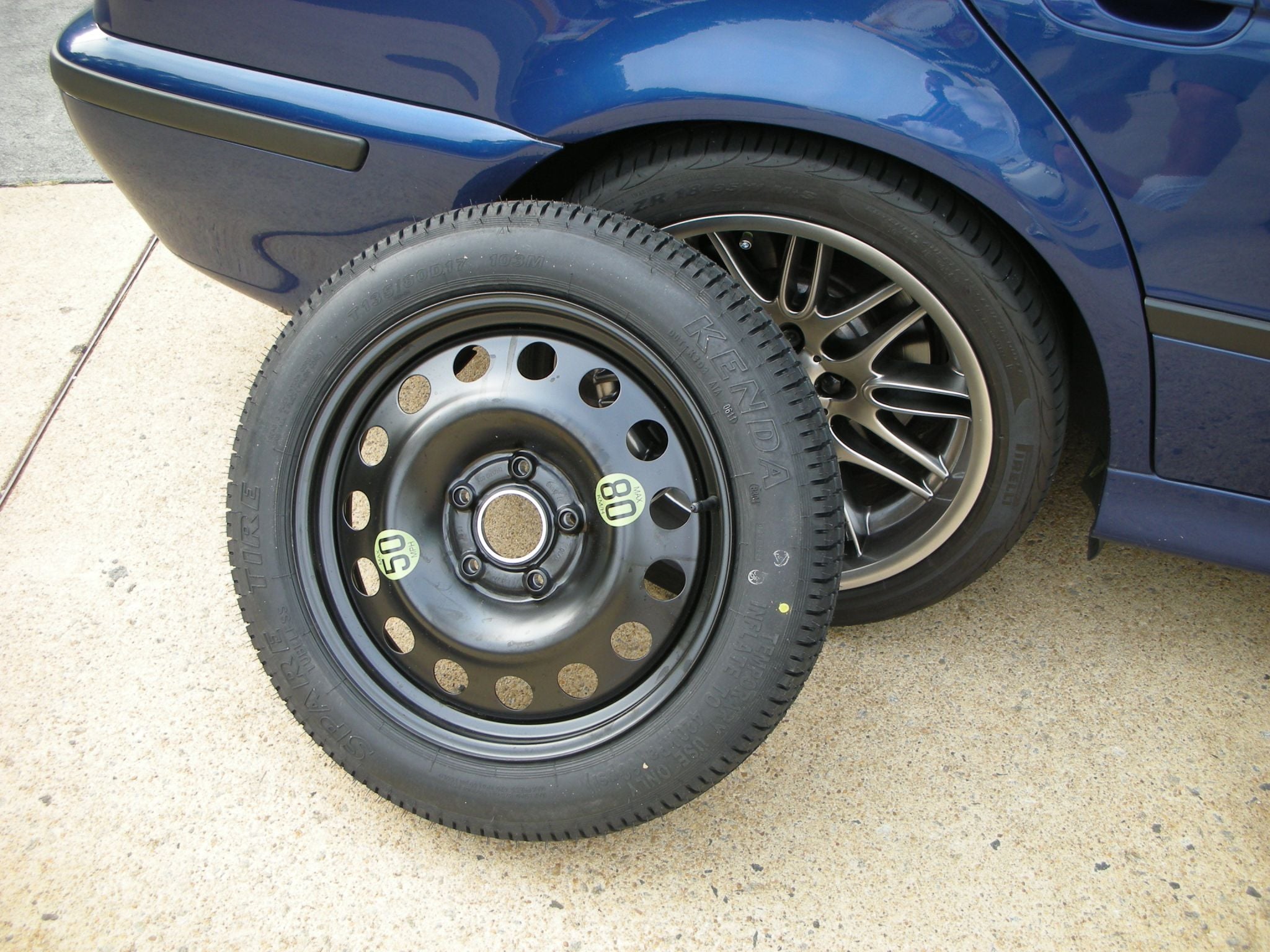
Consumer preference for large-diameter wheels with low-profile tires — more susceptible to damage in potholes — has gone hand in hand with another trend: launches that arrive without a spare tire or only with the temporary version of it, that thinner and restricted-use tire. It is against this second practice that a bill in progress in the Chamber of Deputies is aimed.
PL 1396/2026, authored by federal deputy Pastor Gil (PL-MA), wants to prohibit the sale of new vehicles equipped with temporary spare tires or for limited use. According to the proposal, every car should leave the factory with spare wheels and tires of the same dimensions, load capacity and speed index as those that already equip the vehicle.
The bill applies to all categories, from passenger cars to SUVs, pickup trucks, light commercial vehicles and utility vehicles. In the justification, the parliamentarian maintains that the temporary spare tire represents a safety risk because, because it is narrower and has a smaller contact area with the ground, it alters the dynamic behavior of the car in braking and cornering, in addition to imposing a speed limit – in general, 80 km/h.
According to him, the part “does not maintain the original characteristics of stability, braking, traction and load distribution of the vehicle”, and the absence of an integral spare tire would constitute a possible defect of the product. The deputy also says that the solution was adopted by the industry for economy.
If approved, the bill provides for punishments for automakers, importers and resellers who do not comply with the rule: a fine proportional to the market value of the vehicle and the obligation to replace the thin spare tire with a full model free of charge. For now, PL 1396/2026 is in its initial phase and is being processed in the thematic committees of the Chamber, where it may undergo changes before an eventual vote – only then would it go to the Senate.
The report sought the office of Deputy Pastor Gil to question whether the text took into account the diameter of the wheels of current cars and the models that use different measurements between the front and rear axles. Until the closing of this report, he had not received a response.
Temporary spare tire: why did it become popular?
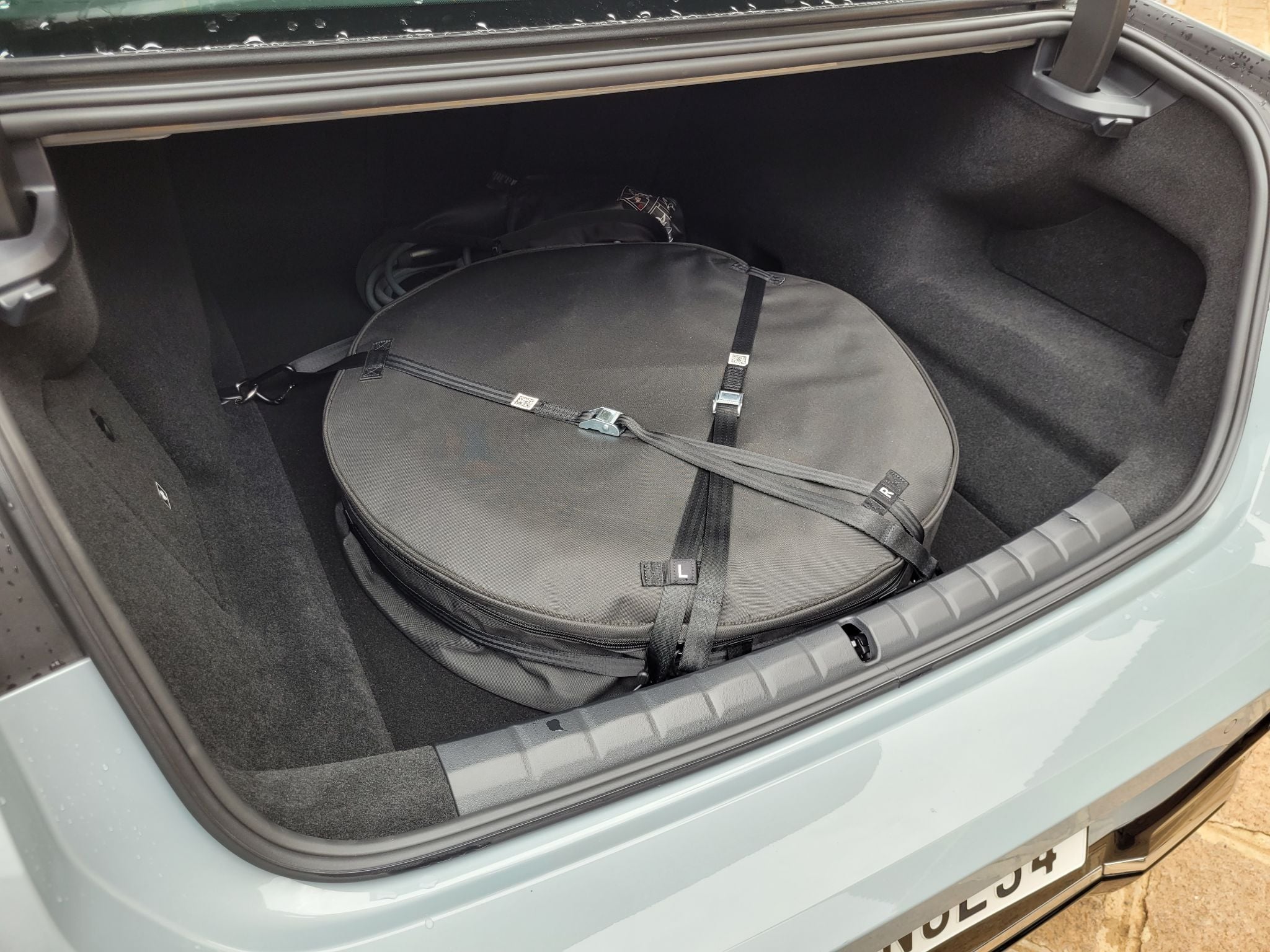
In cars with large wheels, even the temporary tire is large, like this one on the BMW i7 (Photo: Eduardo Rodrigues | AutoPapo)
The spare tire for temporary use is nothing new. It already appeared in American cars of the 1960s, when the full-size spare wheel was offered as an optional item. In Brazil, the format began to spread around 2012, in models such as Honda Civic, Ford New Fiesta and Chevrolet Cobalt, and today it is adopted by much of the industry.
Currently, Brazilian legislation does not require the spare tire to be integral: it is only asked that the vehicle has some solution to continue its journey in case of a damaged tire. The Brazilian Traffic Code (CTB) lists among the mandatory equipment the spare tire and rim, the jack and the wheel wrench. Contran Resolution No. 913/2022, on the other hand, regulates precisely the wheel and spare tire assembly for temporary use and alternative systems.
The text determines, among other points, that the external diameter of the temporary spare tire is equal to that of the running wheels, that the car has space to accommodate the replaced wheel and that the automaker informs the maximum safe speed for the use of the part. The same resolution dispenses with the spare tire in vehicles equipped with tires capable of running “airless” (run-flat) or with alternative systems, such as the repair kit with sealant and compressor.
Among the models sold in the country, the temporary spare tire appears in popular Chevrolet lines, such as Onix and Tracker, in the Jeep family — Renegade, Compass and Commander — and in SUVs from Chinese brands, such as the GWM Haval H6.
Since modern cars — especially SUVs — use a larger-diameter, wider wheel/tire assembly, an integral spare tire would also be bulky and heavy. Hence the manufacturers’ preference for the temporary tire. The 19-inch wheel used, for example in some versions of the Jeep Compass weighs 14.7 kg, while the corresponding tire weighs 12 kg. That is, the complete set is close to 27 kg — a considerable effort for the driver at the time of change.
The gain in space in the trunk is also considerable, and the case of the Jeep Renegade illustrates this logic well: by changing the integral spare tire for the temporary, the SUV expanded the trunk from 260 to 320 liters. In the all-wheel drive versions, which keep the spare identical to the other tires, the luggage compartment capacity is smaller. The industry also points out a positive side effect: because it is not suitable for daily use in another car, the thin spare tire is less targeted by theft than the integral one.
In the 2000s, European manufacturers bet on run-flat tires, with reinforced sidewalls, capable of running for a few kilometers even with punctures. In these cars, the spare tire gives way to a kit with sealant and compressor. The solution, however, is only effective against punctures in the tread – it remains vulnerable to larger impacts and tears – and makes the tread rougher because of the less flexible sidewall. Therefore, it did not succeed in Brazil.
Necessary care for the temporary spare tire
According to Roberto Falkenstein, Pirelli’s innovative technologies consultant for Latin America, the temporary spare tire is a solution for the driver to drive for a few kilometers until he can repair the damaged tire.
He warns that the part alters the dynamic behavior of the car because it is narrower, has a different compound and, often, a smaller diameter, which impairs performance in curves and braking.
In addition, it can affect the optimal functioning of electronic driving assistance systems such as ABS, stability control, and traction control, especially if used for long distances or in severe conditions. Therefore, its use should be seen only as a temporary solution, until the original tire is repaired or replaced.
It is because of these factors that there is a limitation of 80 km/h. Falkenstein reinforces that it stems from the purpose of the piece, created only for emergency use. The expert explains:
At higher speeds, mechanical stress, heat generation and differences in behavior in relation to other tires significantly increase, which can compromise stability, braking capacity and handling.
Manufacturers recommend turning off the stability control when running with this type of spare tire, as different measurements can interfere with the reading of the sensors that govern the system.
British journalist Chris Harris demonstrated in practice how the temporary spare tire reduces a car’s grip: he installed four of these parts in a Mercedes-Benz C63 AMG, which started to skid much more easily.
Comments are the sole responsibility of their authors and do not represent the opinion of this site. Comments containing profanity or offensive language will not be published. If you identify anything that violates the terms of use, please report it.