Toxicology test for CNH: understand how it works and the amount of hair needed
Case of error in the collection of material in Paraíba alerts about the operation of the exam, rules of procedure and driver's rights
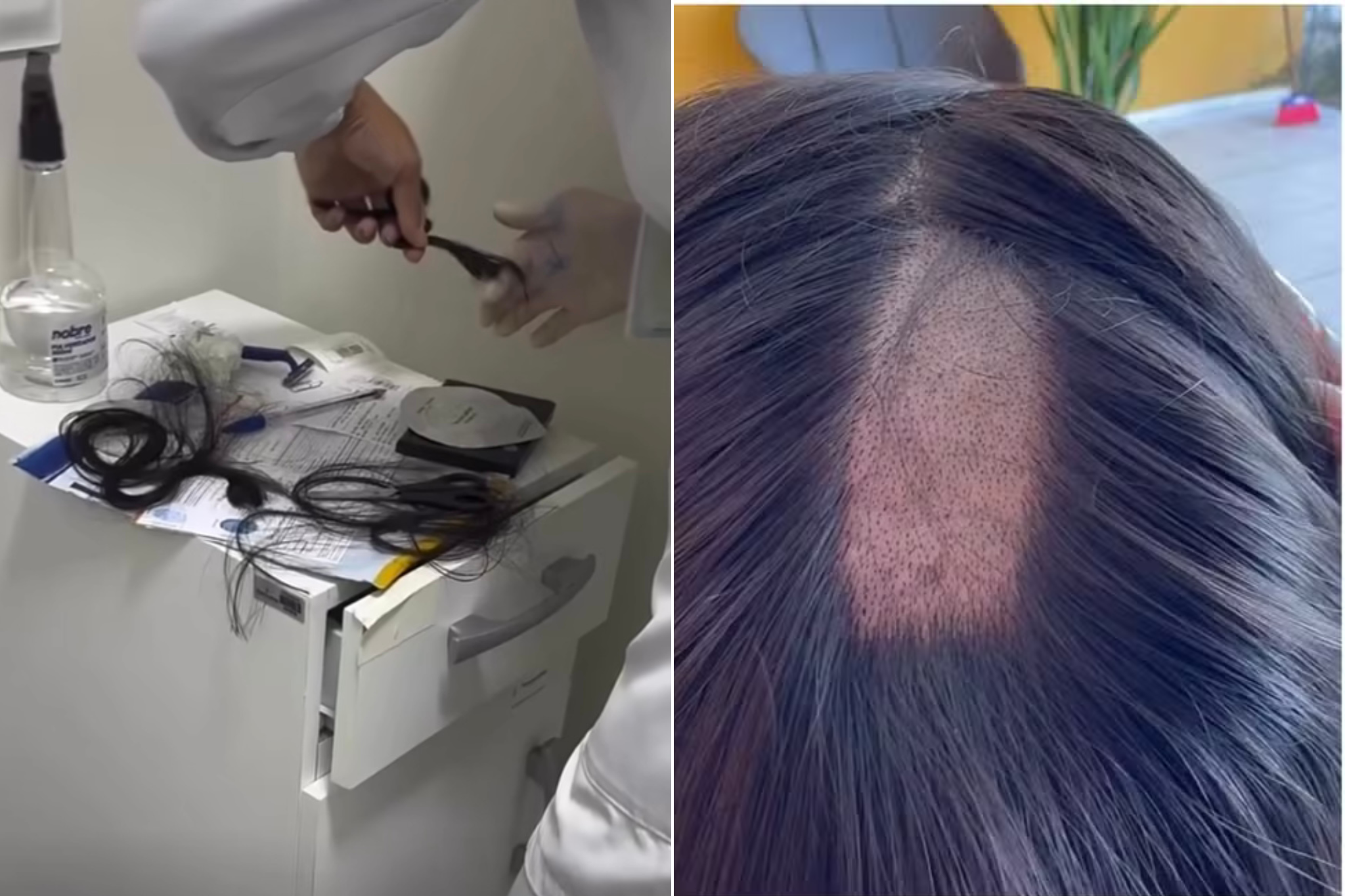
CNH candidate denounced failure to collect hair for toxicology examination, alleging physical pain and damage to self-esteem. (Photos: Reproduction | Social Media)
Since May of this year, candidates for the first National Driver’s License (CNH) for cars and motorcycles are required to take the toxicological test and present a negative result. But a recent episode in Sapé (PB), sparked an alert about inspection and strict compliance with collection protocols. A candidate for the license publicly denounced having had part of her hair shaved inappropriately during the technical procedure.
The case, which had wide repercussions on social networks, involved candidate Ana Karolina, who showed a large flaw in her hair through videos and photos. According to her report, the professional responsible for the service made successive mistakes in handling the material.
The case generated alarm on social networks and led to several questions about the operation of the exam, the collection procedure and especially about the amount of hair needed to carry out the toxicological test.
How the toxicological test works for the first license
Before the new determination provided for by Law No. 15,153/2025, the toxicology test was mandatory only for professional drivers in categories C, D and E. But now the test is also a mandatory step for those who want to drive or drive in categories A, B and AB.
This Senatran rule aims to ensure that no driver with a recent history of consumption of psychoactive substances enters the National Registry of Licensed Drivers (Renach).
What are the steps to perform the test?
The specific procedure must be validated by the State Traffic Departments (Detrans) of each state, has a wide detection window and has strict safety and collection rules established by law:
Authorized locations: collection must be done in laboratories accredited by Senatran or linked collection points. Home care or in unauthorized mobile units is expressly prohibited.
Sample material: a small strand of hair is used. If the candidate does not have enough hair length, they can be used by body hair (such as chest, legs or armpits) or, ultimately, nails, if the person has proven alopecia universalis.
Material collection: the technical protocol requires a sample more than enough to perform the exam, for reproducibility purposes.
Deadlines and validity: usually the laboratory has up to 15 days to enter the technical report directly into the Renach system. Once issued, the exam is valid for 90 days.
How the toxicology test detects the consumption of psychoactive substances
After the drug is consumed, the bloodstream, skin oils, and perspiration are responsible for transporting the substances and depositing them in the keratin spread throughout the body. The test analyzes this deposit in hair, hair, and nail samples.
In the case of hair, as it develops, the substances are incorporated into the hair cortex and attach. In approximately 6 days, the hair can leave the root and appear on the scalp incorporated with the drugs.
In the case of body hair, the growth cycle is different from that of hair. Still, detection through body hair is as effective as locks of hair.
Do I need to shave my hair to take the drug test? What is the necessary quantity?
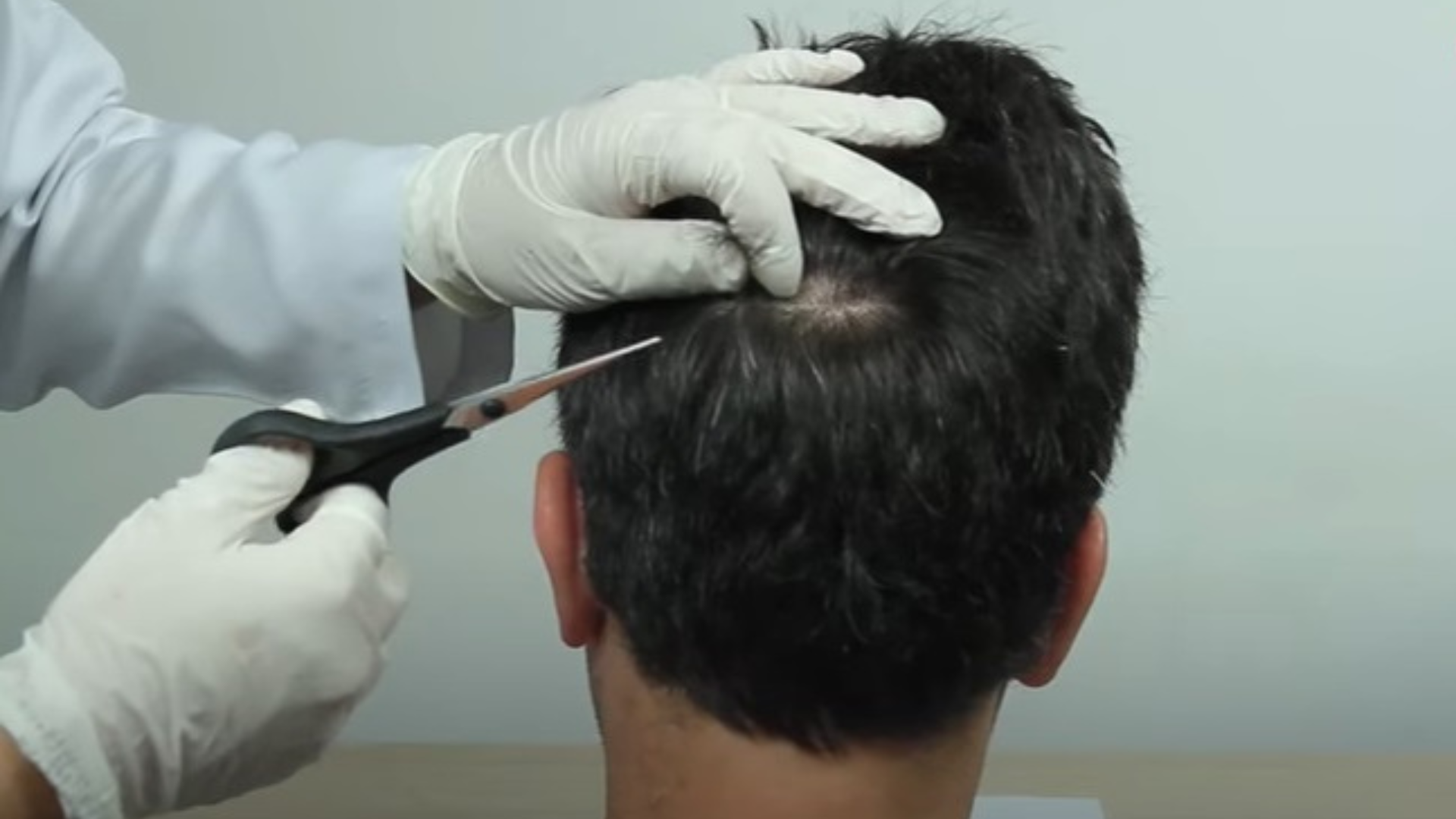
According to Andressa Benedetti Martins, laboratory coordinator of Pardini Toxicology, the collection to carry out the toxicological test is painless and non-invasive. The specialist points out that, preferably, the sample should be collected from the hair of the head, due to the minimum detection window of 90 days.
The amount needed to certify or not the use of psychoactive substances is approximately the thickness of a pen. It would not be possible to do the toxicological test with just a few hairs because the laboratories need to serve a specific mass to have reproducibility in the results.
Vabelo specimen should be at least 3 cm long. (Photo: Pardini Toxicology | Reproduction)
After arriving at the laboratory, this hair is weighed, needing to reach a specific mass to perform the test. Hair procedures, such as dyeing, bleaching, straightening, they do not directly interfere with the result, that is, they are not able to give a false positive or false negative result. What can happen, depending on the analysis, is the interference that prevents the presentation of the result. In this case, the sample is recollected.
Is it possible to cut only the ends for the exam? And what about body hair?
The answer is: no. The strands need to be extracted close to the root, because, according to Andressa Benedetti Martins, the length of the hair is directly related to the detection window. This is because, to test for drug consumption in the last 90 days, it is necessary to use the ‘youngest’ part of the hair that grew in this period.
Each centimeter of hair represents an average of 30 days, so the minimum length of a sample to meet this window should be three centimeters. If the donor does not have the required size, collection is also allowed in body hair, but the detection window is extended to 180 days, because its growth rate is different.
The criterion for the hair sample is approximately 22 centimeters in diameter, as if it were a cotton ball. According to the laboratory coordinator of Toxicology Pardini, the sample is valid regardless of the length of the hair, as long as it does not look freshly shaved. If the candidate has alopecia universalis proven by a medical certificate, this exam, as a last resort, can be performed from nails.
Andressa Benedetti Martins also points out that, if the toxicological test is carried out correctly, there is no difference in reliability in relation to the different samples.
What substances are detected in the CNH toxicology test
Toxicological tests are carried out in laboratories accredited by the National Traffic Secretariat (Senatran) for the detection of:
Amphetamines (amphetamine, methamphetamine, MDA/MDMA or ecstasy, rivet, amfepramone, femproporex, LSD);
Mazindol – weight loss drug;
Cannabinoids (Carboxy THC) – found in marijuana, hashish, K2, spice;
The test does not detect consumption of energy drinks, antidepressants, alcohol, anabolic steroids, tranquilizers and the like. But, even so, it is important to inform prescription medications for continuous use at the time of the initial interview, with the presentation of the medical prescription, to avoid false positives.
How long does it take for the test to detect drugs?
The toxicological test required to obtain the CNH is called large-scale because it identifies the consumption of illicit substances in a period of:
90 days (three months) before collection in hair analysis (sample of at least 3 cm);
180 days (six months) before collection in the analysis of hair, usually from the arms, legs, armpits or chest, collected with scissors or shaver, close to the body, and it is necessary to remove only a small strand of hair, opting for an area that is not apparent.
How long does the drug stay in the body to be detected in the toxicology test?
The time that illicit substances stay in the body and can be identified by the test depends on several factors, such as:
Type of substance consumed
Quantity of drug used
Frequency of use
It is worth mentioning that the lower consumption of psychoactive substances may result in the detection of the drug in the procedure. In this way, even if the drug is consumed in a single day, it will be possible to identify the drug in a period of 90 to 180 days, depending on the sample of the material (hair or hair).
The Case of Sapé (PB): error in procedure and damage to self-esteem
According to the complaint recorded on video, Ana Karolina’s hair collection had to be repeated after the laboratory professional tore one of the sample packaging envelopes. Two large strands of hair were extracted, one in the central region and the other on the side of the head, causing physical pain and damage to self-esteem, according to the patient.
In a video widely circulated on social media, the CNH candidate said: “she took my hair twice, where she should have taken it only once, and in smaller quantities. I still wanted to remove a third strand, claiming that it would not be valid.” Ana Karolina says that she was only instructed to tie the wires to hide the failure at the end of the service.
After the repercussion of the incident, the laboratory published an official note admitting that an internal investigation identified an isolated failure in the procedure. The company stated that the episode does not reflect its welcoming values and closed an agreement with the client to pay for the necessary hair treatment and psychological support.
Comments are the sole responsibility of their authors and do not represent the opinion of this site. Comments containing profanity or offensive language will not be published. If you identify anything that violates the terms of use, please report it.