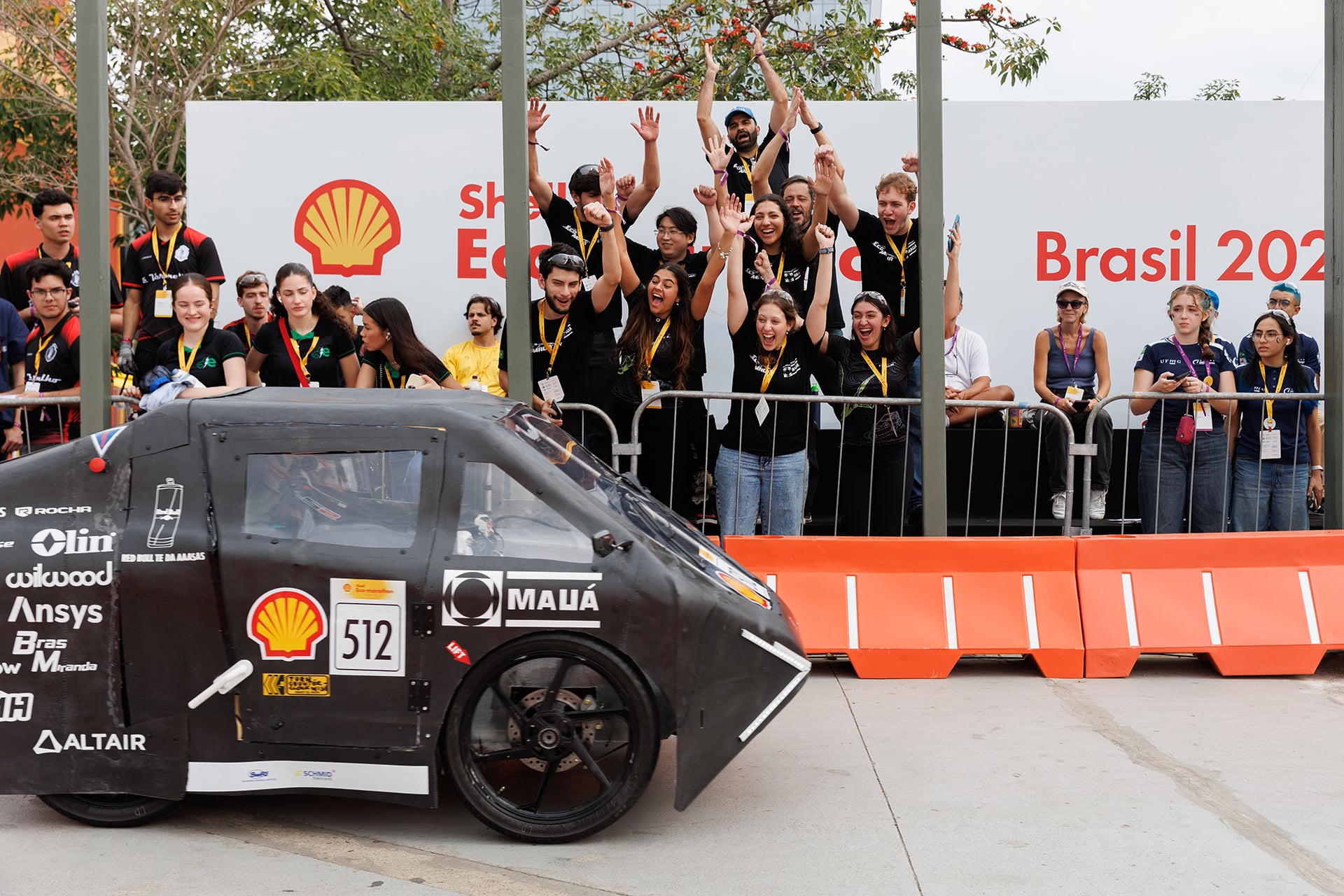
The 2026 edition of Shell Eco-Marathon Brasil ended in Rio de Janeiro with a national record — and the feeling that students could go even further. The UFMG BE Mileage team scored 401 km/kWh in the Prototype – Electric Battery and surpassed the 381 km/kWh that had been in force since 2024.
But the rain closed the track at Pier Mauá shortly after it opened, and entire categories were left without valid results – including the two hydrogen ones.
It is worth translating the brand: if a street car had this efficiency, the 38 kWh battery of a BYD Dolphin Mini would yield about 15 thousand kilometers without recharging.
From a bet between scientists to 47 teams at the Mauá
Pier The Shell Eco-Marathon was born in 1939, in a Shell laboratory in Wood River, in the United States, as a bet between researchers on who would run the farthest with a gallon of fuel. The winner did 49.73 miles per gallon, equivalent to 21.1 km/l.
The game became a formal competition in 1985, in France, and arrived in Brazil in 2016. In ten years, about 300 teams from more than 60 institutions have passed through it; the 2026 game brought together 47 teams and more than 500 students from Brazil, Colombia, Mexico, and Peru.
The rule is simple and brutal: travel the longest possible distance with the least amount of energy. There are two classes of vehicle — Prototype (ultralight and low) and Urban Concept (which needs to look like a real car) — and three energy sources: internal combustion, electric battery and hydrogen fuel cell. The categories, however, are not the sponsor’s choice.
“We offer the categories that universities say they want to research. They are the ones that define, and that’s why categories come and go,” Norman Koch, global general manager of Shell Eco-Marathon, explained to AutoPapo . In 40 years, there have been disputes over dimethyl ether, natural gas and solar energy.
Photo: Shell | Disclosure
Ten laps, 25 minutes and the engine off
Each team needs to complete ten laps within 25 minutes, with six attempts to register a valid mark – one second over the limit invalidates everything.
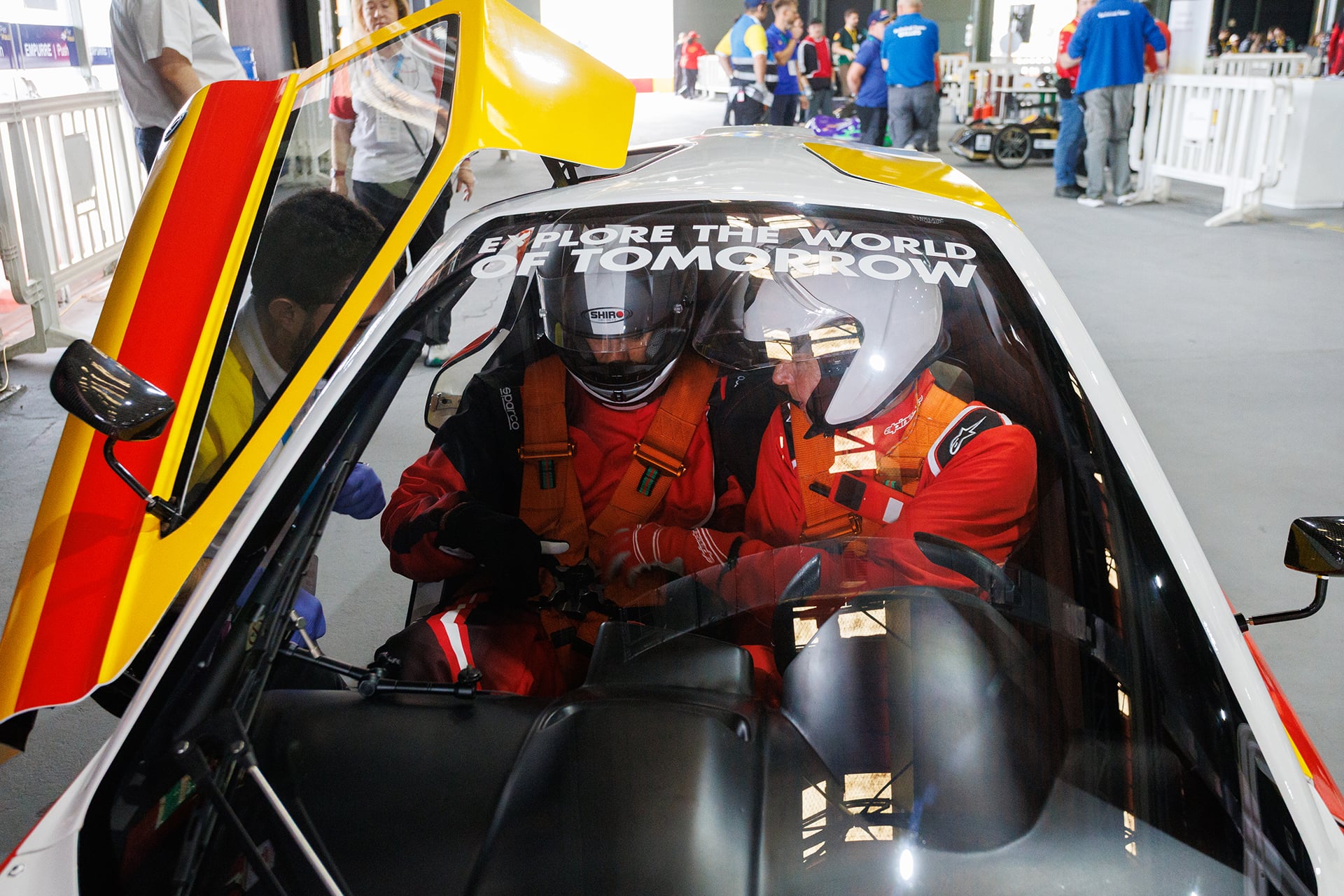
“The faster you go, the more energy you expend. The teams try to go as slowly as possible within the time,” summarized Ian, a British volunteer Shell driver who took the report for a spin in an Urban Concept built in Taiwan.
Driving is engineering in itself: the cars accelerate for a few seconds, turn off the engine and continue with inertia – the burn and coast, which the Brazilian teams have nicknamed toothless. The driver hunts unevenness in the asphalt and avoids touching the steering wheel, because each correction turns into friction. The tires, calibrated to very high pressures, are almost massive.
“They’re not comfortable at all. And when a tire blows out, it feels like a shotgun blast,” Ian said. In prototypes, the heat is so hot that the drivers leave after ten minutes.
Photo: Shell | Disclosure
Adapted brush cutter and naval
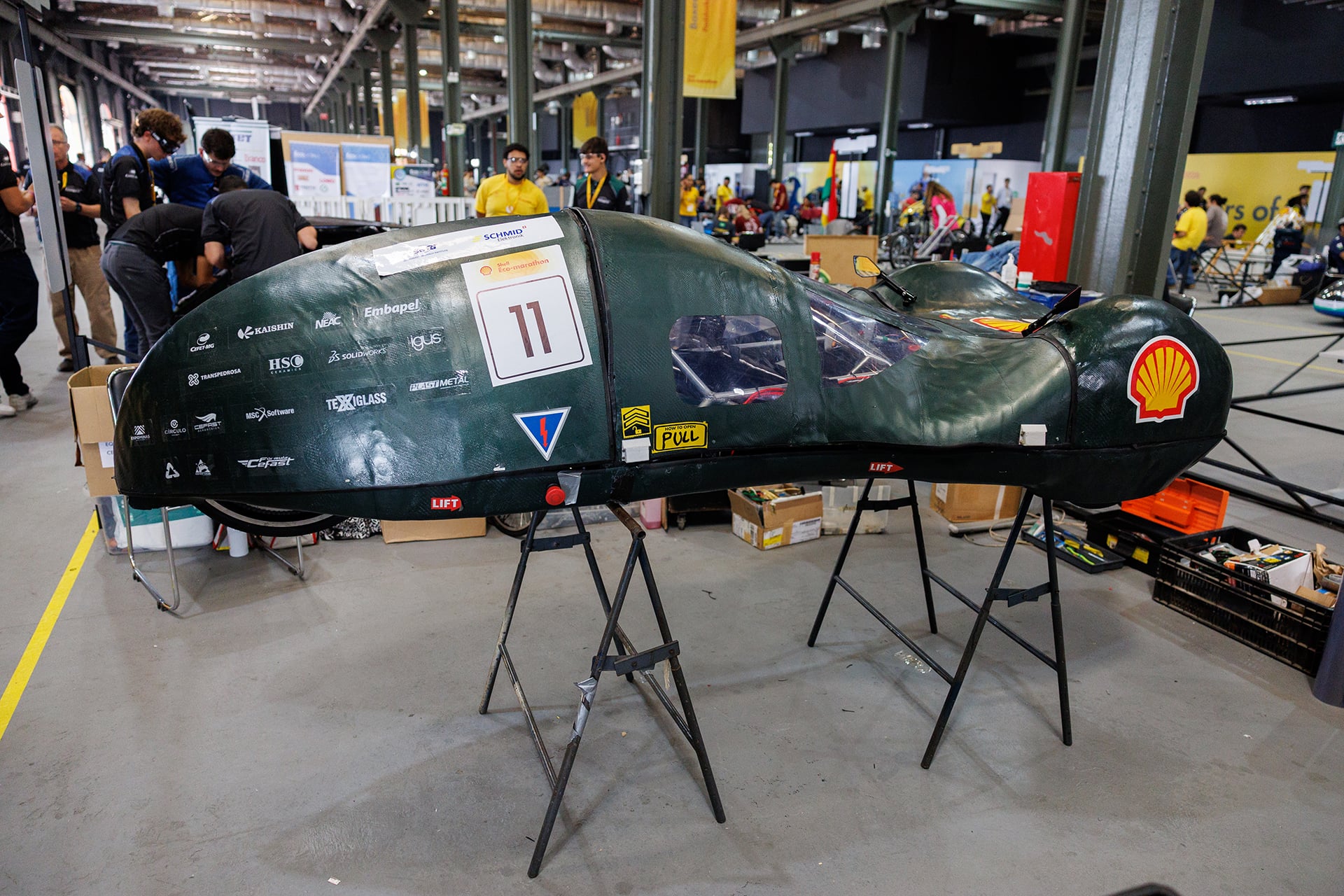
aluminum The car that did 556 km/l in 2026 and gave the Drop Team, from IFRS Erechim, the sixth championship in the Prototype – Internal Combustion uses a Honda GX25 brush cutter engine, with about 1 hp from the factory.
“There’s not much of a secret, we open it, we expose it. The engine was handpicked by the oldest participants, and the younger ones found the ideal configuration”, said the team captain. In 2023, the Drop Team set the Brazilian record of 716 km/l, the equivalent of going from São Paulo to Florianópolis.
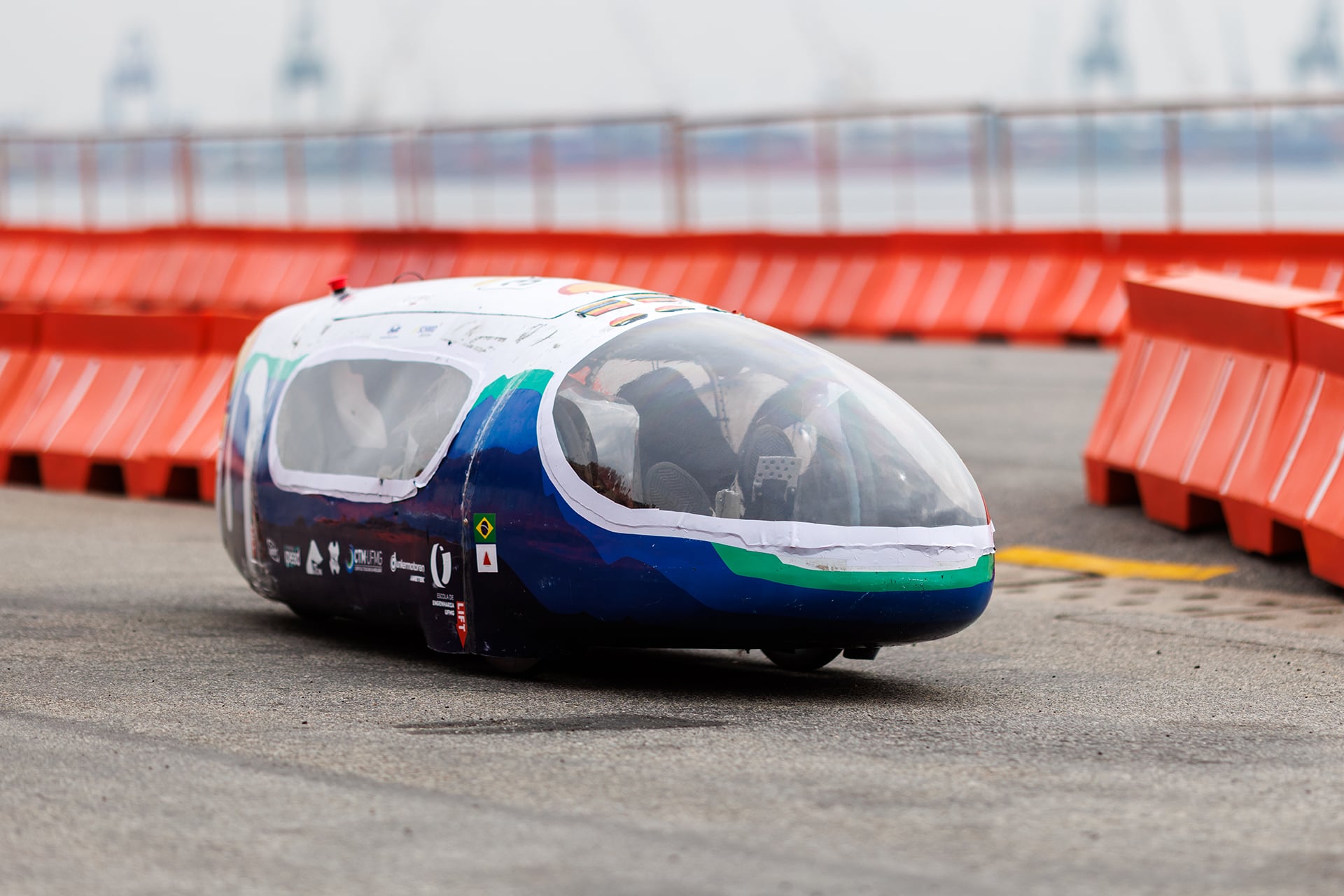
At UFMG’s Mileage, the electric prototype weighs about 35 kg, has a carbon fiber fairing and is driven lying down, without a steering wheel, by levers. “We manufacture it to be as light as possible and to run as much as possible,” explained a member of the team.
The same car won the American stage, in Indianapolis, in April, with 469.7 km/kWh. The Urban Mileage Concept, with electronic boards and an anatomical steering wheel made by the students, took the category to combustion with 65 km/l.
In hydrogen, the math is even thinner: the 300-bar cylinder is kept at 150 bar for safety, but the cell works between 0.6 and 0.7 bar.
“The PEM cell has been around for several decades, but its efficiency has to be very well studied. Now the technology is taking a leap in evolution,” said Professor Sebastião Ribeiro Júnior, from electrical engineering at UFPR, whose team uses tubular aluminum and stretches of naval aluminum in the wheel hubs: “The wheel is lighter even than that of a bicycle.”
AutoPapo took a spin on the combustion Urban Concept made by Shell itself (Photo: Shell | Disclosure)
What’s left of all
this Koch says that a lot of the innovation is hidden. “We’ve seen a lot of research into materials: composites that are not just carbon fiber and glass, but biodegradable fibers. We’ve seen cars made of bamboo or hemp. And there’s a lot of intellectual property in the programs that model driving.”
About Brazilians, he is direct: “Whether you are a student from Berlin, Beijing or Boston, they make the same mistakes and have the same brilliant ideas.”
The ceiling of what is possible is still far away: the world record for the gasoline competition is 3,771 km with one liter, from the Microjoule prototype, from the French school La Joliverie, in 2009. With just under 11 liters — less than a quarter of the tank of a popular car — that car would go around the world.
Comments are the sole responsibility of their authors and do not represent the opinion of this site. Comments containing profanity or offensive language will not be published. If you identify anything that violates the terms of use, please report it.