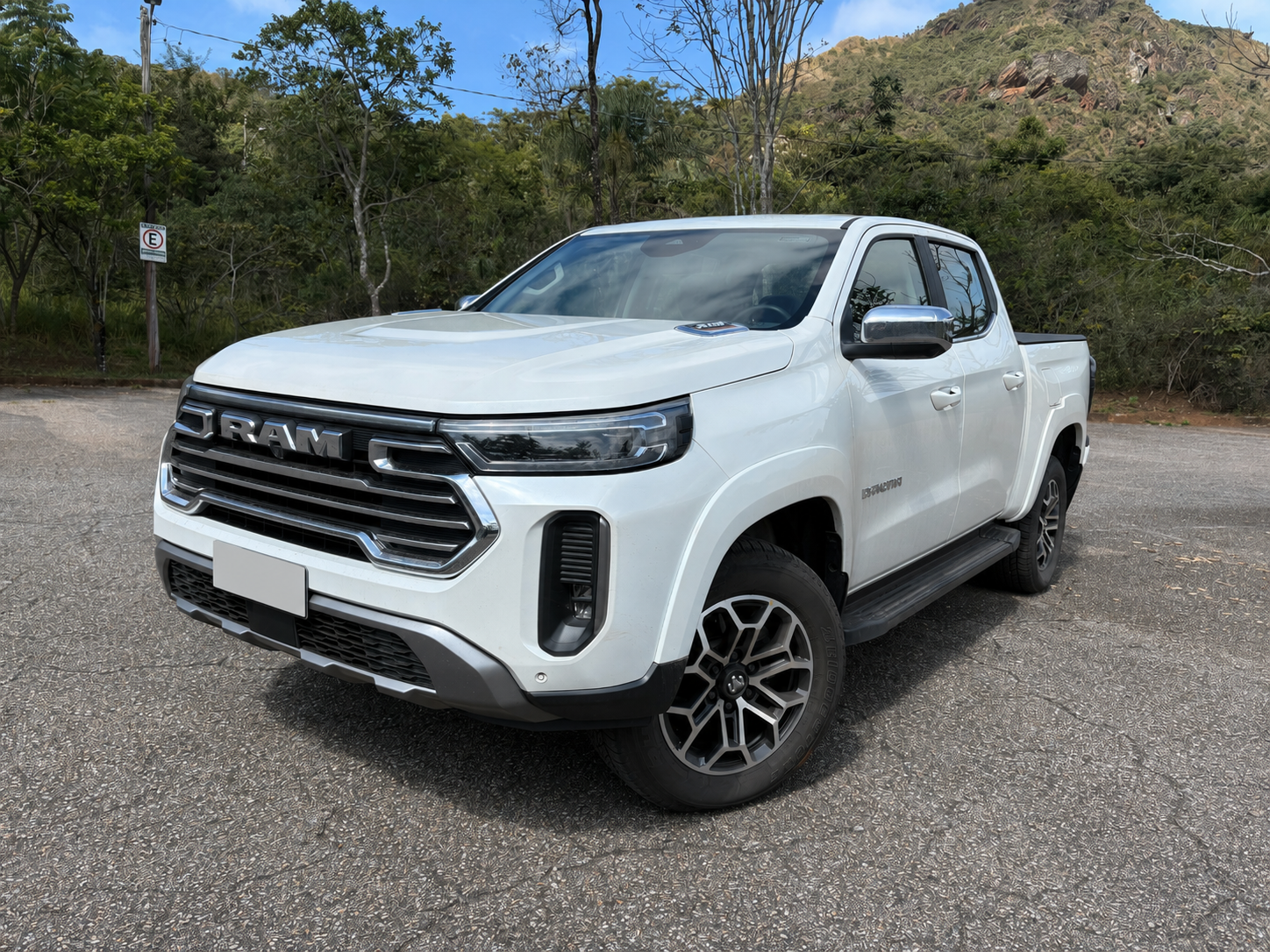
The Ram Dakota Laramie arrived in the Brazilian market with a clear mission: to occupy a more sophisticated space within the midsize pickup segment. The problem is that it shares practically everything with the Fiat Titano. Both use the same platform, bodywork, mechanical set and even most of the equipment. The question that remains is simple: does the RAM justify the difference of almost R$ 33 thousand charged in relation to the top-of-the-line version of the Italian sister?
The Titano Ranch, a more sophisticated version of the Italian derivation, has an initial suggested price of R$ 290.490. The Dakota Laramie starts at R$ 322.990. If the consumer opts for the Night Edition option, the price rises to R$ 330 thousand. And if Titano and Dakota are so similar, what justifies paying more? That’s what we’re going to find out.
Visually, Dakota bets on the identity of the North American brand to differentiate itself. The traditional grille with the ram’s emblem, unique finishing details and a more refined cabin help build a premium product perception. However, the essence remains the same.
What changes from the Fiat Titano to the Ram Dakota?
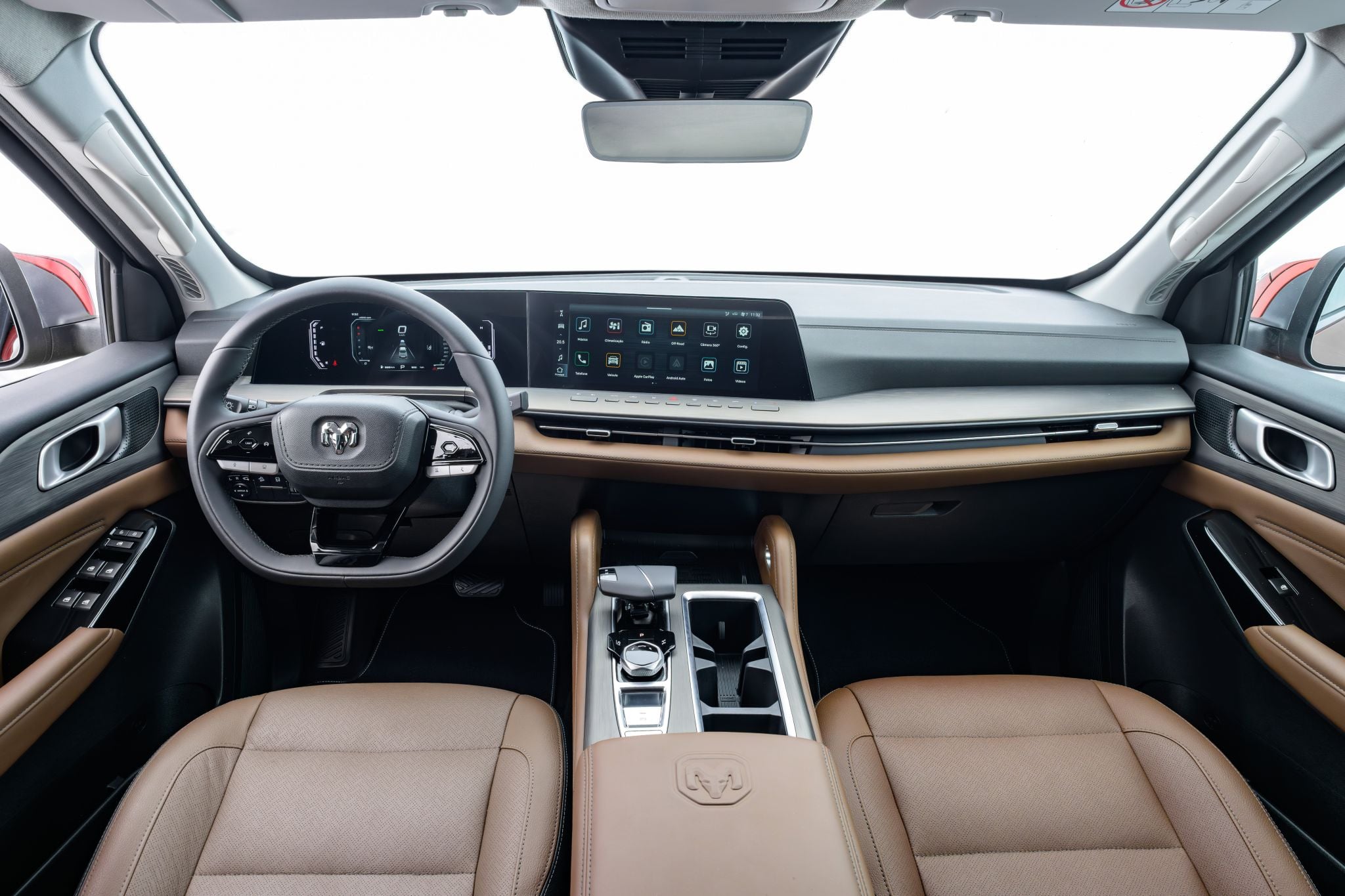
The main differences are in the interior finish and the technological package. The Dakota Laramie received an exclusive panel, larger multimedia center, leather upholstery with a brown tone and a more complete equipment list.
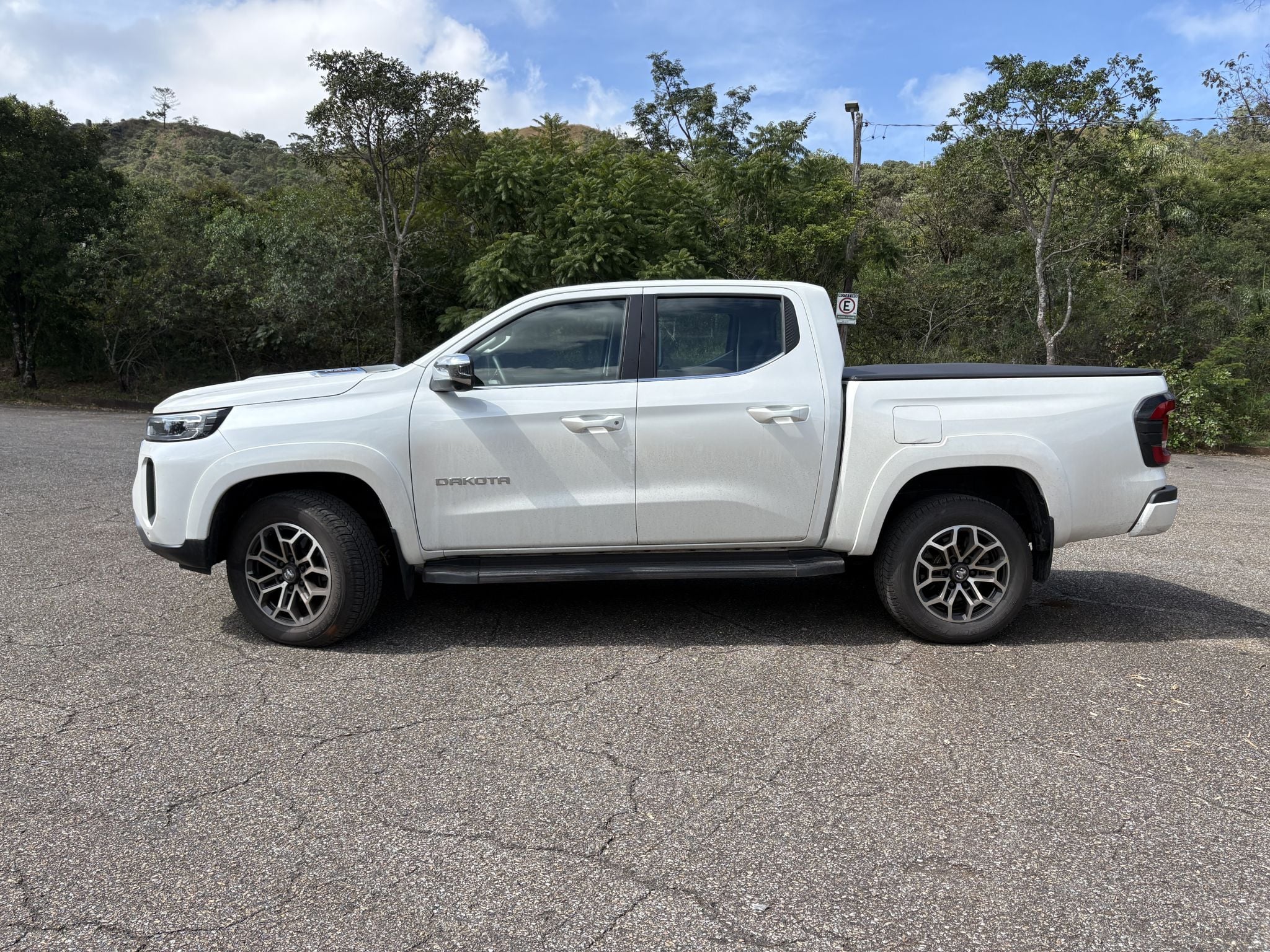
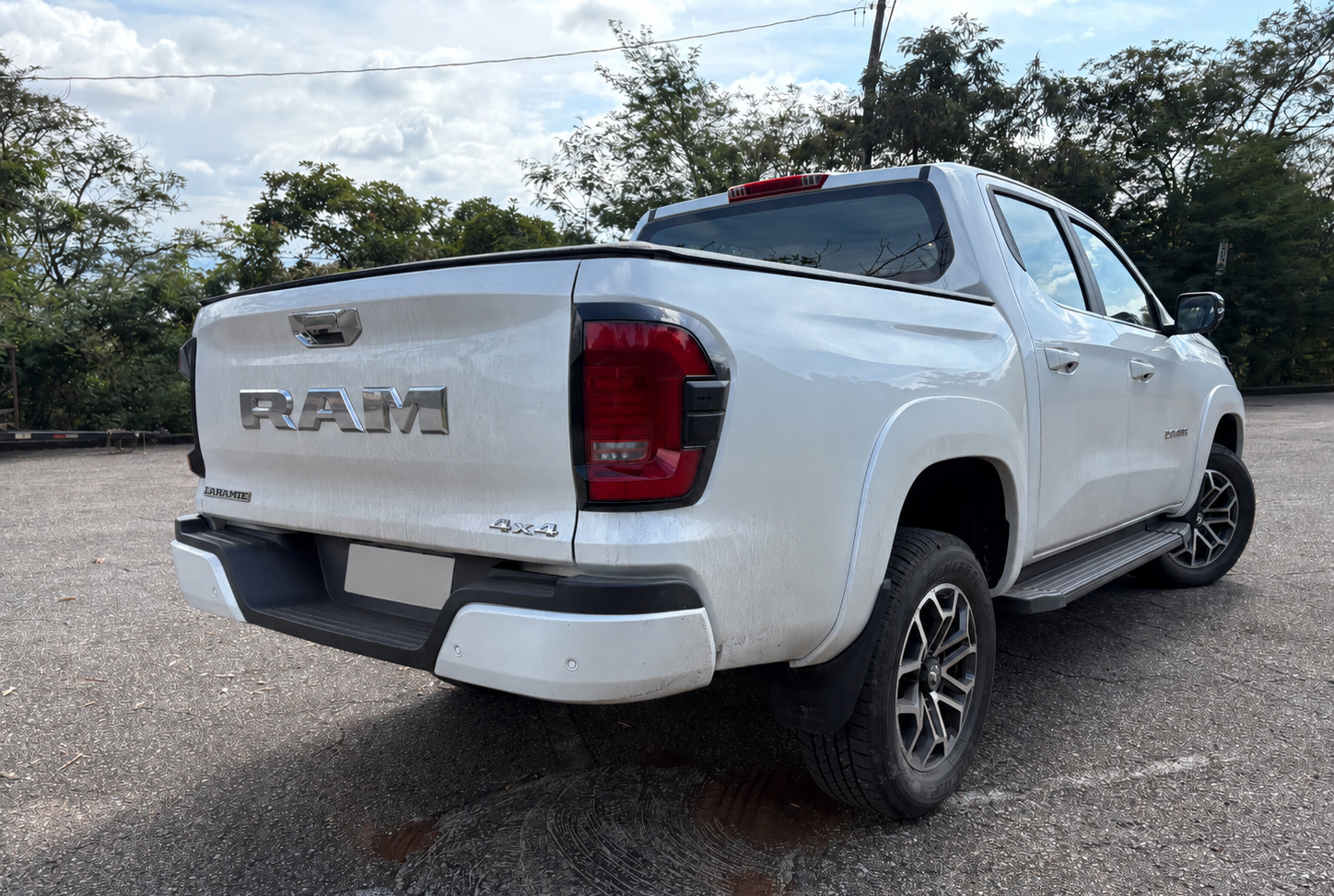
Bodywork and mechanics between Dakota and Titano are identical, what changes is basically grille, hood, interior trim and equipment
Among the highlights is the 540-degree camera. The system not only offers a panoramic view around the vehicle, but also creates a virtual projection of the ground under the pickup when it is in motion. The feature is especially useful on trails and off-road courses, allowing you to see rocks, ditches and obstacles hidden by the raised hood.
The pickup also offers an induction cell phone charger, two-zone digital air conditioning, rear cross traffic monitoring and a more complete driving assistance package than available at Titano. Dakota offers a reverse cross traffic monitor, which is an indispensable item for a pickup truck, as it avoids the risk of accidents in maneuvers with garage exits or parking spaces.
2.2 turbodiesel engine delivers plenty of power
Under the hood, the Dakota uses the same 2.2-liter turbodiesel four-cylinder engine that equips the Titano. There are 200 hp of power and 46 kgfm of torque, associated with an eight-speed automatic transmission and 4×4 traction with electronic selector.
In practice, it is an efficient set for the size of the vehicle. There is abundant power for overtaking, resuming and off-road use. The performance, however, must be analyzed within the proposal of a medium pickup with more than two tons.
Like any other medium pickup, it is not a vehicle that conveys the agility of a passenger car. Starts are slower, braking requires greater anticipation and changes of direction need to respect the high center of gravity.
What is it like to drive the Ram Dakota in the city?
After traveling more than 1,000 km through the Pantanal of Mato Grosso do Sul, where the Dakota was totally at ease, it was time to check out the urban use, where most buyers will drive most of the time. Thus, if in the field and on the road the Dakota demonstrates robustness and competence, the urban environment highlights the typical limitations of medium pickup trucks.
Dakota’s interior is more sophisticated than Titano’s, with floating instrument panel and multimedia
The large size makes maneuvering, parking and circulation on narrow roads difficult. The high width requires constant attention in corridors shared with motorcyclists, while the weight compromises part of the agility necessary in the traffic of large cities.
On the other hand, electronic resources help to minimize these difficulties. Sensors, cameras and driving assistants make daily use less stressful, especially for those who use the pickup as a family vehicle.
The suspension is also worth mentioning. After the updates promoted by Stellantis, the set was more comfortable than in the first Titano units (when it was made in Uruguay). Still, the typical behavior of a pickup equipped with a rear leaf spring remains, transmitting oscillations and impacts that do not appear in SUVs or passenger cars.
Ram Dakota faces strong competition
Dakota’s biggest challenge may not be in the “family disputes”, but among the traditional competitors in the segment.
With a price close to R$ 323 thousand, the pickup enters directly into the range of intermediate versions of the Toyota Hilux and Ford Ranger. In some cases, the value is even close to versions equipped with more powerful engines, such as the Ranger V6.
Load capacity of 1 ton and volume of 1,210 liters put Dakota on par with competitors
The Hilux maintains a reputation for ruggedness built over decades. The Ranger is widely considered one of the references in technology, drivability and performance among medium pickup trucks sold in Brazil. Given this scenario, Dakota bets mainly on the prestige that the Ram brand has built here.
Is Ram Dakota Laramie worth buying?
The answer depends on the importance that the buyer attaches to the brand and the more refined finish.
As a product, Dakota delivers comfort, technology, off-road capability and a competent mechanical set. However, the technical proximity to the Fiat Titano makes it inevitable to question the cost-benefit of the price difference.
For those who want the Ram badge in the garage, the fanciest materials and some exclusive equipment, the Dakota may make sense. Those looking for rationality in the purchase will probably find in Titano a similar proposal for less money or may consider established alternatives such as Hilux and Ranger.
In the end, the Dakota is an excellent pickup. The question is whether the prestige of the sheep on the grid is worth the thousands of reais overcharged.
Comments are the sole responsibility of their authors and do not represent the opinion of this site. Comments containing profanity or offensive language will not be published. If you identify anything that violates the terms of use, please report it.