

Drogometer in the Dry Law: see how the test works and what substances and medicines are detected
Inspection will have rapid screening for narcotics throughout the country. Check out the complete list of substances and clarification on medicines
By
Julia Vargas
Published on 2026-08-28 at 03:00 PM
Published on 2026-08-28 at 03:00 PM
Be the first to comment.
Summarize with:
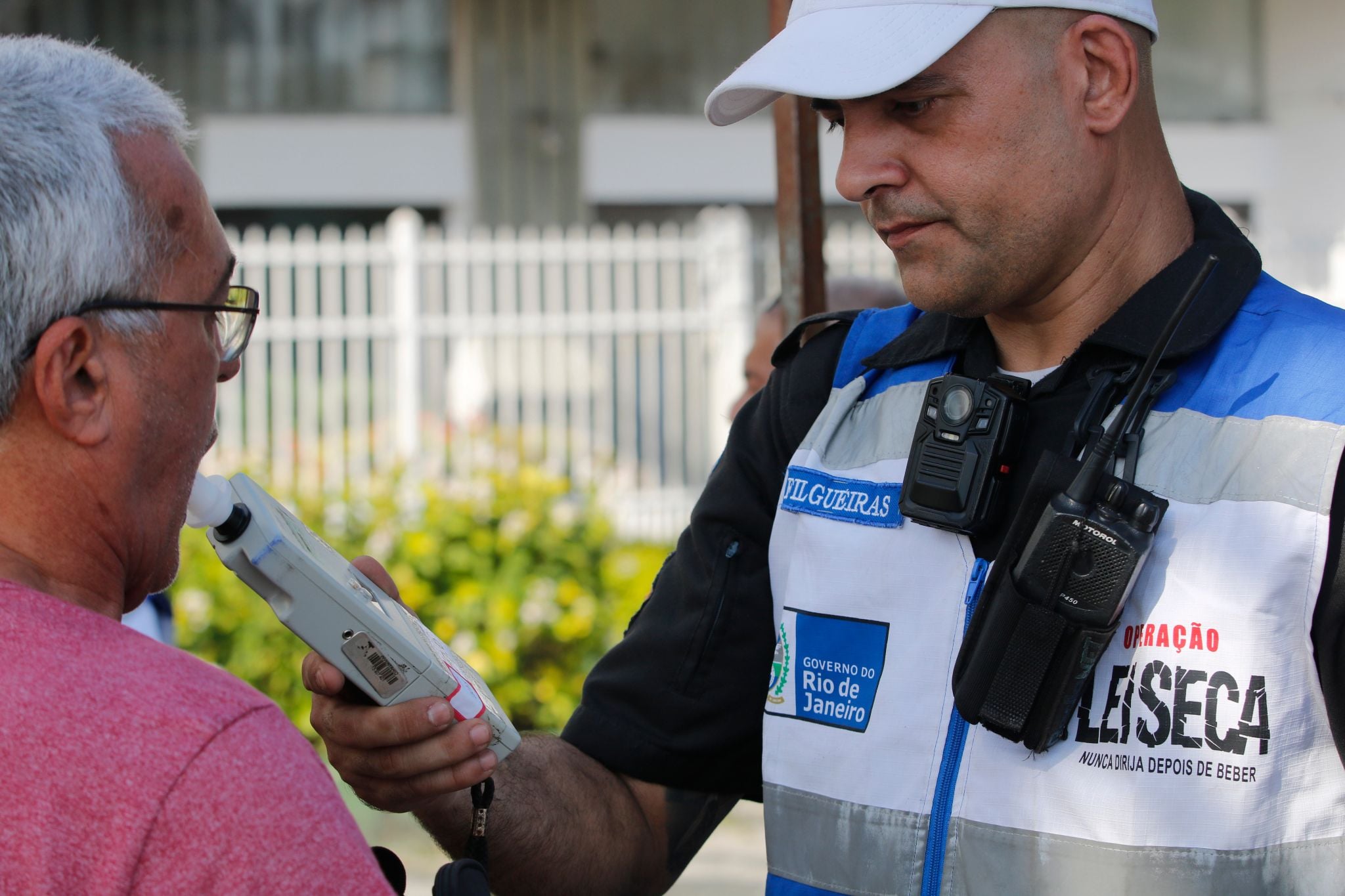
The National Traffic Council (Contran) approved new rules for the enforcement of the Dry Law in Brazil, which include the detection of psychoactive substances and punishment for those who drive under its influence. In addition, the new rule regulates the rapid screening stage, operational procedures used by traffic agents and the use of new equipment in approaches, such as the dromometer.
Along with the new legislation, questions arose about which substances are punishable and the identification of the use of medications. But, the main question is: Will drivers who use prescription drugs be fined and punished?
SEE ALSO:
- Engine oil additive is a trap
- What changes in the Dry Law: understand the new rules for alcohol and drug
- Drunk driver who causes death can have his driver’s license suspended for 10 years and a fine of R$ 14,6 thousand
tests
In this article you can check the complete list of psychoactive drugs that fall under the prohibitions of the Dry Law and what the National Traffic Secretariat says about the use of medications.
- It is important to remember: although the new legislation has already been approved, the inspection with the new tests will only happen after the certification of the devices and procedures, that is, if you are stopped in a blitz today, you will not experience these changes. The changes involving inspection forms and framing codes of infractions will have a period of 60 days to come into force.
Substances detected by the dromometer
The new equipment that will be used in the inspections already has the Certificate of Conformity No. 040/T/2024 issued by Inmetro and performs the test on oral fluids or saliva. Unlike the alcohol test, the result does not inform the quantity, it only indicates the presence or absence of the psychoactive substance.
The appliance’s dashboard identifies 12 classes and specific elements:
- Amphetamine;
- Cocaine;
- MDMA (ecstasy);
- 6-MAM (heroin);
- LSD;
- Delta-9-THC (cannabis);
- Fentanyl;
- Ketamine;
- K2 (synthetic cannabinoids);
- Morphine;
- Methamphetamine;
- MDPV.
It is important to note that the list does not include all medicines with cannabidiol, since a product based on medical cannabis or CBD does not have THC, the main component of cannabis associated with intoxicating/psychoactive effects, or contain only traces, depending on the formulation. Thus, it is not safe to say that all medical CBD is 100% free of the substance to be detected by the dromometer.
Use of medicines and Senatran’s clarifications
The National Traffic Secretariat (Senatran) and the National Traffic Secretary, Adrualdo De Lima Catão, emphasized that health treatments do not turn drivers into offenders. Medications for continuous use for ADHD, depression or anxiety (such as Venvanse and Clonazepam) do not activate the dromometer, unless they contain in their exact composition the substances listed on the panel.
To avoid unfair punishments for past consumption that no longer affects driving safety, the device operates with parameters called cutoffs, which ignore harmless residual amounts. Patients undergoing treatment with medical cannabis (CBD) should check the product formulation with their doctor, as formulas that contain traces of Delta-9-THC can be identified in the test.
The dromometer acts exclusively as rapid screening in the field. For administrative, criminal or judicial procedures that require greater technical rigor, positive preliminary results may require confirmation by laboratory analysis. Regardless of the test, the fitness to drive vehicles during treatments that cause drowsiness or reduction of reflexes continues to be determined by the prescription and individual evaluation of the doctor in charge.
Claims and refusal to the test
The Contran resolution also brings other novelties:
- Fatal accidents: it is mandatory to carry out tests for alcohol and other substances in drivers involved in accidents with death.
- Rule for refusal: denying the test remains a very serious infraction. The new rule prohibits applying, in the same approach, simultaneous fines for refusal and for driving under the influence.
Refusing the breathalyzer test in a Prohibition blitz remains a very serious infraction, even if the driver does not show signs of intoxication. The driver will have to bear:
- Fine: R$ 2,934.70, (10x the amount of the fine for a very serious infraction).
- Suspension of CNH: 12 months.
- CNH collection: the document can be collected during the inspection.
- Vehicle restraint: the car is held until a licensed driver can take the wheel.
- Recidivism: if the driver commits the same infraction again within 12 months, the fine is doubled, reaching R$ 5,869.40.
SEE MORE ABOUT

0 Comments
Comments are the sole responsibility of their authors and do not represent the opinion of this site. Comments containing profanity or offensive language will not be published. If you identify anything that violates the terms of use, please report it.