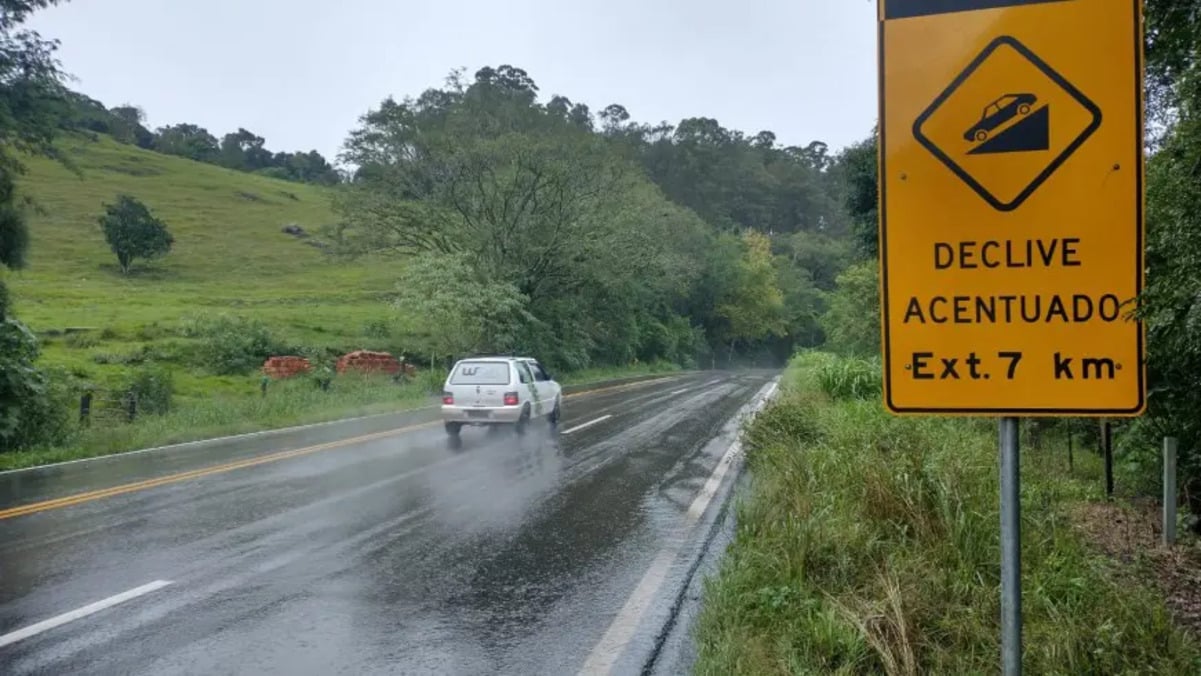
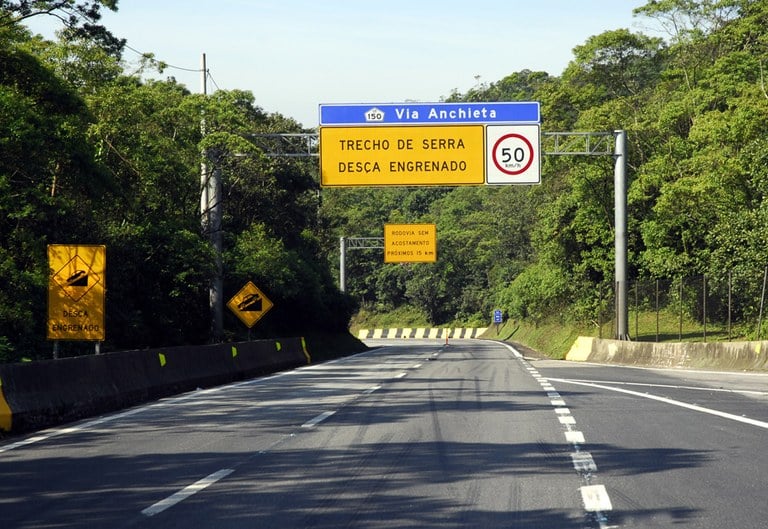
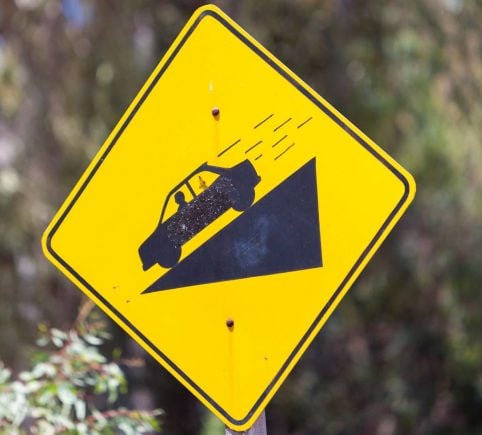
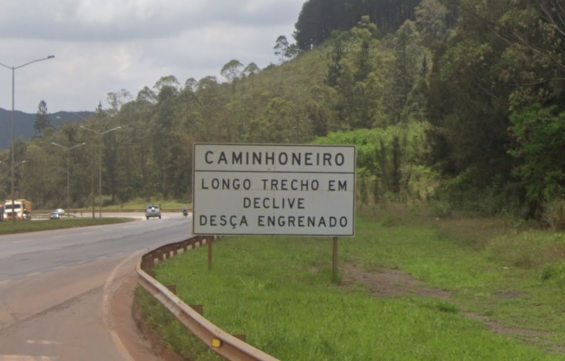
On highways, especially those that pass through mountain ranges, you will find warning signs that indicate slopes, slopes and other road conditions. But, beyond just seeing these signs, knowing their meanings and how to act can save lives.
On roads that have strong or long descents, for example, the places are demarcated with signs that signal the relief. However, the smartest driver does not interpret only this, he understands that there is a slope ahead, so he must go down in gear and use the engine brake.
After all, what does it mean to go down geared? What is the engine brake?
Going down with the car in gear means nothing more, nothing less, than keeping the car in gear during the descent. Meanwhile, there are many drivers who choose to drive down a slope with their car in neutral. But, who is right?
It depends on the descent. If the hill is not very strong, it makes sense not to gear the car, so you don’t harm the momentum and use inertia and gravity to keep the car moving. However, if the driver is going through a steep or very long saw, the car must be in gear, as this way the engine helps to hold the vehicle, reducing speed naturally, without demanding so much from the brakes.
Understand what the engine brake is and why it is a great ally
If the vehicle is in gear, you can make use of the greatest ally of your braking system: the engine brake.
By constantly pressing the brake pedal to maintain speed on long descents, you will overheat the system, causing it to lose its efficiency. The result can be tragic: an unbraked and runaway car going down a steep road.
The most effective way to avoid this risk is by using the engine brake. This technique, in combustion cars, consists of reducing speed using only downshifts. The shorter ratios cause the engine rev to go up, which can help maintain or reduce speed on a descent.
This technique has two benefits: it saves the service brake, maintaining its effectiveness for emergencies, and it also helps to save fuel. On highways with constant slopes, there is a warning to keep the car in gear precisely for this reason.
How to use the engine brake on manual cars
In a car with a manual transmission, the engine brake is done by reducing the gears. The ideal is to reduce one at a time, to find the sweet spot for the speed and slope you are facing, in addition to not running the risk of making the engine spin above the red range.
The lower the gear, the stronger the effect of the engine brake. Depending on the circumstances, the car will only maintain speed, so the driver saves money by not having to accelerate or brake.
How to use the engine brake on automatic cars
In the case of cars with automatic transmission, the story is a little different. These models have positions that limit the gear that will be used or use a sequential mode. On descents, these functions can be used to brake the engine.
In models that do not have a sequential gearbox, the driver must use the D3 and D2 positions when descending, for example, thus indicating the use of a stronger gear to hold speed. Now, if the gearbox is sequential, just downshift by the lever or the butterflies. An advantage of automatic cars is that they do not have the risk of over-revving.
In the case of the CVT transmission, it is also possible to use the engine brake. In the case of models like the Honda Fit and Nissan Sentra, you will find the “L” position on the lever rail (Low). This “gear” serves to use shorter ratios, which serve both to climb hills and to have engine braking on descents.
In some cars with a CVT gearbox without gear simulation, there may also be the “S” position, for “Sport”. As it also reduces gear ratios, less dramatically than the “L”, it can also serve as an engine brake on lighter descents.
Comments are the sole responsibility of their authors and do not represent the opinion of this site. Comments containing profanity or offensive language will not be published. If you identify anything that violates the terms of use, please report it.