


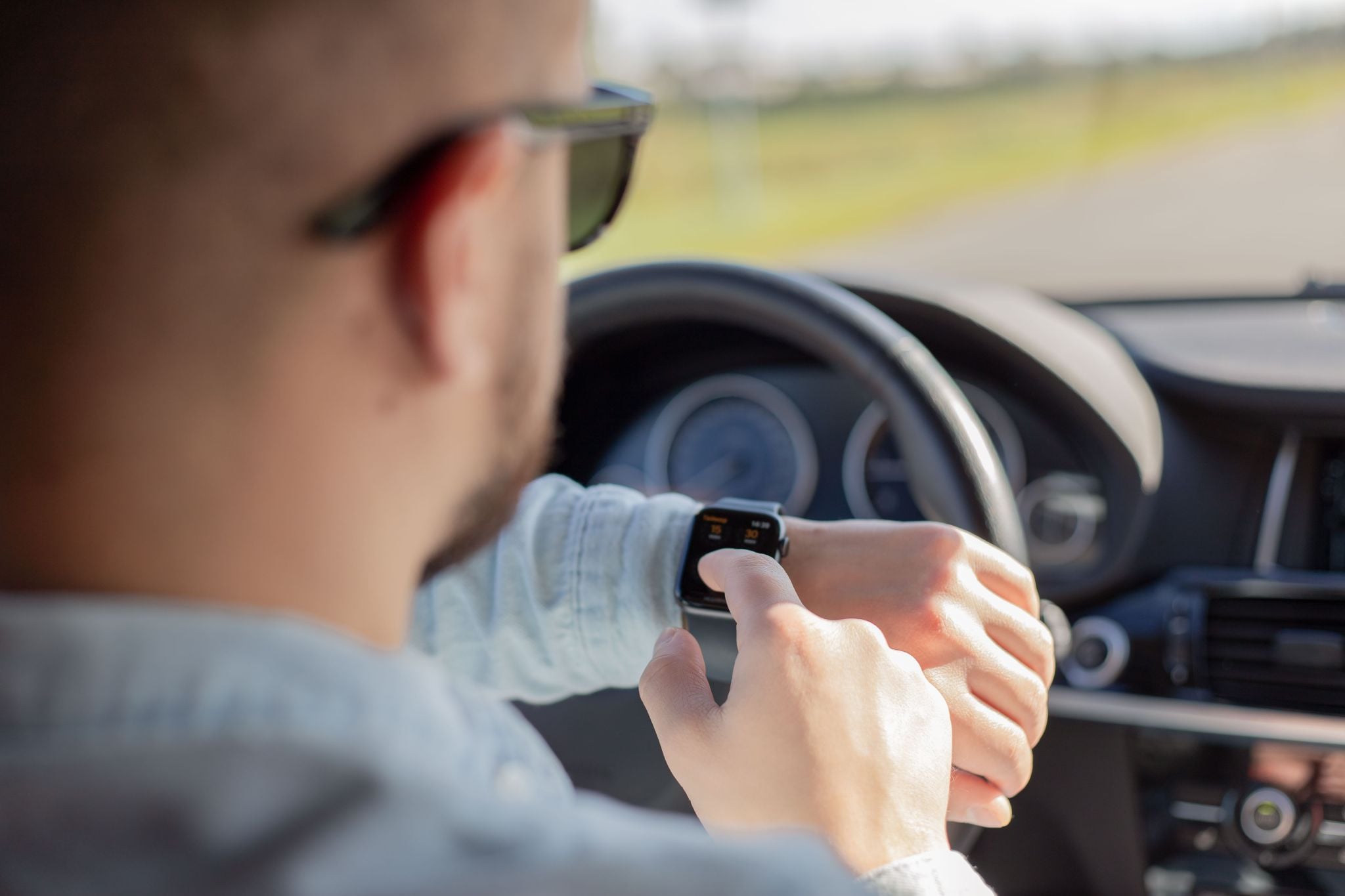
Does wearing a smartwatch while driving give you a fine? See what the legislation says
Although there is no clear mention of smart watches, the Traffic Code provides punishments for the way the driver interacts with devices
By
Julia Vargas
Published on 2026-08-13 at 03:00 PM
Published on 2026-08-13 at 03:00 PM
Be the first to comment.
Summarize with:
The popularization of smartwatches has brought practicality to everyday life, allowing you to check notifications, answer calls and read messages directly on your wrist. However, when this technology is used while driving a vehicle, a frequent question arises among drivers: can using a smartwatch behind the wheel generate a fine?
The answer to this question is not so simple and requires attention to the details of the law. The Brazilian Traffic Code (CTB) does not mention smart watches by name, but provides strict punishments for behaviors that compromise the driver’s attention or involve the handling of electronic devices.
SEE ALSO:
- Engine oil additive is a trap
- Anvisa issues warning about the use of smartwatches
- This Bugatti smartwatch has more features than your car
What does the Brazilian Traffic Code (CTB) say about the Smartwatch?
Brazilian traffic legislation was drafted before the consolidation of smartwatches and, therefore, does not have a specific article for this type of device. The closest legal reference is Article 252 of the CTB, which regulates the use of cell phones and headphones while driving. The text establishes a very serious infraction (seven points and R$ 293.47) for the driver who holds or handles the cell phone while driving the vehicle.
In the absence of a direct mention of the smart watch, the fine depends on the traffic agent’s assessment of the driver’s conduct. If the inspection catches the driver typing on the watch screen, reading texts or gesturing to answer calls in order to lose control of the vehicle, the behavior may be framed as lack of attention or improper handling of equipment.
The risk of distraction, plus the financial penalty
More than the impact on your pocket with an eventual fine, the danger of interacting with a smartwatch in traffic is the loss of focus. Looking at the wrist may seem like a harmless and quick gesture, but a deviation of attention of just two seconds at 60 km/h makes the vehicle travel more than 30 meters without the driver having full control over what happens in front of him.
In addition, unlike the cell phone, which is usually stored in a pocket or attached to the dashboard, the smartwatch is in direct contact with the skin and vibrates with each message, email or app alert. This constant tactile stimulus induces the driver to look at the arm involuntarily and repetitively. To counteract this risk, the experts’ recommendation is to activate the “Do Not Disturb” mode or silence the alerts on the watch and smartphone before starting any route.
Smartwatch vs. Smartwatch Cell phone in the holder: what is the rule?
There is an important practical and legal difference between the provisions:
- Mobile phone on the holder: It is allowed for GPS navigation, as long as the device is fixed to the dashboard or windshield and that the destination is configured before the vehicle starts moving. The driver cannot hold or touch the screen during the journey.
- Smartwatch: It has no regulation that authorizes its use for visual navigation on the wrist while driving, as the reading requires turning the arm and focusing on a reduced screen, combining visual and manual distraction.
SEE MORE ABOUT

0 Comments
Comments are the sole responsibility of their authors and do not represent the opinion of this site. Comments containing profanity or offensive language will not be published. If you identify anything that violates the terms of use, please report it.