


Does stopping the car on the side of the road to answer an emergency call give a fine?
A different portion of the lane is intended for stopping or parking vehicles only in specific cases of emergency; understand what they are
By
Julia Vargas
Published on 2026-08-07 at 02:00 PM
Published on 2026-08-07 at 02:00 PM
Be the first to comment.
Summarize with:
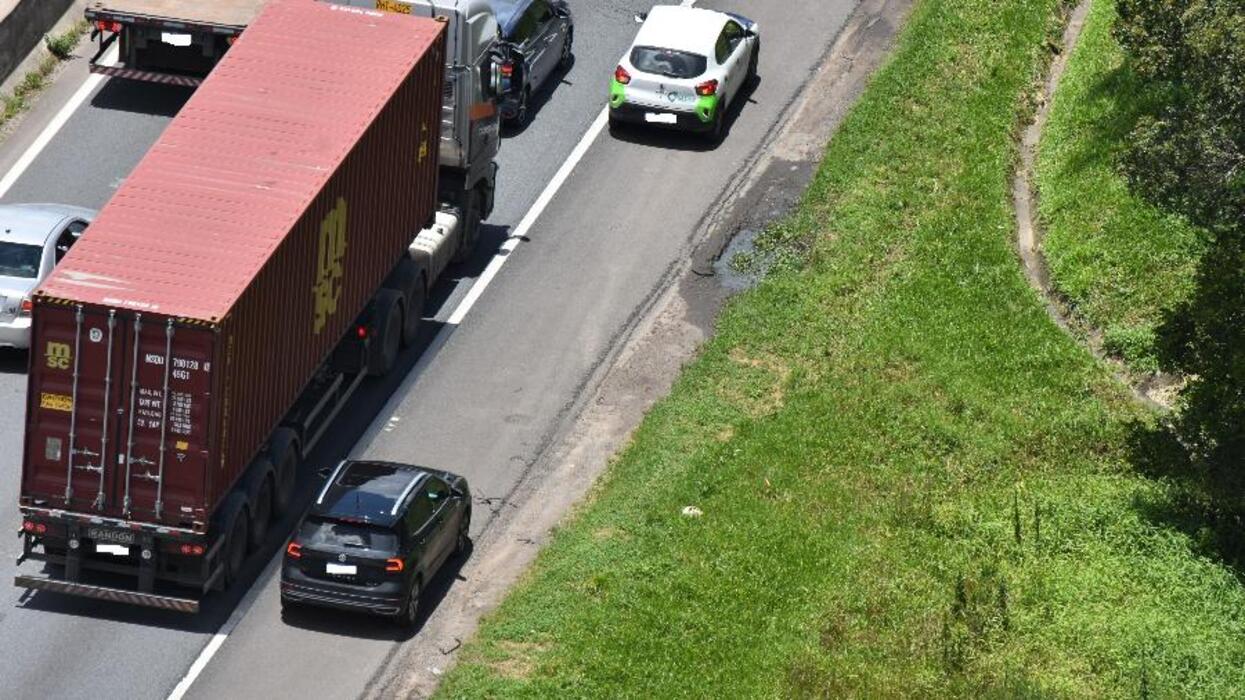
When receiving an urgent call in traffic, many people will choose to pull over the car to the side of the road to be able to answer without being fined, but end up exchanging one infraction for another. This portion of the road, which is different from the roadway, is intended for stopping or parking vehicles, but only in specific cases.
The law reserves this range exclusively for emergency situations, admitting the concept of force majeure, and fines for incorrect use can reach R$ 1,467.35. Check out the rules for driving the shoulder, how to use it correctly and what to do when you receive an emergency call.
SEE ALSO:
- Is there a time limit to stay on the side of the road? Understand!
- Shoulder: know what it is and how to use it to avoid traffic fines
- App drivers and taxi drivers can have exclusive lane and right to stop
When it is allowed to use the shoulder
The intuitive attitude of reducing speed and pulling the car over to the side lane before answering an urgent call has good intentions, as this way you avoid handling your cell phone behind the wheel, an infraction of a very serious nature provided for in the Brazilian Traffic Code (CTB). However, this same maneuver can result in an unpleasant surprise: a fine for irregular parking on the side of the road.
This is because the correct use of this part of the road is related to emergency situations or force majeure, such as health problems, traffic accidents, lack of fuel or a breakdown in the vehicle. It can also be used for entering and exiting real estate or special parking areas and for left turns.
Therefore, answering an emergency call, even if it involves serious family unforeseen events or professional emergencies, does not authorize the driver to stop on the side of the road. The legal guidance determines that the driver must proceed until he reaches a gas station, rest area, signalized retreat or other permitted and safe exit .
The situation only changes legally when the phone call communicates an immediate and unavoidable danger to life or physical integrity. Still, there is no automatic exemption or free pass. The characterization of force majeure depends on the body of evidence presented and the careful evaluation of the traffic authority or the administrative board of appeals.
How to act without exchanging one infraction for another
To navigate safely and avoid losses when receiving a call in transit, you can apply a quick decision-making test based on the rules provided for in Articles 46, 47, 181 and 225 of the Brazilian Traffic Code (CTB):
- Key question: “Does continuing to drive to the next gas station, setback, or foothold create a real, physical, immediate risk to my life or the lives of others?”
- If the answer is NO: ignore the phone or ask the passenger to answer. Keep driving and stop only in a permitted place.
- If the answer is YES: signal your intention in advance, pull over to the side of the road with caution.
| Driver’s | CTB | Allowed on the shoulder? |
|---|---|---|
| Mechanical breakdown or flat | Emergency / Force Majeure | YES |
| Sudden illness of driver/passenger | Medical | YES |
| Urgent family/work | Personal | NO |
| Consult GPS or apps | Driver | NO |
| Immediate Danger Warning | Force majeure subject to proof | CONDITIONAL |
How long can I keep the car on the side of the road?
If for some reason of force majeure you need to stop the vehicle on the side of the road, it is essential for your safety and to avoid damage that this is done correctly.
1. Shoulder is not parking
Art. 181 – Parking the vehicle:
VII – on the shoulders, except for reasons of force majeure”
- Infraction – light;
- Penalty – fine;
- Administrative measure – removal of the vehicle;
2. Driving on this part of the road will also cost you a lot
Art. 193 – To travel with the vehicle on sidewalks, sidewalks, walkways, bicycle paths, bike lanes, islands, refuges, landscaping, medians and lane dividers, shoulders, channel marks, lawns and public gardens”
- Infraction – very serious;
- Penalty – fine (three times).
3. Overtake for it? No way!
Art. 202 – Overtaking another vehicle:
I – on the shoulder”
- Infraction – very serious;
- Penalty – fine (five times).
4. Not using the shoulder to make a left turn is an infraction
Art. 204 – Failure to stop the vehicle on the right shoulder, to wait for the opportunity to cross the lane or enter on the left, where there is no appropriate place for the return operation:
- Infraction – serious;
- Penalty – fine
5. Leaving objects on the track after solving the problem
Art. 226 – Failure to remove any and all objects that have been used for temporary signaling of the road”
- Infraction – average (4 points);
- Penalty – fine (R$ 130.16).
SEE MORE ABOUT

0 Comments
Comments are the sole responsibility of their authors and do not represent the opinion of this site. Comments containing profanity or offensive language will not be published. If you identify anything that violates the terms of use, please report it.