


Carriage in the car: CTB rules, mandatory items and speed limit
Check out the CTB rules, mandatory equipment, new speed limit and safety tips to avoid fines on the road
By
Julia Vargas
Published on 2026-08-04 at 06:00 PM
Published on 2026-08-04 at 06:00 PM
Be the first to comment.
Summarize with:
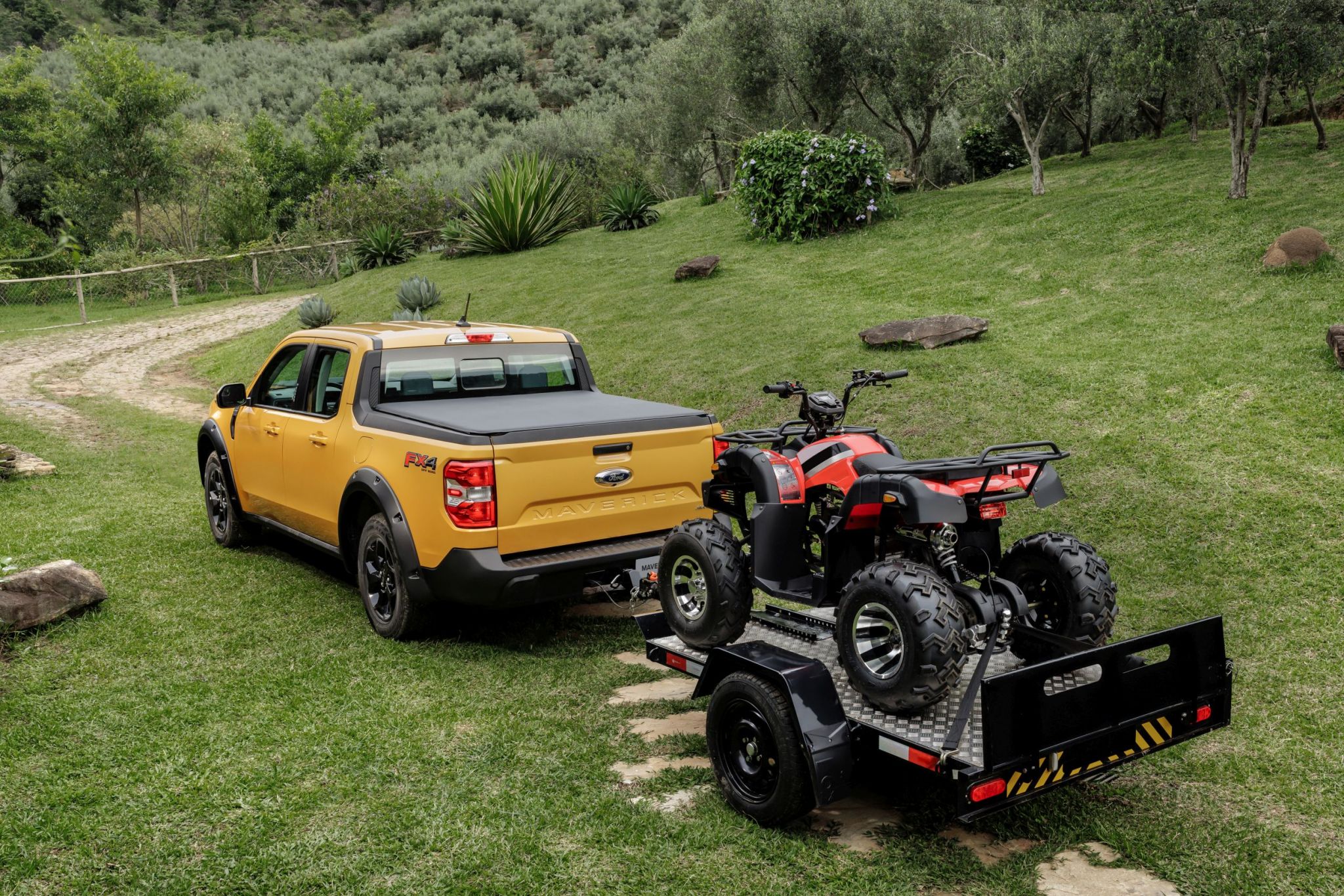
Those who need to carry a larger volume of cargo than the car can hold, both for leisure and work, can resort to trailers, popularly called trailers. Despite being quite common, the rules for its use are usually little known, which can bring a lot of headache to the driver.
This accessory works as an extension of the car, but it is still a vehicle of its own. Because of these two factors, the truck has to meet the rules of the Brazilian Traffic Code (CTB), otherwise, the driver can be fined. Therefore, in this article you can check the basics to use the trailer correctly, as well as care tips and important driving guidelines.
SEE ALSO:
- This equipment is prohibited in some cars
- Cars that cannot use a trailer: understand the reason
- Trailers and trailers: everything you need to know about
Items and basic information about the trailer
Because they are recognized as vehicles, the trailers need to meet regulations similar to those of cars, that is, they need to be registered with the local DMV, registered and have their documentation up to date. The CTB also establishes that these accessories must be equipped with several safety items in order to circulate correctly.
Failure to comply with these requirements provides for a fine in the amount of R$ 195.23, in addition to five points on the National Driver’s License (CNH). See what are the mandatory equipment:
- Rear bumper;
- Rear wheel protectors;
- Rear position lights, red;
- Parking and service brakes, with independent controls, for vehicles with a capacity of more than 750 kg and produced from 1997 onwards;
- Red brake lights;
- Rear license plate lighting;
- Rear direction indicator lamps, amber or red;
- Tires that offer minimum safety conditions;
- Bounding lamps and side lamps, when their dimensions so require.
Equipped with a trailer, your car is no longer a light vehicle and the speed limit changes!
The rule provided for by Resolution 798/202 of the National Traffic Council (Contran) places the passenger car that is pulling another vehicle in the same category of heavy vehicles. By hitching a trailer to your car, it is no longer treated as a “light vehicle” in traffic while driving with the accessory and is considered a “heavy vehicle”. In practice, the car now obeys the speed limit of trucks and buses.
Where there are no signs, Article 61 of the Brazilian Traffic Code (CTB) sets the maximum speed of 90 km/h for various types of vehicles, including cars with trailers.
Driving precautions and safety risks when using the trailer
The use of the trailer demands another behavior from the driver. It is important to be aware that the vehicle is bigger, heavier and has a “foreign body” that affects the entire dynamics of the car.
Thus, you have to be very careful, because, above a certain speed, the trailer can start to swing like a pendulum behind the car. A gust of wind, for example, can be enough to destabilize it, increasing the risk of serious accidents.
About overtaking on the roads, it is necessary to take into account that the car has become larger and heavier, which requires more time for a resumption than in a car without a trailer. Thus, on single-lane and two-way highways, only overtake in places that are really allowed and safe, with good visibility and without any vehicle in the opposite direction.
It is also necessary to pay extra attention in curves, as the trailer affects the stability of the car, which tends to “loosen” the rear more. The ideal is to drive slowly and avoid sudden movements on the steering wheel, whether in curves or also in straight sections.
SEE MORE ABOUT

0 Comments
Comments are the sole responsibility of their authors and do not represent the opinion of this site. Comments containing profanity or offensive language will not be published. If you identify anything that violates the terms of use, please report it.