


BYD appeals to the Federal Government and takes advantage of widely criticized
Gecex decision reopens debate on legal certainty, competition and industrial policy in the Brazilian automotive sector
By
Fernando Calmon
Published on 2026-06-27 at 05:00 PM
Published on 2026-06-27 at 05:00 PM
Be the first to comment.
Summarize with:
“In Brazil, even the past is uncertain.” The anthological phrase of Gustavo Loyola, former president of the Central Bank, applies to the imbroglio that BYD and the Federal Government, through Gecex (committee for import tariffs, quotas, trade defense measures and tariff exceptions), prepared amid widespread criticism and not only from Anfavea.
SEE ALSO:
- Electric car: study reveals that recharging is the main concern of Brazilians
- Chinese cars face devaluation in traditional market
- Sales of light vehicles in May continued to rise
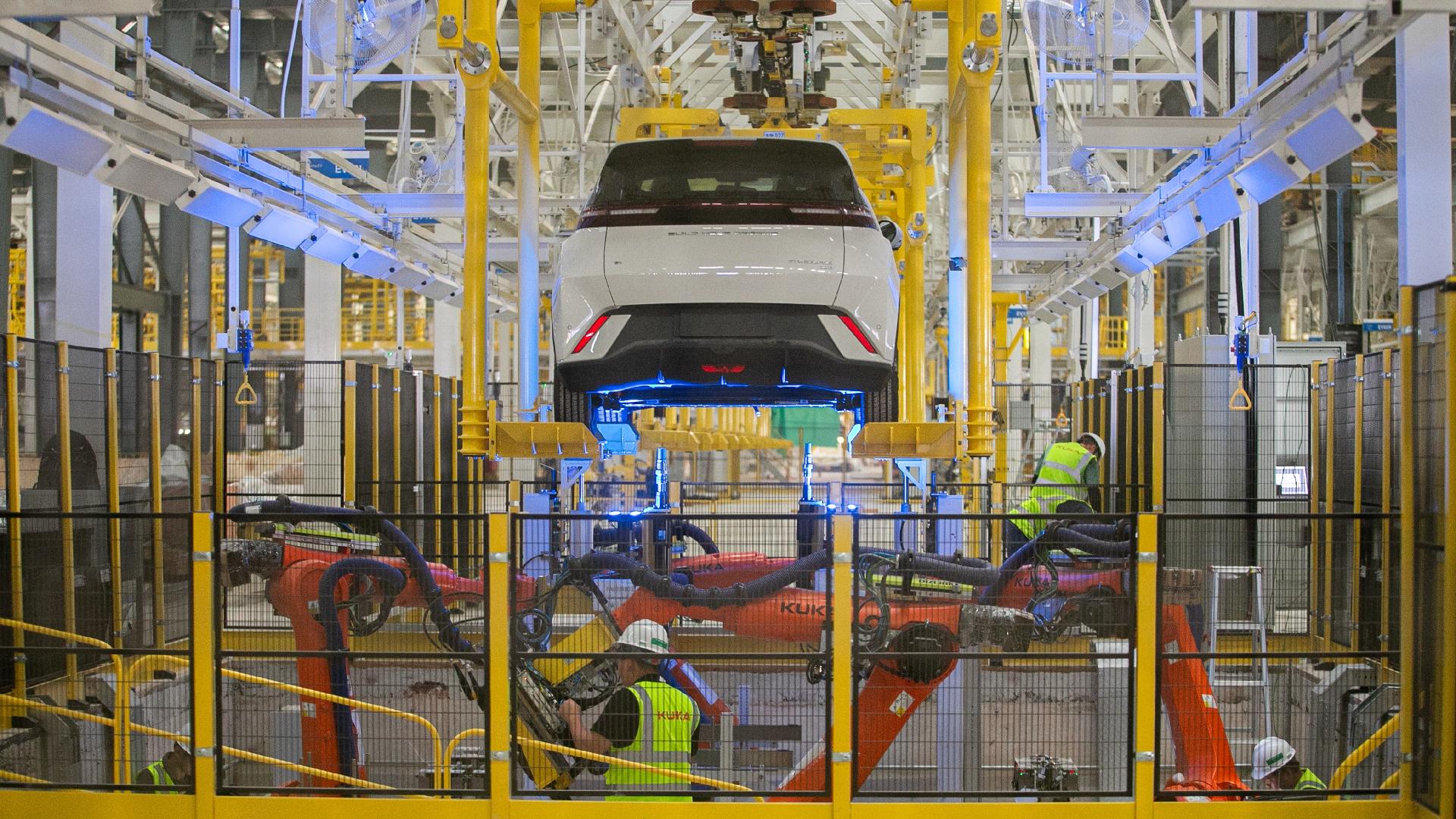
Gecex has only now decided to zero import tax on disassembled vehicles (CKD) and semi-disassembled vehicles (SKD), from July 1 to December 31 of this year, within a quota of US$ 463 million. This deliberation came from a reinterpretation, at least biased, of a previous position. As BYD had delayed works at the Camaçari (BA) plant, it called on the state government to help and mix partisan politics with economic decisions. Which is always bad.
The Federation of Industries of São Paulo (Fiesp), in one of its statements, states that “by changing the rules of the game by surprise, the Federal Government violates legal certainty, sabotages regulatory predictability and penalizes the entire Brazilian automotive chain”. Sindipeças highlighted “the evident need to level the playing field, with measures that mitigate the effects of imports of CKD or SKD vehicle kits, no longer justified by the simple reason that the industrial implementation in our country is a reason for favored treatment”.
Sérgio Nobre, from the CUT (Central Única dos Trabalhadores), said that “the measure ignores previous resolutions of the collegiate itself, which ended the quotas. By changing the rules of the game by surprise, the Federal Government violates legal certainty, sabotages regulatory predictability and penalizes the entire Brazilian automotive chain.”
Alexandre Baldy, senior vice president of BYD in Brazil, in July 2025, classified the arrival of the Chinese brand in an inelegant way. “If the dinosaurs are screaming, it is a sign that the meteor is working”, in reference to the brands represented by Anfavea for 70 years. He decided to change his discourse in the face of the critical manifestations of this association, last Monday. which include possible judicialization of the issue. Now, he says that the entity has a historical trajectory and deserves respect. It sounds like regret.
Electric vehicles will pay more taxes in China
An increase in the tax burden is planned as a measure to pay for the maintenance of streets and roads due to their much larger mass, which can reach more than two tons. With the drop in sales of cars with combustion engines, the collection on liquid fuels has also been reduced, which has always been the most important and safe source to finance the conservation of asphalt pavement.
According to the Chinese website South China Morning Post, on the 21st, this initiative is yet to be announced. However, it threatens the pace of domestic electric sales, which are already facing difficulties with the recent reduction of tax incentives, largely eliminated. Rather, they supported its rapid growth. However, in important cities such as Shanghai, the auction of license plates for cars with combustion engines remains. The value reaches the equivalent of R$ 70,000, but the plates are linked to the buyer who can use them in the future acquisition of new models.
State media and critics have drawn attention to what could happen from now on. Current tax on purchases already includes consumption patterns. Those models with a mass greater than 2,700 kg must limit the maximum energy expenditure to 19.1 kWh per 100 km (5.23 kWh/km) to enjoy a 50% reduction in the tax burden. But that hasn’t fully curbed the trend toward larger, heavier models.
The domestic electric market in China is already facing some difficulty, with some hesitation from consumers. This boosted exports and the initiative to build factories in Europe, mainly to circumvent the high import tariffs imposed on Chinese products.

SEE MORE ABOUT

0 Comments
Comments are the sole responsibility of their authors and do not represent the opinion of this site. Comments containing profanity or offensive language will not be published. If you identify anything that violates the terms of use, please report it.