


Assistive engineering and PwD car; understand how to have an adapted vehicle
Steps involve detailed medical reports, evaluation boards, DMV authorization, vehicle inspection and other procedures
By
Julia Vargas
Published on 2026-06-07 at 01:00 PM
Published on 2026-06-07 at 01:00 PM
Be the first to comment.
Summarize with:
People with disabilities (PwD) have the right guaranteed by law to drive autonomously and safely, so they need adapted vehicles. And, contrary to what many people imagine, there is no ‘standard PwD car’, as needs vary from individual to individual.
These changes to the vehicle can be simpler or more complex and that’s where engineering and assistive technology come in. This multidisciplinary field studies the development of technologies, products, and services to improve the functional capabilities of people with disabilities or reduced mobility. The objective is to provide greater independence, quality of life and social inclusion.
SEE ALSO:
- What is a car like for PwD: understand adaptations in vehicles
- CNH PwD: how to get and renew, who is entitled and how much it costs
- Are you going to buy a PCD car? See which rules should change this year and which ones are left for 2027
In this article you can check out the step-by-step guide on how to adapt your vehicle according to Brazilian legislation and how the main automotive adaptations for some types of disabilities work.
Steps for the PwD car to be adapted
According to Julyver Modesto, consultant and professor of Traffic Law, briefly, the procedure for a person with a disability to have an adapted vehicle involves:
- Evaluation by the Special Medical Board of the State Traffic Department (Detran), which will define the necessary restrictions and adaptations;
- Registration of these restrictions in the CNH;
- Request for prior authorization from the DMV to carry out the modification of the vehicle, when necessary;
- Execution of the adaptation by a specialized company;
- Carrying out a vehicle safety inspection at a Licensed Technical Institution (ITL), with the issuance of the Vehicle Safety Certificate (CSV), when required;
- Presentation of documents to the DMV (including the CSV and other required documents) to update the vehicle’s registration and issue a new CRLV-e.
Only after the documentary regularization and the registration of the adaptations will the vehicle be able to circulate regularly.
The first step to having a PwD car is the medical evaluation
According to the consultant and professor of Traffic Law, before adapting your vehicle, the person who has some type of disability must go through a special medical board that performs an individualized analysis. This step must be scheduled with the DMV and the evaluation will determine whether the individual is able to drive safely or without adaptations.
According to the traffic law expert:
There are situations in which the disability or clinical condition can make the candidate unfit to drive, especially when there is no possibility of compensation for vehicle adaptation or when the condition irreversibly compromises driving safety. In these cases, the result may be unfitness, according to the criteria of Resolution No. 927/22 of the National Traffic Council (Contran).”
When examining candidates with disabilities, the Special Medical Boards adopt the criteria established by NBR 14970 of the Brazilian Association of Technical Standards (ABNT), which provides for accessibility in motor vehicles and establishes drivability requirements.
Mara Ligia Kiefer, partner and leader of inclusion projects at Somar Diversidade and member of SAE (Society of Mobility Engineers) Women, points out that it is essential to bring a report containing the history of disability in detail to the medical board. This includes:
- the cause of the disability;
- whether it is congenital or has been acquired;
- what the sequelae are, with detailed explanations;
- what are the limited motor and/or sensory conditions;
- what are the impediments;
- the International Classification of Diseases (ICD).
According to the inclusion specialist, “the more detailed the report, the greater the chance of recognizing the limitations to also obtain the Special CNH for Persons with Disabilities, including Non-Visible Limitations”. The DMV medical board is responsible for validating all documentation presented, so it is extremely important to provide a complete report and complementary exams, if any.
These exams that support the document may include:
- MRIs, X-rays and CT scans;
- Psychiatric Diagnosis;
- Ophthalmic or auditory diagnoses;
- Functional and Occupational Examinations that show the extent of the limitation or range of motion.
With the result provided by the medical expert, even if the PwD has not been considered fit to drive, he can still acquire a vehicle, as long as he defines another individual responsible for his driving. Now, if she obtains a positive opinion of driving safely, she can move on to the next step that involves the DMV.
If the driver does not yet have the Special CNH, he must take the document to proceed with the change of his vehicle. The special medical board produces a document that, in addition to qualifying the aptitude, also defines what will be the restrictions and adaptations technically available for the type of disability specific to each PwD driver, as well as what data must be included in the Special CNH.
Detran authorization, adaptation of the vehicle based on assistive engineering and vehicle inspection
After the medical analysis, Contran Resolution No. 916/22 determines that any modification to a vehicle already registered depends on prior authorization from the executive traffic agency. In this way, the PwD driver must contact the DMV again and present the document issued in the evaluation of the medical board to obtain permission to adapt the vehicle.
With the authorization of the traffic agency, the driver can finally arrange for the adaptation of his car based on engineering and assistive technology. This area is responsible for transforming series cars and other items into customized models that provide greater ergonomics, autonomy and accessibility.
According to Julyver Modesto, these changes must be carried out by specialized companies or workshops. They must be able to perform vehicle modifications in accordance with the technical and safety requirements provided by Contran, the opinion of the medical board and the authorization issued by the DMV.
After that, it is still necessary to carry out a vehicle safety inspection at a Licensed Technical Institution (ITL), which, if necessary, will issue the Vehicle Safety Certificate (CSV). Finally, the person with disabilities must look for and present the CSV and other documents required for the vehicle registration to be updated.
Thus, a new CRLV-e will be issued that includes the adaptations made and the vehicle will be officially released to circulate on the streets.
How are the adaptations in a PwD car
The necessary adaptations vary from case to case and the legislation brings corresponding solutions for each need, with numerous possibilities. Mara Ligia Kiefer explains, for example, that there are several types of dwarfism, which affect mobility in a peculiar way.
In this way, the person who has this disability may have upper and lower limb limitations that require the installation of extenders, extenders, seat adaptations and even electronic equipment. The specialist reiterates that each case is different and highlights the importance of a well-written medical report so that the adaptations are satisfactory.
But in general, the following deficiencies require:
- Dwarfism or shortening of limbs: bringing the controls closer to the driver’s body without impairing the activation of safety systems, such as the airbag. This can include a spare seat with a raised seat and backrest, pedal extenders, extenders, among others;
- Limitations in the lower limbs: full control of the vehicle is transferred to the upper part of the passenger compartment with levers for the accelerator and brake that are positioned next to the steering wheel, among other solutions;
- Limitations in the upper limbs: driving with only one hand or alternative controls, such as a rotating pommel, steering wheel control center, among others;
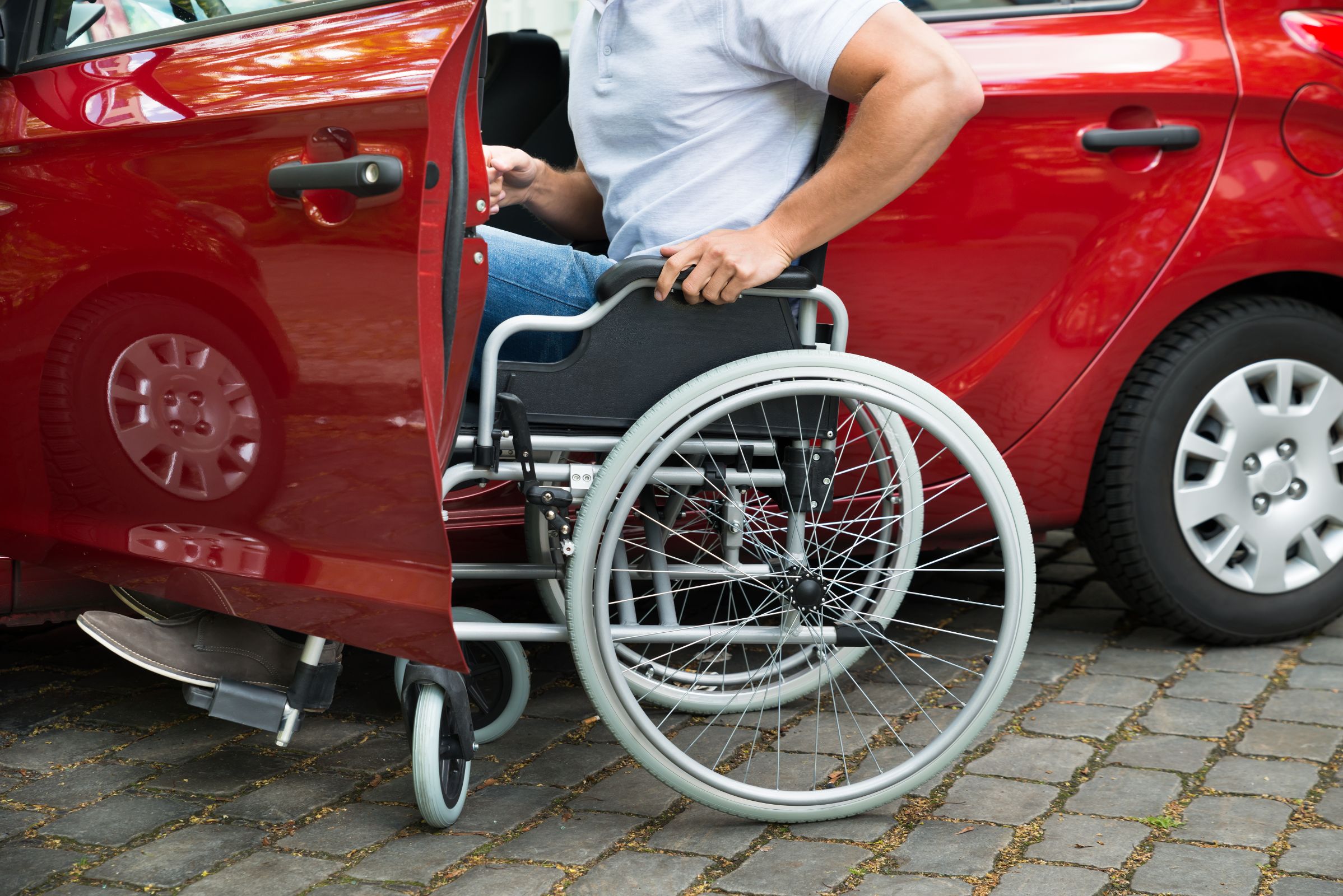
- Wheelchair users: need to enter the vehicle while remaining in the chair or assistance for the transfer that can be done with the installation of ramps and automatic lifts or swivel and advanced seats.
SEE MORE ABOUT

0 Comments
Comments are the sole responsibility of their authors and do not represent the opinion of this site. Comments containing profanity or offensive language will not be published. If you identify anything that violates the terms of use, please report it.