The Yamaha Fazer 250 became the FZ25 at the end of 2017, when it reached its 4th generation already in the 2018 year/model version, and in the process won the public’s eyes for its sharper aesthetics and onboard technology. However, the years passed and a systemic problem began to worry some would-be owners: chassis breakage rumors.
In comments on social networks, part of the motorcyclists treat the subject as an internet thing, a seasonal problem and distant from the public. The specialist in motorcycle structures Douglas Braga disagrees: for him, this is the motorcycle with the highest recurrence of problems involving the structure.
And how serious is this defect? It’s more or less like breaking the spine. You can’t walk anymore unless a very good “repair” is done.
Douglas is the owner of DG. Motocraft, a reference workshop in motorcycle structure adjustments in Duque de Caxias (RJ). In more than ten years of experience, he says, the FZ25 is the champion of chassis breakage.
The problem is real and it came exactly from the new generation, which is from 2018 and goes until now”, said the mechanic.
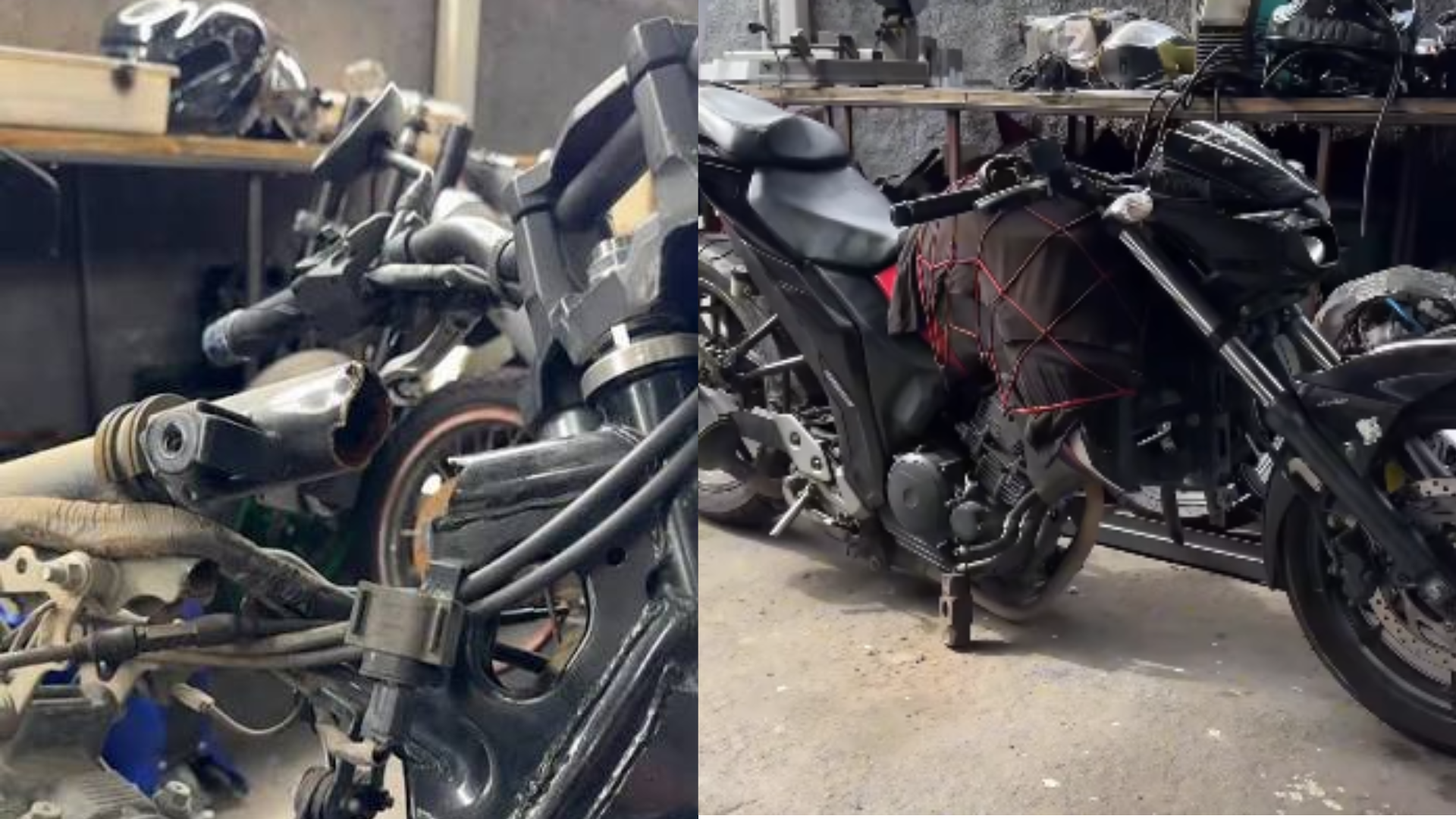
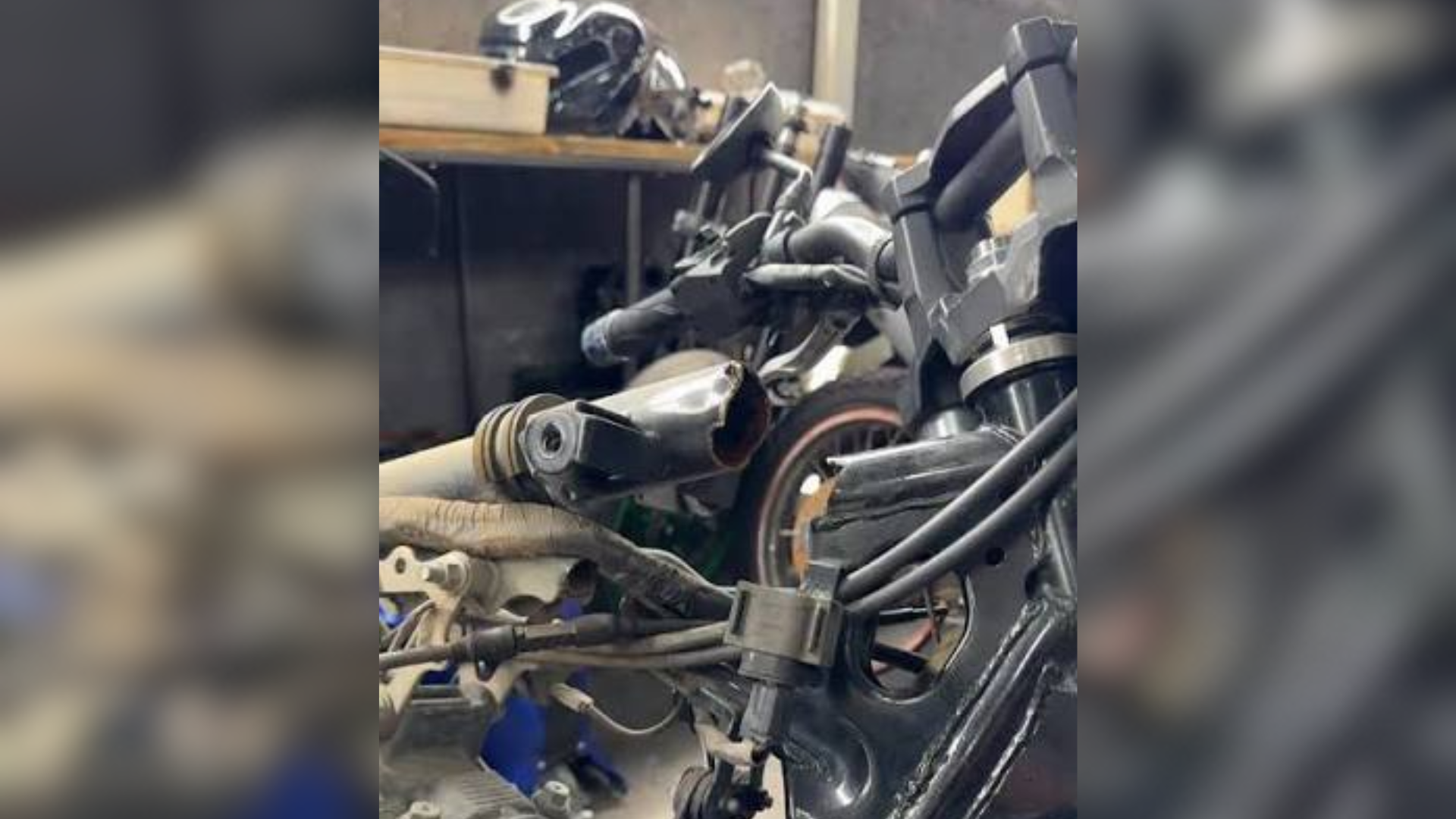
The breakage happens systemically at the top of the structure, right in the element that supports the greatest weight of the bike.
The specialist receives models with problems every week (Photo: DG. Motocraft | Disclosure)
The expert says that the problem is in fact due to the change of generation. This is because, with the new FZ25, the chassis lost important parts and did not receive adjustments where it should.
“What happens is that the formation of the chassis of this model is very fragile, because in the previous one a double cradle was used [a type of chassis in which two tubes descend from the steering column and pass under the engine]. The cradle came from the lower central part of the chassis and went to the upper part of the seatpost. The new models come with the engine complementing the structural part of the chassis”, says Douglas.
Without this structure “hugging” the engine, the new generation left the engine the function of serving as support.
The problems with this change, according to Douglas, are two: the elasticity of the engine and the fragility of the upper part of the seatpost.
The vibration caused by the movement of the internal parts moves the chassis more than it should. The upper part, where it actually breaks, suffers the crack due to the lack of reinforcement that could solve the problem.
The Honda CB 300F Twister uses a similar
chassis Douglas drew the reporter’s attention to a pertinent point: the Honda CB 300F Twister, a direct competitor of the Yamaha FZ25, has the same chassis proposal without a double cradle, but the model does not suffer from the defect.
“The Fazer uses the same chassis model as the Twister. But why don’t the Twisters break? Because they come with two reinforcement tubes on top of the chassis. The FZ25 comes with a single tube.”
What would be the solution for the Yamaha Fazer 250?
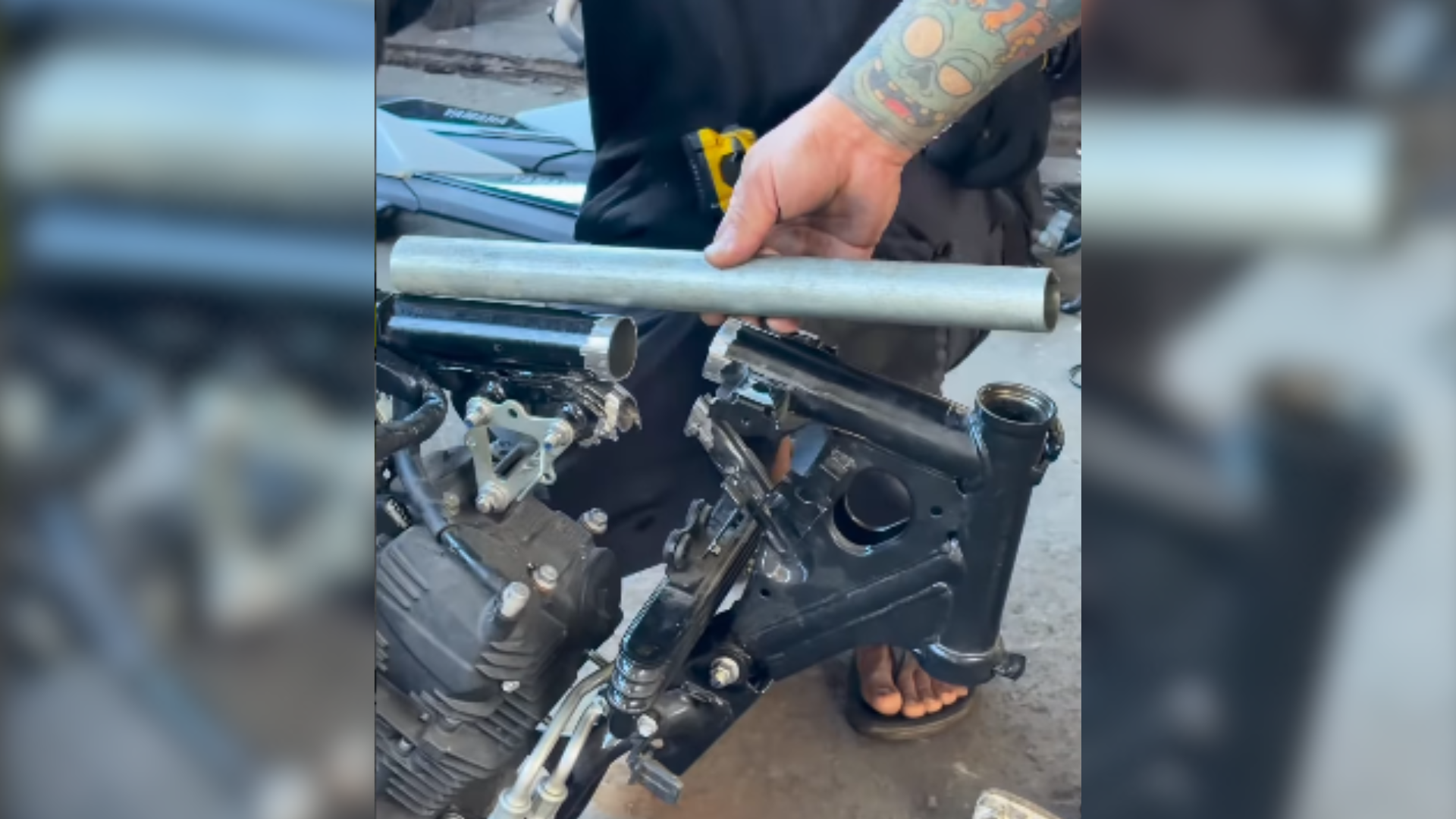
Douglas shows how he reinforces the model’s chassis (Photo: DG. Motocraft | Disclosure)
There is no official solution to this chassis breakage problem, as Yamaha does not address the issue.
The solution that the mechanic found was to reinforce the upper part of the chassis by placing an inner tube at the point where it breaks.
“I can say that I do maintenance on about six to eight bikes a month,” Douglas said of the recurrence of FZ25 with this problem.
According to the expert, there is no average mileage or defined time of use for the defect to appear.
What can postpone the Yamaha Fazer 250 problem?
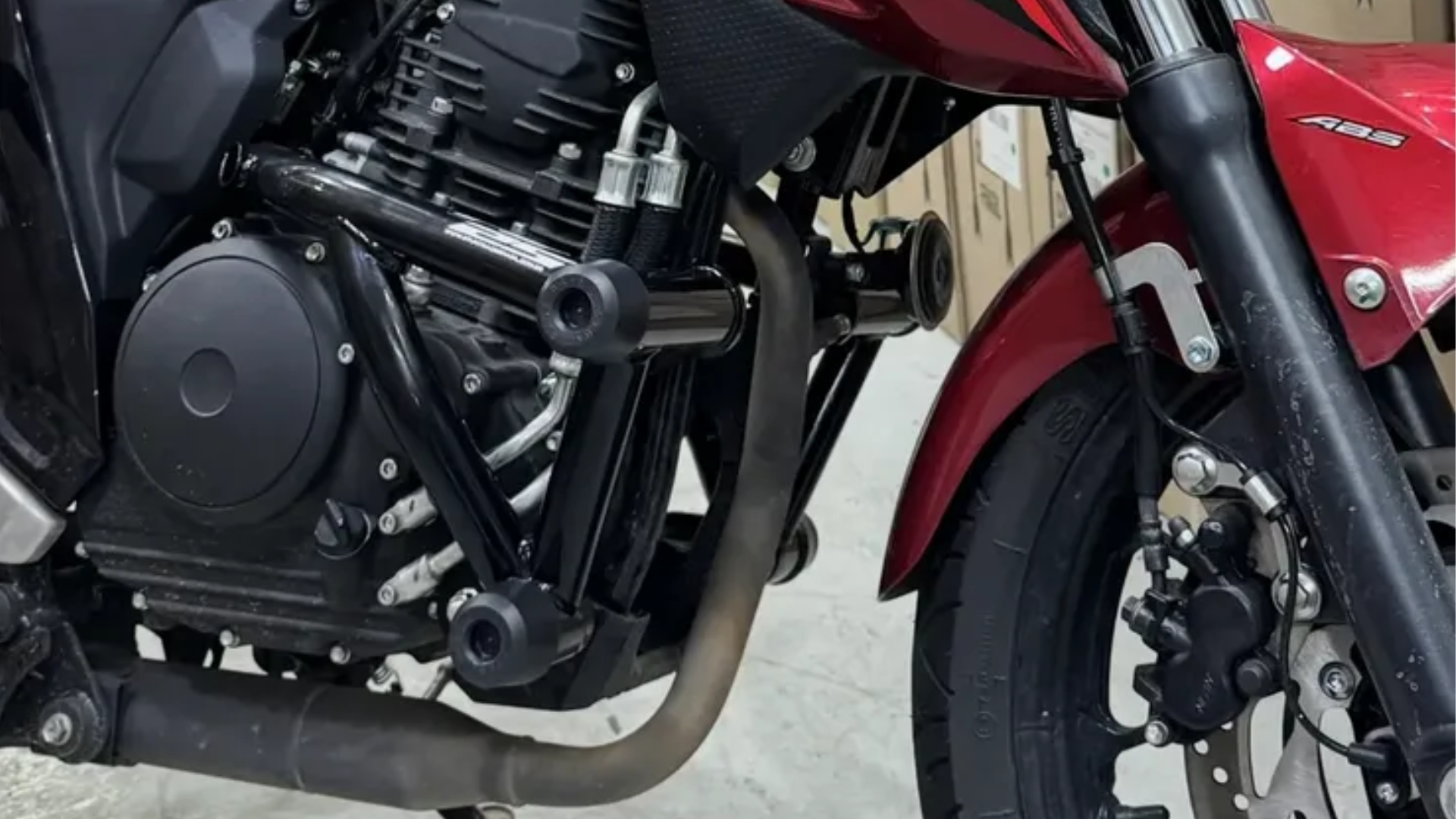
Equipment can be easily found on the internet (Photo: Internet | Reproduction)
In the same way that there is no official position on the solution, there is also no one on how everything can be avoided.
Douglas’ recommendations are twofold:
Tighten the engine studs — they are what ensure that the chassis and engine are aligned in the best way, which helps to postpone the problem.
Install engine guards — the guards that are screwed together with the engine and chassis help hold the structure. Douglas cites the Stunt Race brand as a reference in this type of product.
Reports of accidents worry the specialist
At the end of the interview, the specialist said that he has received several reports of drivers who have had an accident while riding, with the bike simply breaking.
“We are concerned about the safety of the riders. On top of the bike, anything can lead to the ground.”
Yamaha does not speak out
AutoPapo has been contacting Yamaha since the problems with the Fazer 250 have worsened in recent years. In none of our requests has the brand taken a position on the situation.
Comments are the sole responsibility of their authors and do not represent the opinion of this site. Comments containing profanity or offensive language will not be published. If you identify anything that violates the terms of use, please report it.