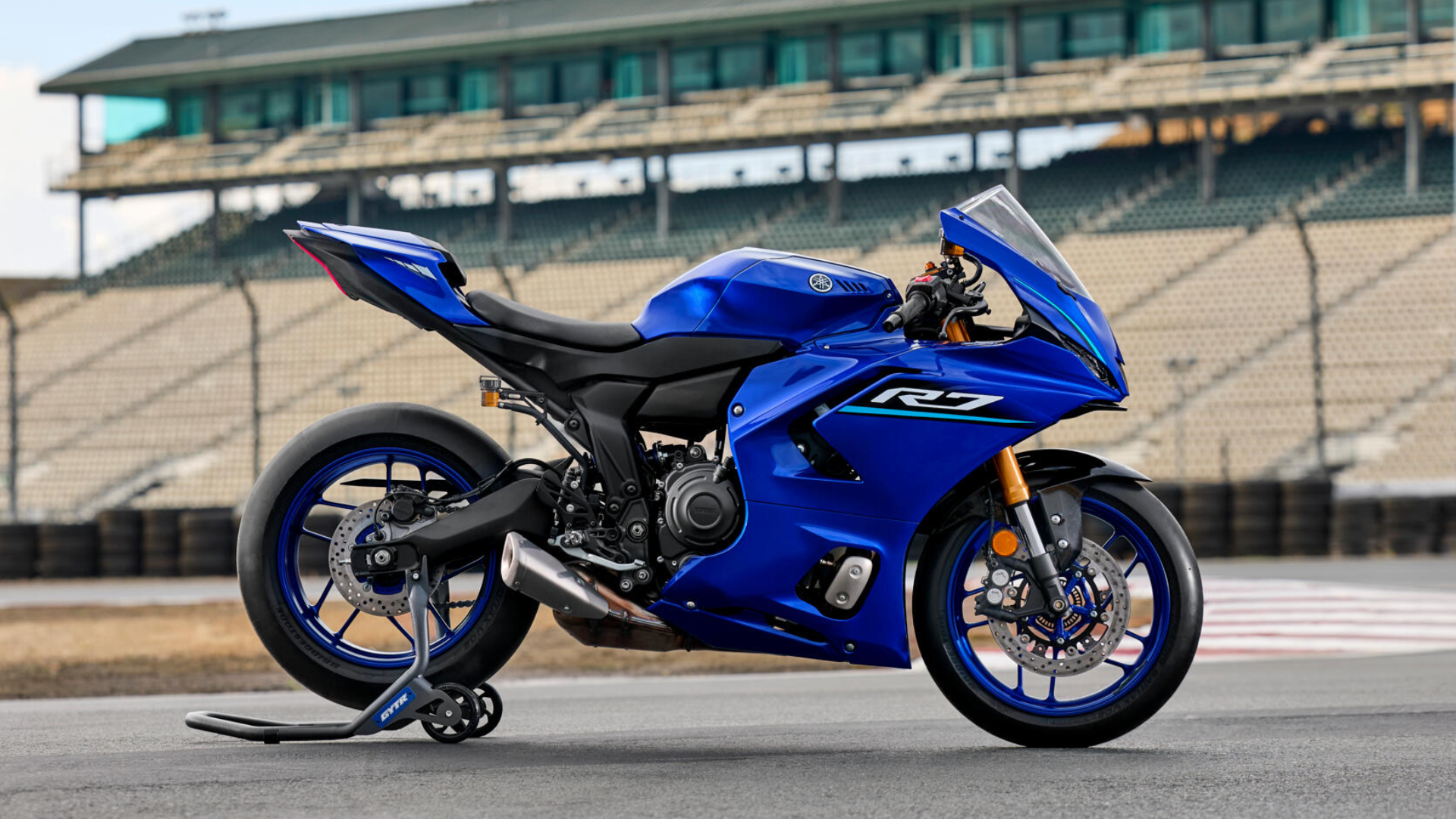
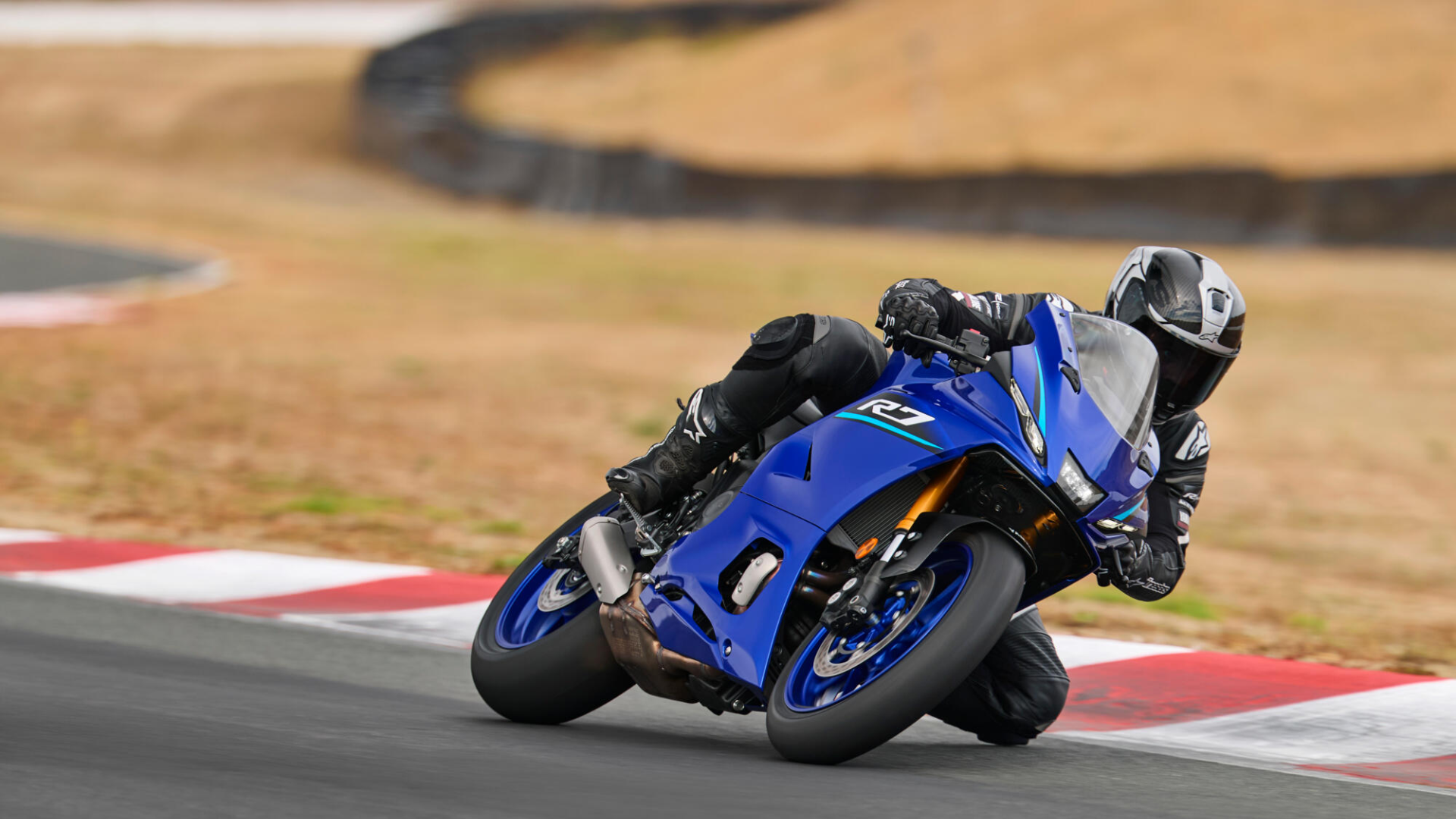
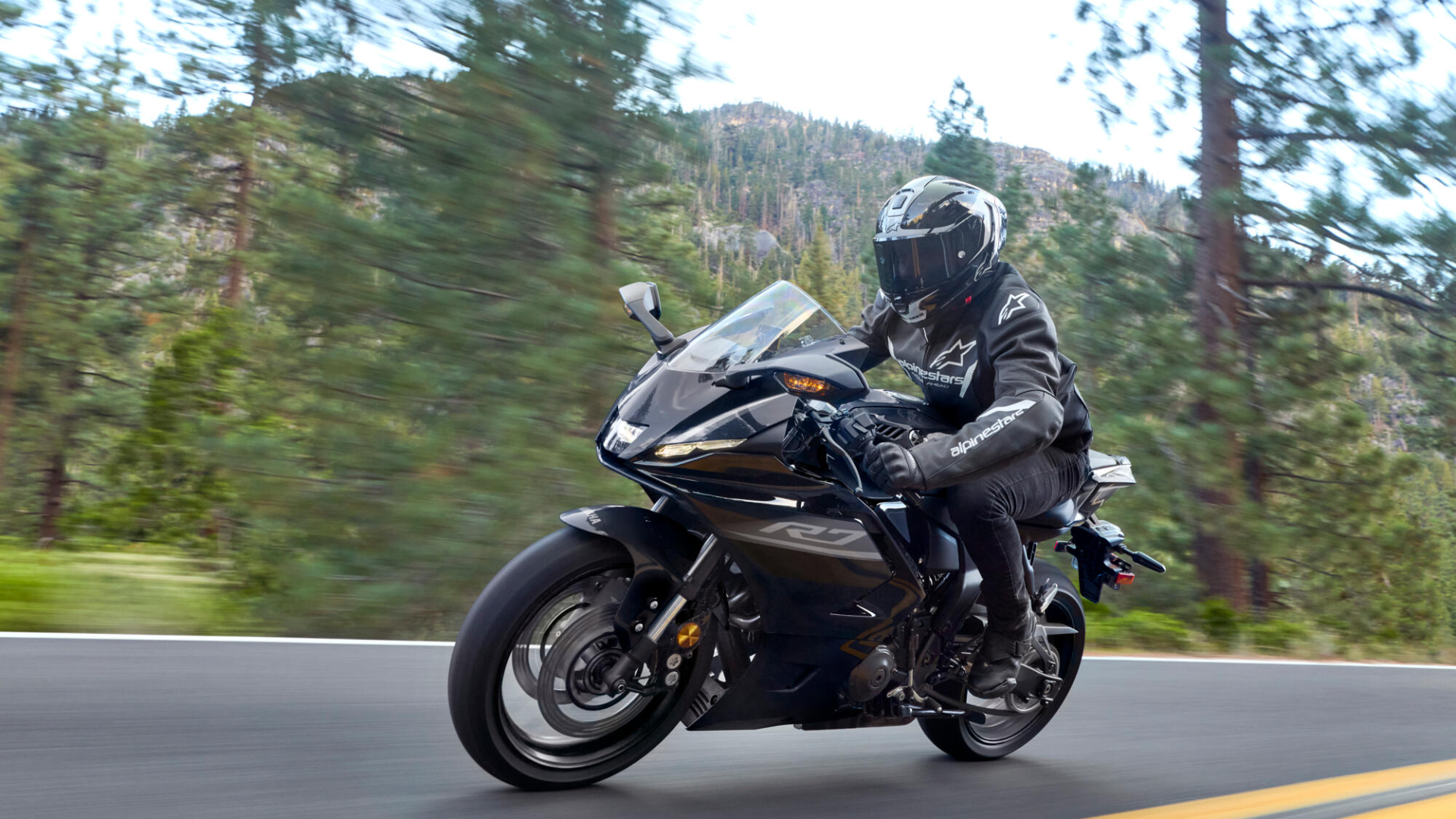
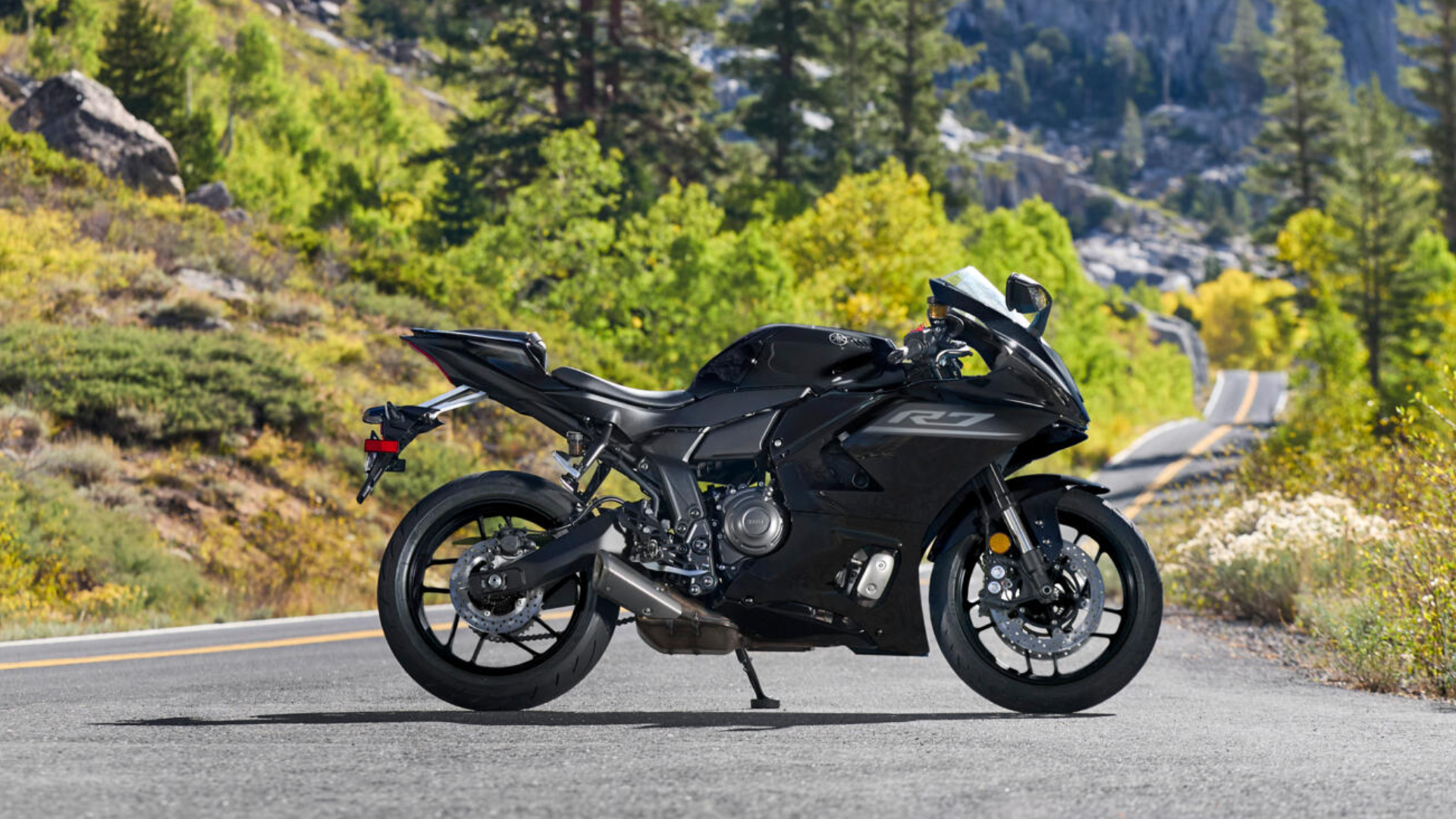
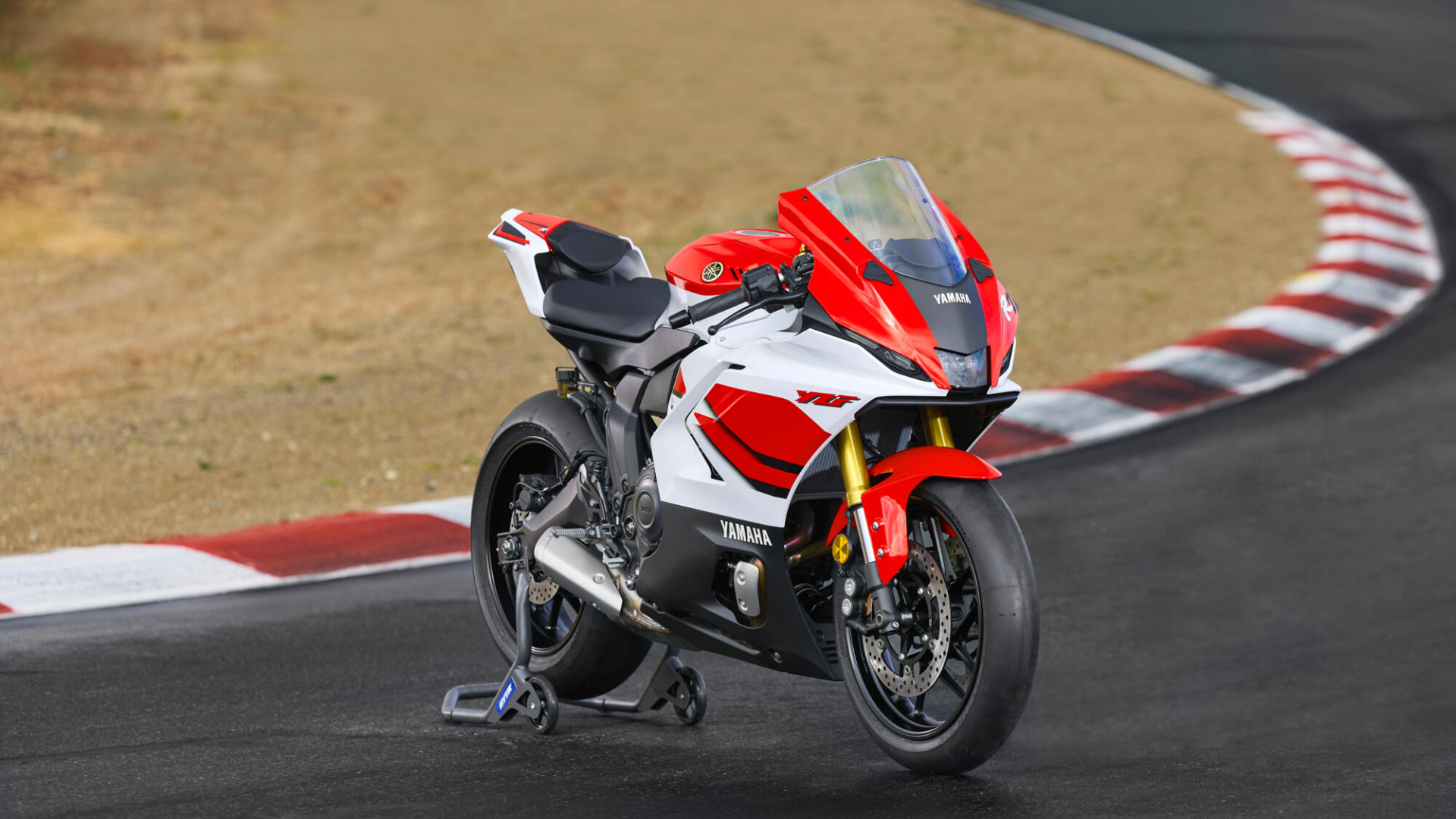
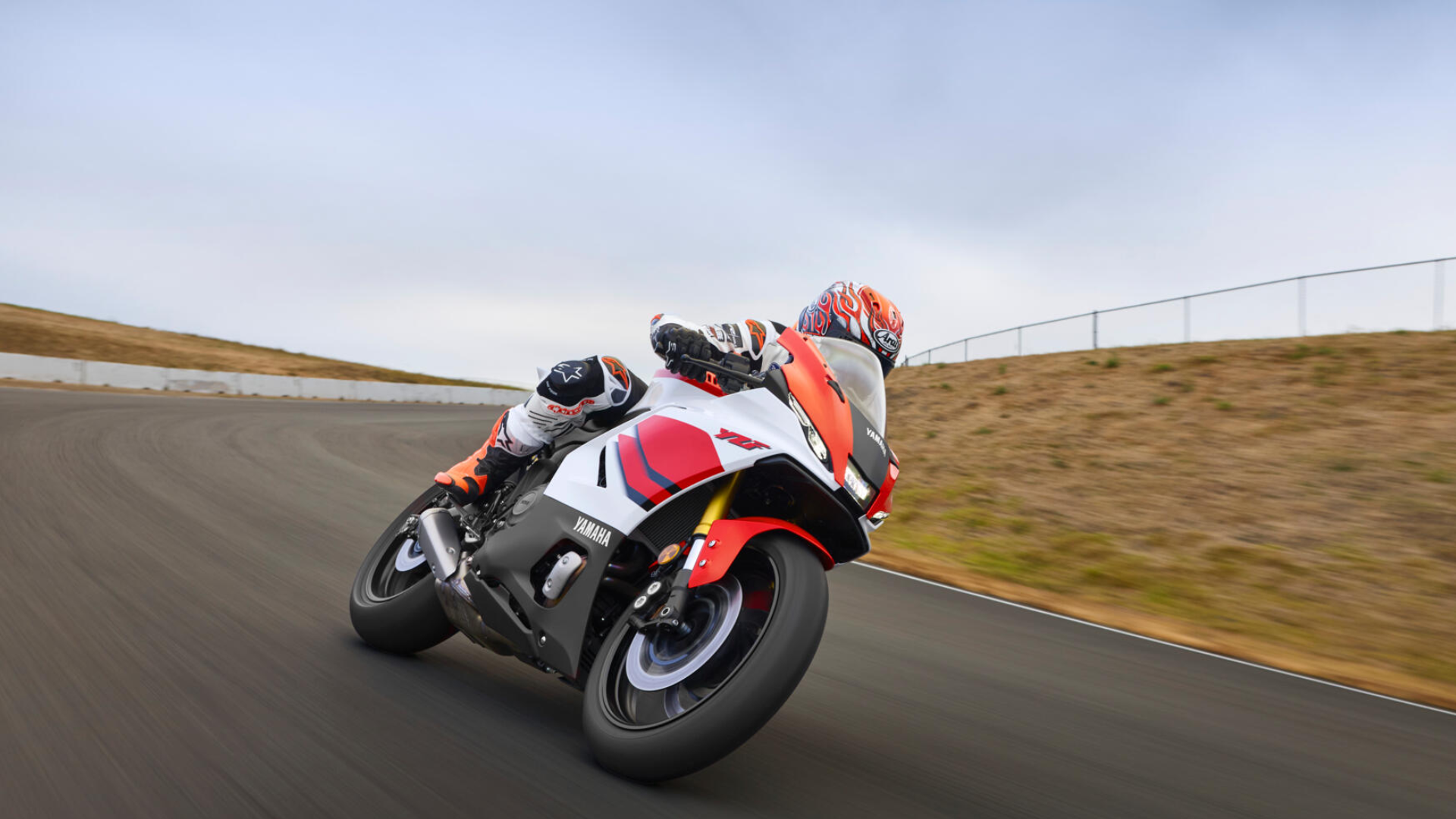
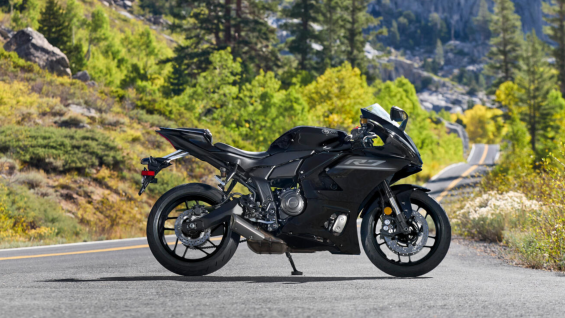
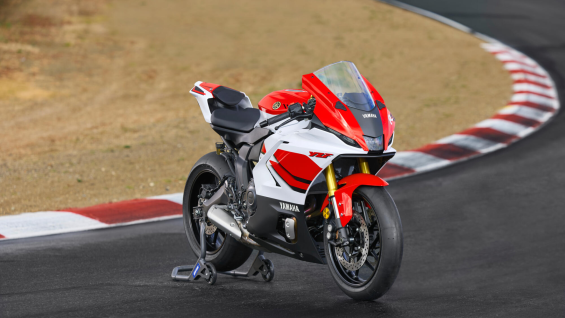
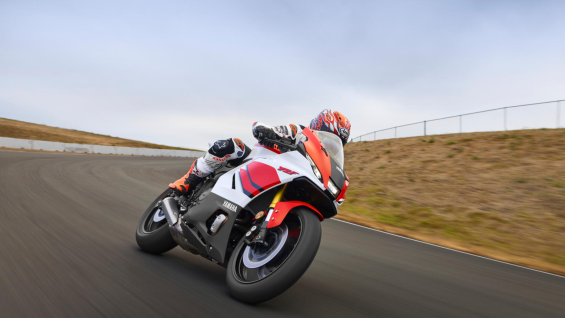
The new generation of the Yamaha R7 2026 was presented in the foreign market with a series of relevant updates, including a more sophisticated electronic package and revisions to the chassis. Still without an official forecast for Brazil, the sports bike is on the radar of enthusiasts – especially at a time when Yamaha is charged for a more complete portfolio in the country.
As we discussed a few days ago here at AutoPapo, today the Brazilian market lives with a gap in Yamaha’s larger displacement motorcycles. While neighboring countries already have newer and more powerful models, such as the R7 itself and the new generation of Yamaha MT-09, here the offer remains concentrated in smaller options. In this scenario, the Yamaha MT-07 has consolidated itself as the largest representative of the Japanese here.
It is precisely this point that strengthens the thesis that R7 could, indeed, land in the country. After all, the R7 is, in practical terms, the faired sister of the MT-07.
Yamaha R7’s mechanical basis is already known
One of the main arguments in favor of the possible arrival of the R7 in Brazil is in the mechanical set. The sports car uses the same 688 cm³ twin-cylinder engine as the MT-07, already widely approved and marketed in the country. Although it receives specific mapping and chassis adjustments to meet the sporting proposal, much of the technical basis is the same — which could simplify adaptation and certification processes.
In practice, this means that some of the regulatory work has already been carried out by Yamaha with naked. In a market impacted by environmental requirements such as Promot’s, taking advantage of an already accepted platform can be a strategic way to make new products viable.
Plans still under secrecy
Despite this, nothing is known about the possibility of the arrival of the R7, and Yamaha itself remains cautious about its plans in Brazil.
In a recent question about the possible arrival of the model, the manufacturer said that it does not share details about future launches – which was already expected.
Sad reality
The fact that neighboring markets already have R7 reinforces that the obstacle does not seem to be technical, but strategic. Given this scenario, the arrival of the sports car in Brazil does not seem to be so palpable, but it still cannot be ruled out — especially at a time when there is pent-up demand for more sophisticated models.
Yamaha R7
The Yamaha R7 2026 is equipped with a 688 cm³ twin-cylinder engine, capable of delivering about 73.4 hp at 8.750 rpm and torque of 6.9 kgf.m at 6.500 rpm, always associated with a six-speed gearbox with an assist and slipper clutch.
In the 2026 line, the model now has an electronic throttle (YCC-T) and an electronic package based on a six-axis IMU. With this, it incorporates features such as traction control, slip control, wheelie management and brake control, as well as adjustable riding modes through the Yamaha Ride Control (YRC) system.
Another highlight is the new-generation bidirectional quickshifter, which allows gear changes without the use of the clutch, including downshifts, in addition to cruise control and adjustable speed limiter.
In the chassis, the R7 received revisions to the chassis, with changes to the frame and swingarm to improve structural rigidity. The spinforged wheels help reduce unsprung mass, while the front suspension has been relieved by about 350 grams.
The model also features a 5-inch color TFT panel with smartphone connectivity, as well as integration with navigation and performance monitoring applications. With a weight of 189 kg and a seat height of 830 mm, the fairing maintains a balanced proposal between urban use and sporty riding.
Comments are the sole responsibility of their authors and do not represent the opinion of this site. Comments containing profanity or offensive language will not be published. If you identify anything that violates the terms of use, please report it.