


Why do ‘broken’ speed limit signs make perfect sense?
Strategy uses decimal numbers to break the habit of drivers who ignore conventional signs in risk areas
By
Júlia Haddad
Published on 2026-04-30 at 09:00 PM
Updated on 2026-04-30 at 09:15 PM
Published on 2026-04-30 at 09:00 PM
Updated on 2026-04-30 at 09:15 PM
Be the first to comment.
Summarize with:
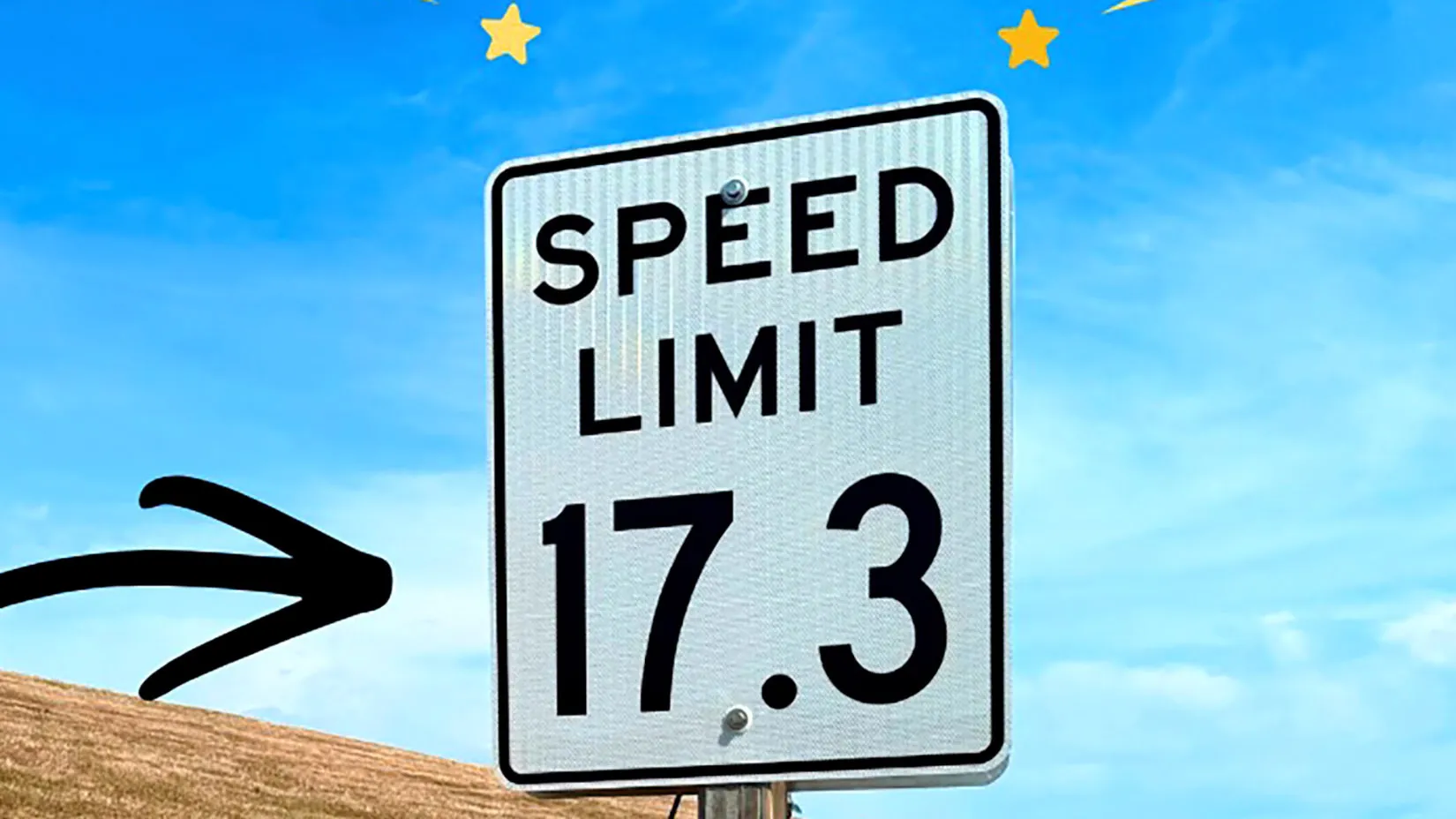
A county in the state of Wisconsin (USA) resorted to an unusual strategy to deal with the lack of attention of drivers. Instead of the signs with the traditional limits of 15 or 20 miles per hour, local authorities installed signs with the limit of 17.3 mph (about 27.8 km/h). The measure, adopted in the vicinity of a public recycling center, aims to combat speeding and chronic inattention in areas of high circulation.
While the exact amount may seem like a misprint or a joke, the choice is strictly deliberate. According to traffic authorities, most drivers are so used to conventional signals that the signs end up becoming “visual noise”, being processed by the brain automatically and often ignored as mere suggestions.
SEE ALSO:
- Difficulty climbing hills in the morning: know what to do
- Harley-Davidson and Jeep announce partnership in Europe for 2026
- Toyota’s office chair costs R$ 17 thousand and uses a luxurious sedan seat
The psychological factor of signaling
The logic behind “broken” numbers is based on behavioral psychology. When confronted with an unexpected piece of data, such as 17.3 mph, the brain is forced to abandon automatic mode and perform active cognitive processing. This brief moment of strangeness is enough for the driver to take his foot off the accelerator and focus on the signs and the surroundings, increasing safety for pedestrians and workers.
Wisconsin is not alone in this initiative. In the state of Colorado, near a shopping center in Colorado Springs, signs indicating 8.2 mph (13.2 km/h) were also installed for the same purpose. Experts point out that while infrastructure interventions — such as speed bumps, roundabouts, and lane narrowings — are more effective at reducing physical speed, decimal plates offer a low-cost alternative to mitigate distraction behind the wheel.
Although the debate about long-term effectiveness continues, since the novelty factor can wear out over time, the use of decimals reflects the effort of American municipalities to find creative solutions to reduce run-over rates without the immediate need for complex road works.
SEE MORE ABOUT

0 Comments
Comments are the sole responsibility of their authors and do not represent the opinion of this site. Comments containing profanity or offensive language will not be published. If you identify anything that violates the terms of use, please report it.