White House repeats VW’s historic mistake in celebrating engine plant in the US
The U.S. government highlighted billionaire industrial investments, but mistakenly associated a generator and naval systems company in the automotive sector
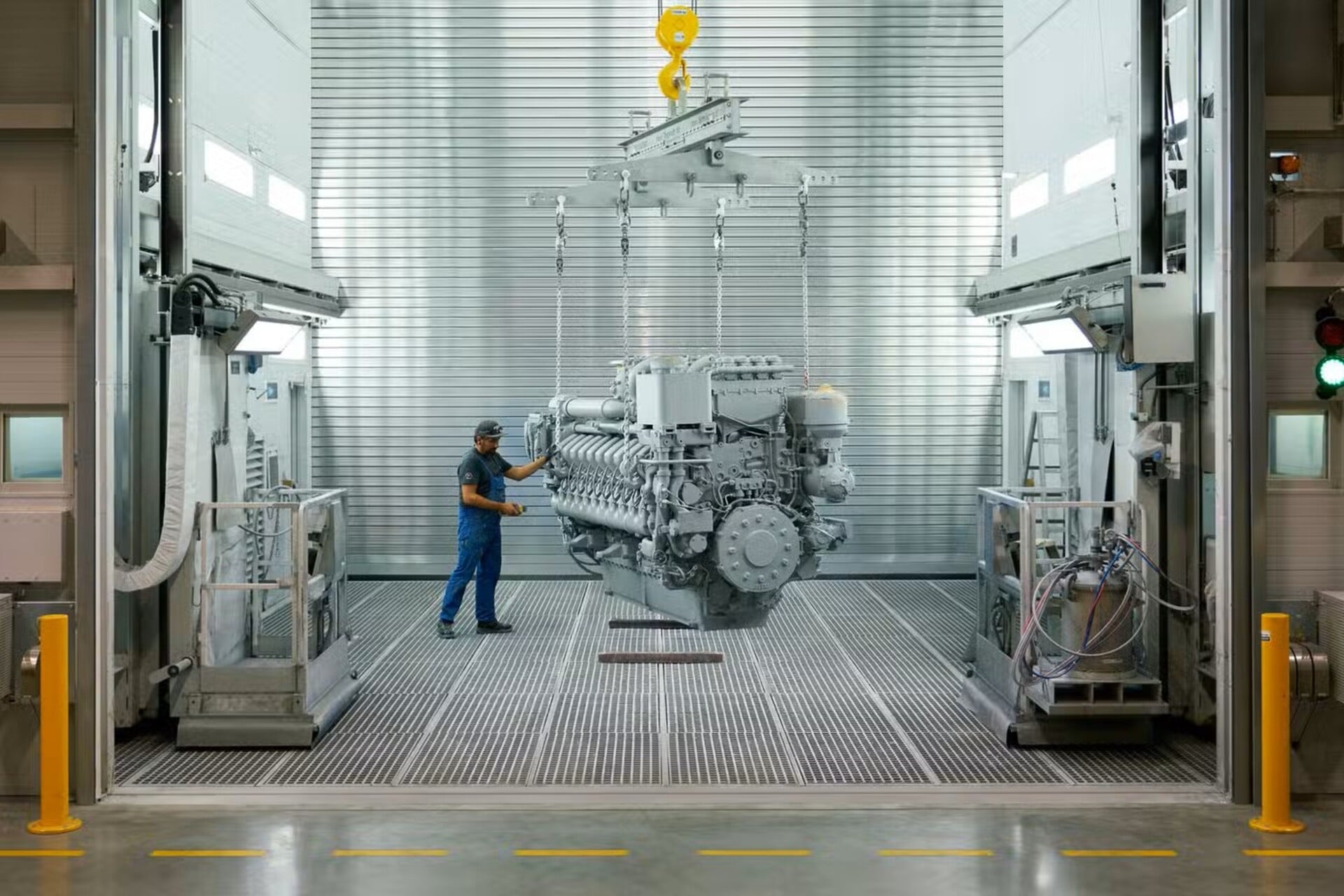
Confused by the White House with the passenger car manufacturer, Rolls-Royce Holdings operates focused on power systems and industrial engines (Photo: Rolls-Royce Holdings | Disclosure)
In an official statement recently released to celebrate measures to strengthen the national automotive industry, the United States government ended up making a curious mistake by mixing totally different business branches. The White House highlighted an investment package of approximately US$100 million attributed to Rolls-Royce, citing financial injections in factories located in South Carolina and Minnesota for the alleged manufacture of vehicle engines in the country.
However, the mistake lies in the fact that the aforementioned division has no connection with the construction of luxury cars or with the V12 engines used in models such as the Phantom or the Ghost — whose assembly responsibility belongs to BMW in the United Kingdom.
The financial contributions actually refer to Rolls-Royce Holdings plc and its power systems subsidiary MTU, whose production lines are dedicated to the development of large diesel engines for ship applications, railway locomotives and high-capacity stationary generators, ideal for powering large data centers and critical facilities.
VW bought it, but didn’t take it… It was BMW
This institutional confusion recalls a landmark historical precedent that occurred in 1998, when Volkswagen shelled out nearly $1 billion believing it was acquiring the entirety of the classic British vehicle brand, only to discover that the rights to the trade name belonged independently to the aerospace and defense arm.
By competing for the acquisition of Vickers PLC, then responsible for the production of Rolls-Royce and Bentley, Volkswagen raised the offer to about US$ 780 million and beat BMW. The problem is that Vickers owned only Bentley and the Crewe plant: the rights to the Rolls-Royce brand belonged to Rolls-Royce Group PLC, a company linked to the production of aeronautical and marine turbines.
Symbol on older models
Volkswagen discovered the trap after completing the purchase, while BMW had already acquired the rights to use the Rolls-Royce name in automobiles for $70 million. After a dispute, the two manufacturers reached an agreement: Volkswagen got Bentley and the Crewe plant, while BMW received the right to produce Rolls-Royce from 2003, in addition to the iconic Spirit of Ecstasy statuette. To do so, it built a new factory in Goodwood and even closed a deal to receive Volkswagen engines for five years.
Despite the huge financial loss, Volkswagen modernized the Crewe plant and invested in the development of Bentley, which remained under its control and consolidated itself as one of the world’s leading luxury brands. Rolls-Royce, on the other hand, followed with BMW, in a turnaround that transformed one of the biggest disputes in the automotive industry into an episode marked by an unexpected — and very expensive — negotiation failure.
Boris Feldman recalls this story. Watch the video:
Comments are the sole responsibility of their authors and do not represent the opinion of this site. Comments containing profanity or offensive language will not be published. If you identify anything that violates the terms of use, please report it.