

VW’s electric buses for BRT and charter arrive with 250 km of autonomy
Batteries under the floor and two CCS2 plugs at the same time cut full recharging to an hour and a half in the new e-Volksbus:
By
Júlia Haddad
Published on 2026-08-14 at 10:00 AM
Published on 2026-08-14 at 10:00 AM
Be the first to comment.
Summarize with:
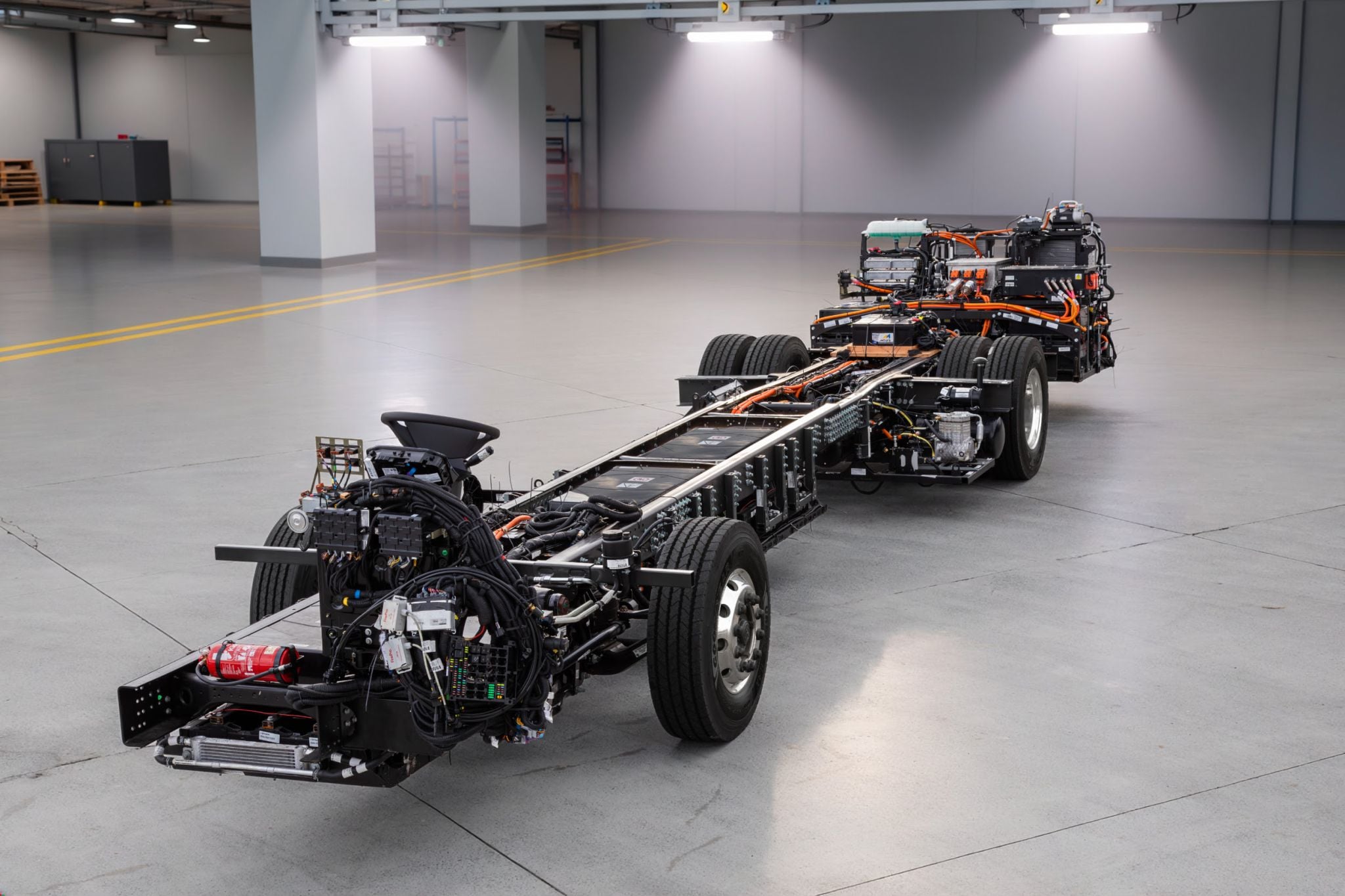
Volkswagen Caminhões e Ônibus has opened sales of two new electric bus chassis, the e-Volksbus 22H and the 18H, the brand’s first with a high floor. The 22H was developed for BRT corridors and cities with elevated boarding platforms, and the 18H, for chartering, a niche currently served by diesel chassis with front or rear engine. The announcement follows the milestone of 300 electric chassis sold by the manufacturer.
In the Padron category, the 22H accommodates up to 82 passengers, between seated and standing, and also serves the basic category. The two models leave the factory with 12 battery packs and a range of 250 km, with the option of configuring eight packs and up to 200 km.
There is a relevant difference from the e-Volksbus 22L, which opened the brand’s electric line: in the 22H, the batteries are below the floor, which reduces the center of gravity. On the 22L, they are on the roof and at the rear. The new model also accepts two simultaneous CCS2 plugs, which drops the full recharge time to an hour and a half.
The technical sheet that the brand did not open
VWCO did not report power, torque or battery capacity for the two launches. The available reference is the 22L, which shares the electrification architecture: its engine delivers 380 hp and 234,5 kgfm, with a gearbox capable of raising the output torque to 413 kgfm on urban slopes.
In this model, the 12 packs of lithium-iron-phosphate cells add up to 385 kWh and recharging takes up to three hours on a 160 kW charger. The chassis has a total gross weight of 22 tons and receives urban bodies of up to 13.2 m. Prices for the new models have not been disclosed.
Components in common with e-Delivery
The project is based on the communization of parts. The base of the chassis is similar to that of the diesel version, while the electric part maintains the concept of the 22L and the modular platform of the e-Delivery truck, which, according to the automaker, has been validated in the last five years in Brazil and Latin America. The production is in Resende, Rio de Janeiro, the same plant as the electric truck.
Also according to the manufacturer, each launch goes through 300 prototype validation stages and more than 50 specific tests for electric vehicles. In parallel, the buses circulate in five cities on a demonstration route, running on real urban stretches to gauge the behavior of the local topography and the routine of passengers.
The company also states that the dealership network and the parts center are already trained to service the new chassis, as they share components with the previous electrical portfolio. The two models debuted publicly at Lat.Bus 2026, at São Paulo Expo.
SEE MORE ABOUT

0 Comments
Comments are the sole responsibility of their authors and do not represent the opinion of this site. Comments containing profanity or offensive language will not be published. If you identify anything that violates the terms of use, please report it.