

Ford raises engine durability target to 15 years and 362,000 km
Ford disassembles engines every day and uses AI to find wear and tear that the human eye doesn't see before the car leaves the factory
By
João Paulo Profeta
Published on 2026-08-14 at 11:00 AM
Published on 2026-08-14 at 11:00 AM
Be the first to comment.
Summarize with:
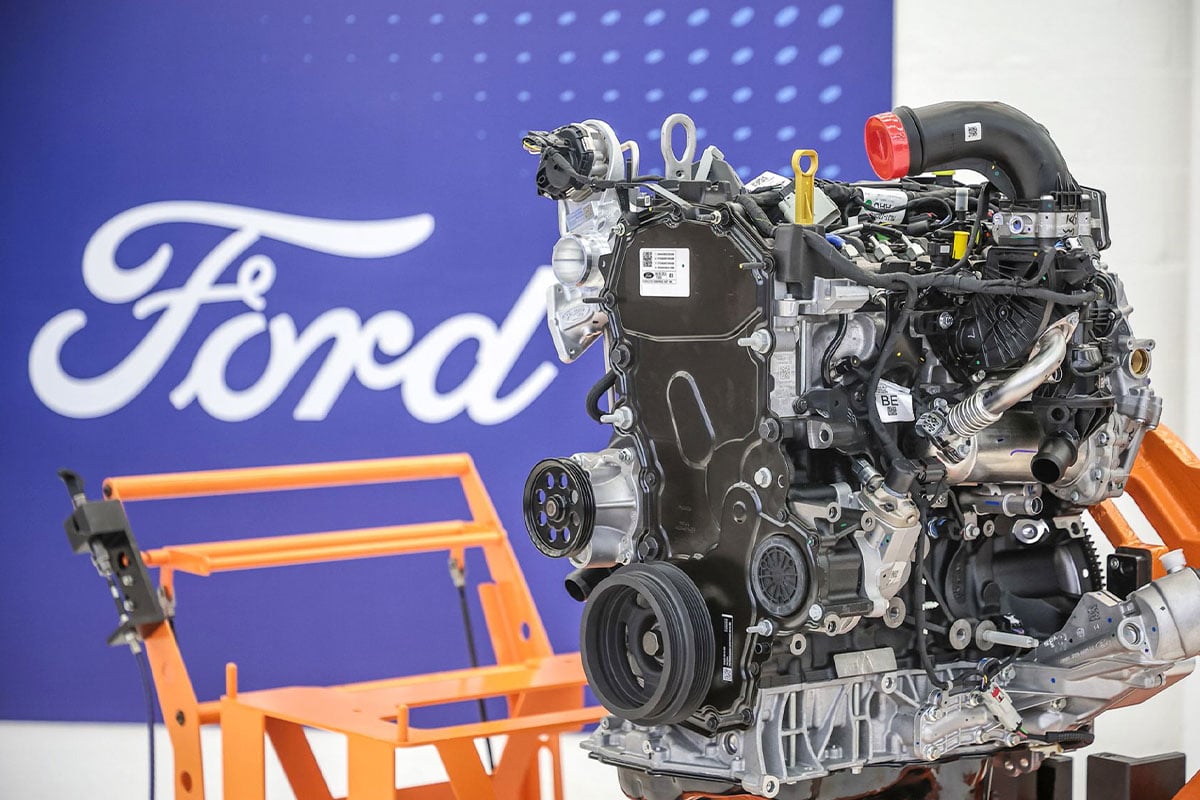
Ford raised the durability goal of its engines and gearboxes and started using artificial intelligence within the factory to try to meet it. The target went from 10 years and 241 thousand km to 15 years and 362 thousand km of flawless operation, in a change that the automaker attributes to the crossing between customer complaints and results of its own internal tests.
Who established the number is Charles Poon, vice president of Vehicle Hardware Engineering at Ford. For him, it is the mechanical assembly that defines the perception of quality, because it is the item responsible for the primary function of the car. “Quality is not marketing or a passing fad. Quality is doing the right thing even when no one is looking,” he said.
To get there, the brand’s engineering mistreats the engines themselves. The units are taken directly from the assembly line and subjected to uninterrupted start and stop cycles and starts with the throttle at full throttle.
The fingerprint test
The basis of the process is daily engine dismantling at the Essex plant and a procedure Ford calls fingerprint testing. Engineers don’t just inspect the part: they analyze the oil for microscopic traces of material. Even if the engine runs perfectly on the dyno, chemical markers reveal if a specific valve or gear is wearing out faster than anticipated.
That’s where artificial intelligence comes in. Physical tests generate hundreds of result curves per day, with hundreds of thousands of data points, a volume at which a microscopic deviation easily passes through the human eye. The software defines what is normal and points out the slightest anomaly.
Frequency matters as much as accuracy, according to Poon: those who test an engine every three months miss many units, while closer sampling stabilizes the quality of what comes off the line. When something is detected, the batch is retained and the component is redesigned before it reaches the market. The bill that Ford wants to avoid is that of activating the warranty three or ten years later.
The lesson that came before
The bet comes after a stumble. In June, commenting on the brand’s declining quality in the U.S. market, Poon told the U.S. press that Ford was wrong to assume that it was enough to introduce artificial intelligence and adjust design requirements to get a better product. The company has rehired veteran engineers, who now guide younger people in reading the data, and maintains more than 100,000 AI-automated tests.
The path chosen also differs from that of other automakers. Nissan has used algorithms to shorten the development time of new models, such as the Skyline sedan, while Ford has directed the technology to the useful life of the mechanical assembly.
SEE MORE ABOUT

0 Comments
Comments are the sole responsibility of their authors and do not represent the opinion of this site. Comments containing profanity or offensive language will not be published. If you identify anything that violates the terms of use, please report it.