

Traffic light developed at USP reduces pedestrian waiting time by 71% and also speeds up cars
Method created at Poli reduced pedestrian travel time by 71.42% in simulations and also reduced the wait for cars
By
Eduardo Passos
Published on 2026-07-27 at 06:00 PM
Published on 2026-07-27 at 06:00 PM
Be the first to comment.
Summarize with:
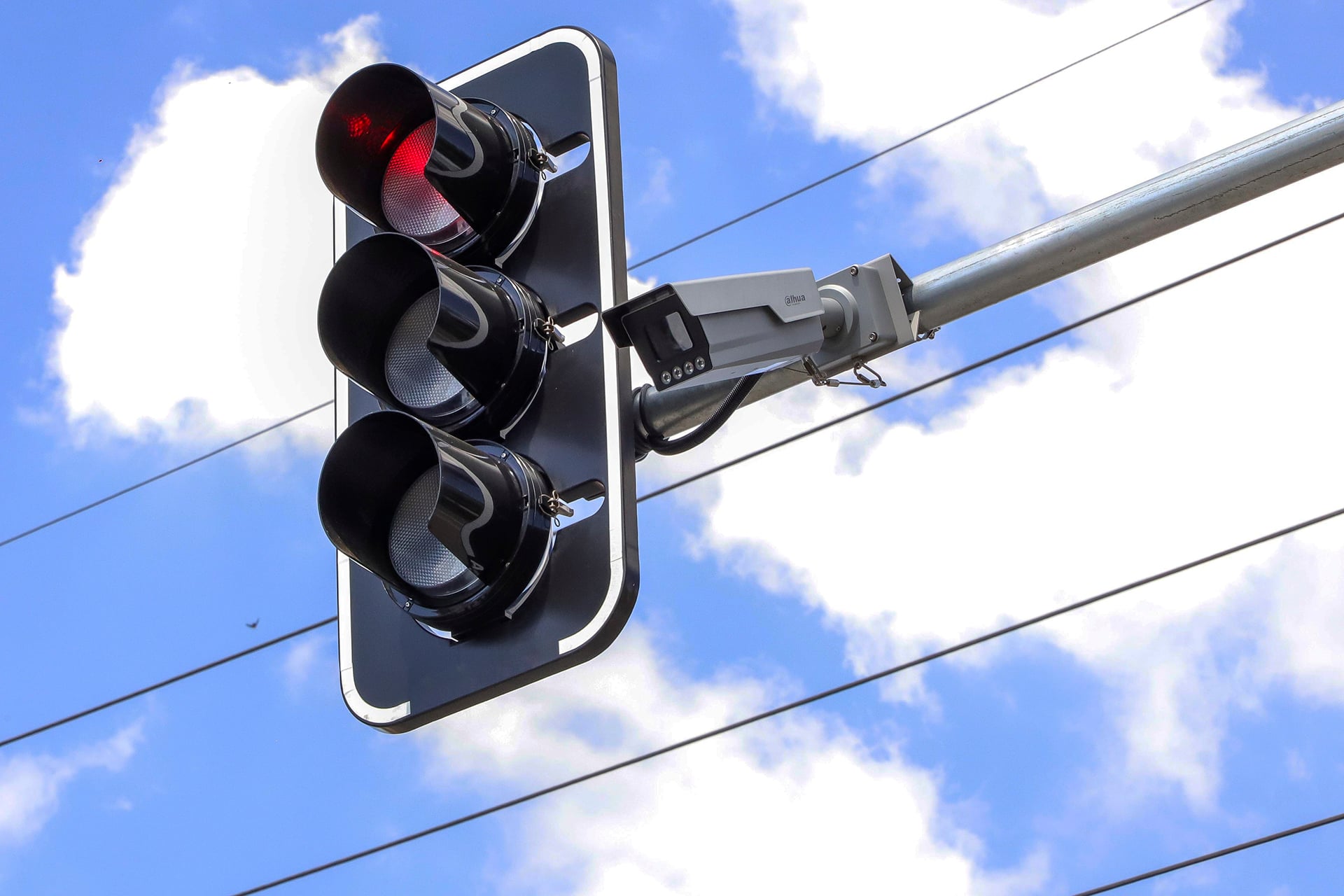
What if the traffic light knew you haven’t finished crossing the street yet? This is the idea behind a new traffic light method created at the Polytechnic School (Poli) of USP. In the simulations, the average travel time of pedestrians fell by 71.42% — about one minute less waiting in the lane.
The work is the master’s thesis of Andrey Luís Barbosa Gomes, supervised by Professor Claudio Luiz Marte. Instead of counting fixed seconds, the system uses sensors to “see” who is in the lane. If the pedestrian has already completed the crossing, the signal closes and releases the cars. If there is still someone in the middle of the road — an elderly person, a person with reduced mobility — the green remains and the vehicles remain stationary.
Where the test was done
The traffic light has not yet been installed on any corner. The technology was tested in microsimulations in the PTV VISSIM software, with the algorithm written in C# language. Before that, the researchers surveyed the geometry of the roads, the volume of cars and pedestrians, and even the most common infractions, such as crossing outside the lane.
There were four intersections reproduced: two at the University City of USP in São Paulo (SP), in front of the University Hospital (HU) and at the so-called Praça dos Bancos; and two in the city, at the Cidade Tiradentes Bus Terminal and at the intersection of Avenida Rebouças and Rua Oscar Freire. The choice was not random: the HU concentrates more fragile pedestrians, such as the sick, the elderly, children and wheelchair users, and Cidade Tiradentes represents an unplanned urbanization.
The car also won
The most counterintuitive result is that the vehicles didn’t lose out. The average waiting time for cars fell 22% in the models at Praça dos Bancos and Terminal Cidade Tiradentes. There was a cost: the maximum waiting time rose by 30.9 seconds, an increase that the authors considered acceptable, since the focus was on pedestrians.
For those who walk, the maximum waiting time fell by 69% on average. The one-minute saving appeared in the HU and terminal models; in Praça dos Bancos, it was 58 seconds.
Marte recalls that São Paulo has the rule of one and a half minutes, the pedestrian’s waiting limit at the city’s traffic lights. For him, the point is behavioral: the driver does not abandon the car in the middle of traffic, but “the pedestrian loses patience, takes risks between vehicles” – and is the most vulnerable link.
Gomes summarizes the logic of the project: traffic engineering usually prioritizes the flow of vehicles and the geometry of the roads, but everyone is a pedestrian at some point during the day.
The study was supported by Capes and BNDES, in collaboration with the Interdisciplinary Center for Interactive Technologies (Citi) at USP. The dissertation should be published soon in the Digital Library of Theses and Dissertations of USP.
With information from Jornal da USP
SEE MORE ABOUT

0 Comments
Comments are the sole responsibility of their authors and do not represent the opinion of this site. Comments containing profanity or offensive language will not be published. If you identify anything that violates the terms of use, please report it.