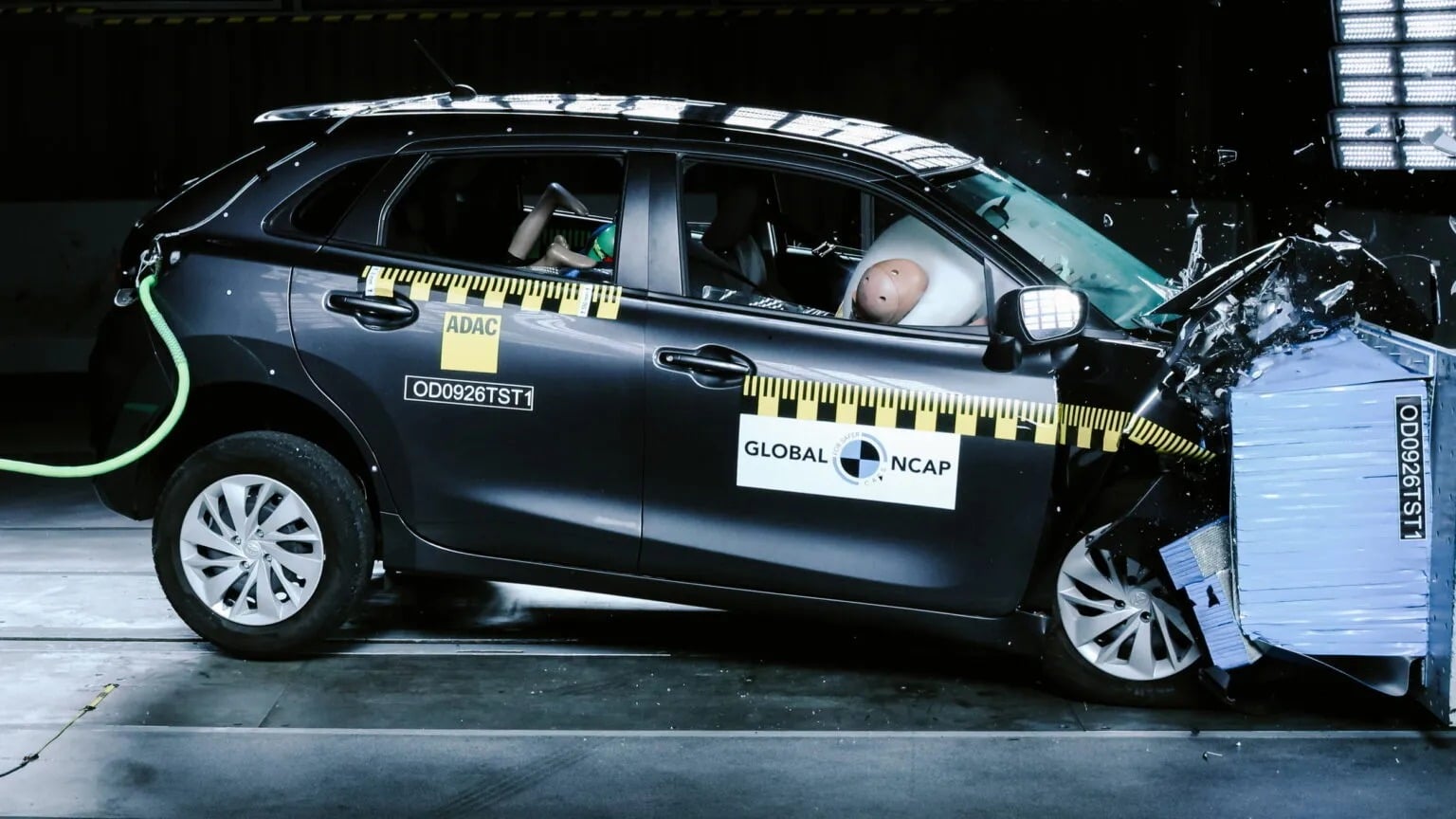
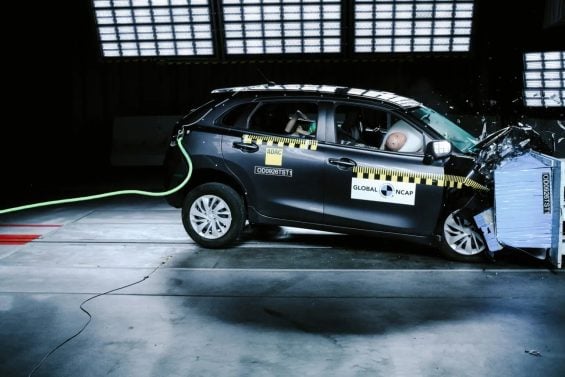
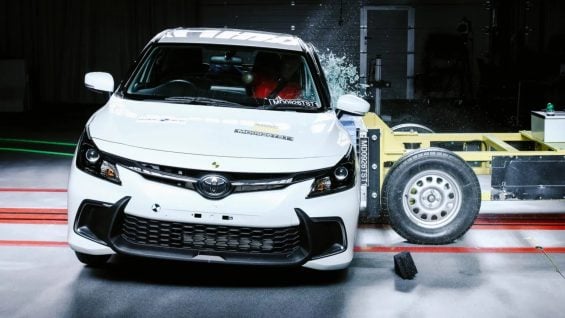
Toyota saw one of its most popular cars in South Africa, the Starlet hatchback , receive a score of zero in the adult occupant protection assessment in crash tests promoted by Global NCAP. The adverse performance exposed structural vulnerabilities in the project and raised debates about the brand’s industrial platform-sharing strategy. The model is manufactured in India as a direct derivation of the Suzuki Baleno, with changes restricted to the design of the bumpers and the logos of the brands.
Structural collapse and failures in lateral protection
Despite leaving the factory equipped with electronic stability control (ESC) and two front airbags as standard, the vehicle had critical active and passive safety flaws. Global NCAP engineers rated the floor area in the footwell and the overall body integrity as unstable. The technical report points out that the cabin structure would be unable to withstand additional loads of mechanical energy in the event of severe accidents.
In the standardized side impact test against deformable barrier, the absence of curtain airbags severely compromised protection. The crash resulted in a poor safety rating for the head and chest regions of the hypothetical occupants. The vulnerability detected was considered so severe that the independent organization decided to cancel the side impact test against the pole due to the high risk of fatal injuries.
Child protection and brand positioning
In the safety evaluation for transporting children, the hatchback secured three stars, but with formal reservations. During the frontal impact simulation, the head of the mannequin designed to represent a three-year-old child collided heavily against the interior trim.
In response to the result, Toyota’s division in South Africa argued that the unit evaluated belongs to an entry-level version at the end of the commercial cycle, which would not reflect the updated standard of the line, in which side and curtain airbags are now offered. Global NCAP reported that it has already anonymously purchased the new version for future validation.
Comments are the sole responsibility of their authors and do not represent the opinion of this site. Comments containing profanity or offensive language will not be published. If you identify anything that violates the terms of use, please report it.