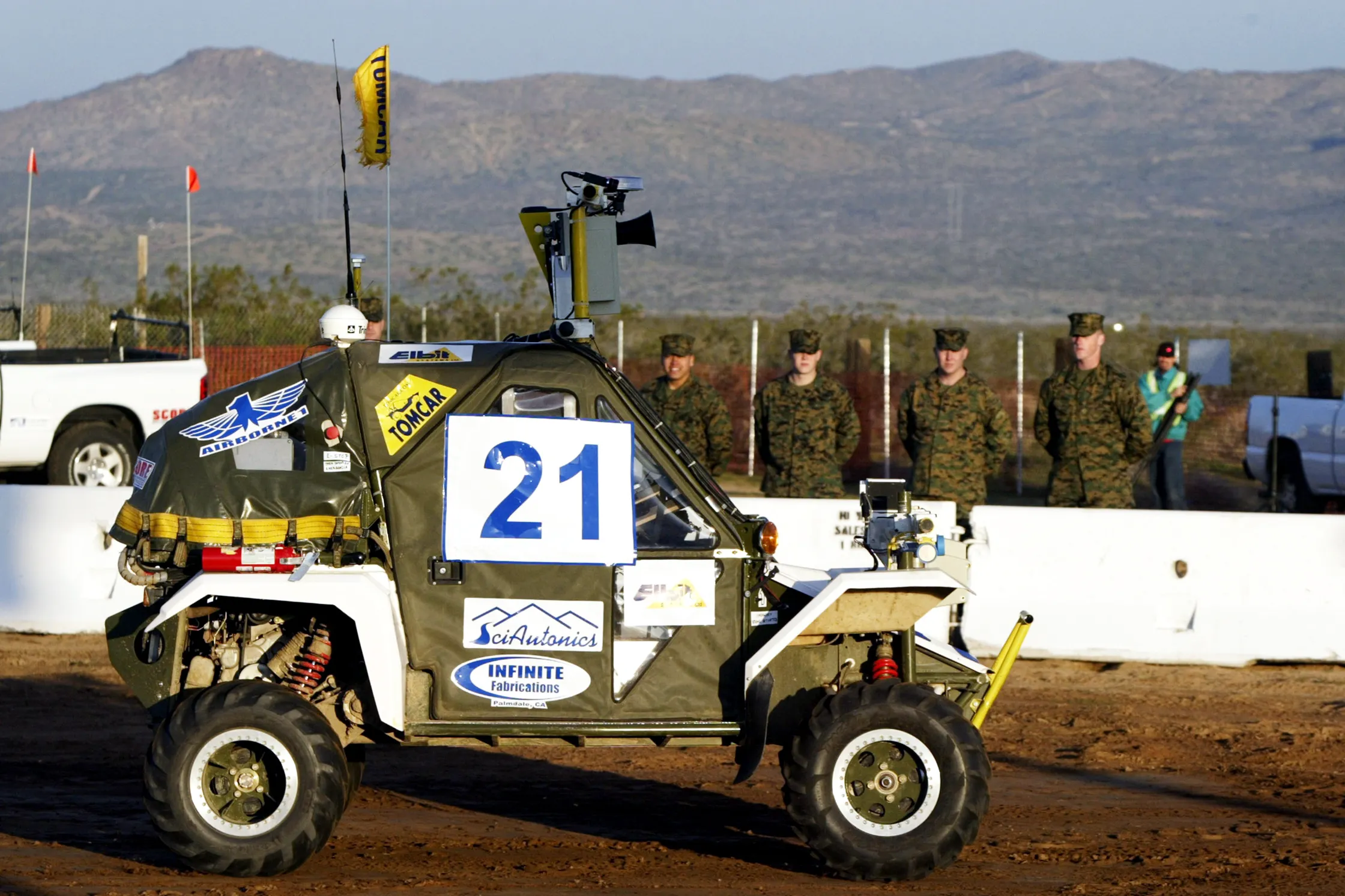
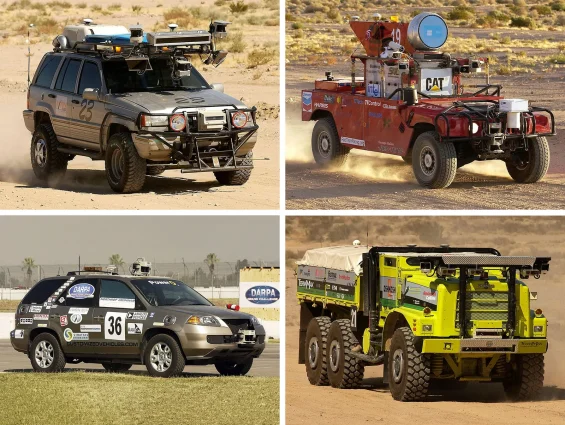
On March 13, 2004, 15 driverless vehicles set off for the Mojave Desert in the United States, pursuing a goal that sounded impossible at the time: to travel 228 kilometers alone, without any human intervention. Promoted by Darpa (Defense Advanced Research Projects Agency), the technological arm of the Pentagon, the challenge offered US$ 1 million to the team that completed the journey in less than ten hours. None came to an end.
Despite the failure, the first Darpa Grand Challenge turned out to be one of the most important milestones in the history of autonomous driving. The competition boosted the development of technologies such as LiDAR, computer vision and machine learning, as well as bringing together engineers who years later would lead projects such as Waymo and much of the self-driving car revolution.
The challenge was born out of a law passed by the U.S. Congress in 2000, which set an ambitious goal: by 2015, one-third of U.S. military ground vehicles should be unmanned. The urgency came from the battlefield. In Iraq and Afghanistan, logistics convoys were the most vulnerable targets for ambushes and improvised explosive devices (IEDs), and automating them would drastically reduce the risk to soldiers. As the defense industry advanced slowly, DARPA bet on something unprecedented: it opened the dispute to universities, companies and independent engineers, who only received the exact route layout — between Barstow, California, and Primm, Nevada — two hours before the start, to prevent any kind of cheating.
Among the competitors were from improvised prototypes to military giants, such as the TerraMax, a 16-ton Oshkosh tactical truck. It would be proof that the ultimate target was never cars capable of parking themselves, but entire supply convoys capable of crossing war zones without exposing their crew.
The results showed how much the technology still needed to evolve. An autonomous motorcycle did not even stand up when it started; a Toyota Tundra with stereoscopic cameras mistook the shadow of a slope for an obstacle and braked for good; Other vehicles were stuck in ditches or did not overcome simple ramps. The best performance was Sandstorm, a Humvee M998 prepared by Carnegie Mellon University, which covered only 11.9 kilometers — just over 5% of the way — before leaving the track and stopping with the tires on fire because of friction.
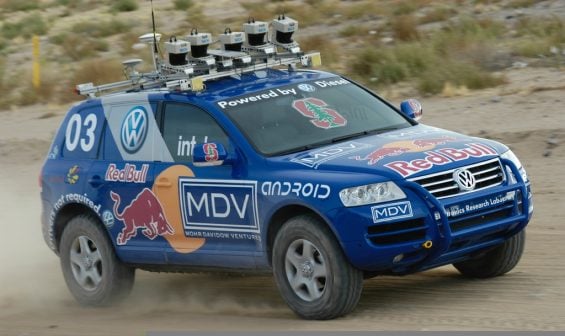
Instead of shutting down the project, Darpa did the opposite: it released a new edition just 18 months later and doubled the prize to $2 million. This time, five teams completed the course. The winner was Stanford University, with Stanley, a Volkswagen Touareg that crossed the finish line in 6 hours and 53 minutes. Led by Sebastian Thrun, the project combined navigation software, cameras and an innovative three-dimensional LiDAR sensor created by David Hall, founder of Velodyne.
The impact of the competition went far beyond the prize: in 2009, Google hired Thrun and Chris Urmson, another prominent name in the challenge, to run its secret autonomous driving project — the embryo of the current Waymo. Other participants would end up at the helm of companies such as Aurora Innovation, Argo AI and Uber ATG, in addition to developing technologies now present in the driving assistance systems of several automakers.
More than two decades later, fully autonomous driving still faces technical and regulatory obstacles. But features that already equip ordinary cars — automatic emergency braking, lane keeping assistant and reading the surrounding environment — took a significant leap on that March 13, 2004, in the middle of the Mojave Desert.
Comments are the sole responsibility of their authors and do not represent the opinion of this site. Comments containing profanity or offensive language will not be published. If you identify anything that violates the terms of use, please report it.