


European Union studies limiter that brakes car speed by GPS
The system would go beyond the ISA and would brake the car at the edge of the road; but the current assistant misses one speed reading every four
By
João Paulo Profeta
Published on 2026-07-20 at 09:00 AM
Published on 2026-07-20 at 09:00 AM
Be the first to comment.
Summarize with:
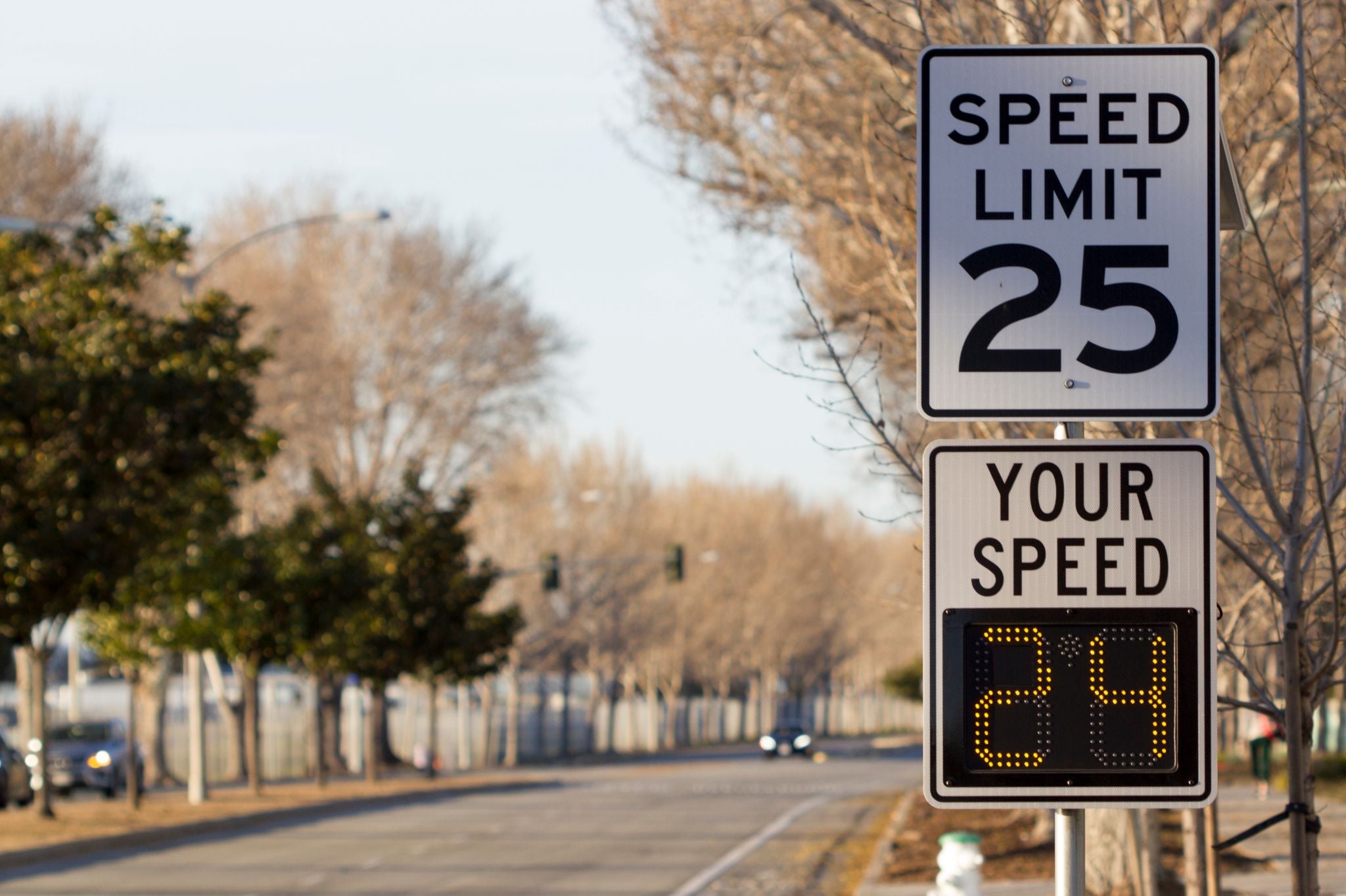
The European Union is considering taking another step in the speed control of cars. After making the Intelligent Speed Assistant (ISA) mandatory since 2024 – which only alerts the driver when exceeding the road limit – the block is now evaluating something much more incisive: an electronic speed limiter that would prevent, in practice, the car from running above the allowed.
The information was published by the British newspaper Daily Mail and echoed by the European press. According to the outlet, the European Commission is studying changing the regulations so that every new car sold in the bloc leaves the factory with a device capable of automatically adjusting the maximum speed to the limit of each road. The system would work by satellite positioning (GPS): when it identifies that the vehicle has entered a lower limit area, it would electronically reduce speed to prevent excess.
There are still no details on how the technology would operate, nor if it could be temporarily turned off, as is the case today with ISA. For now, this is just an idea, but the Daily Mail says that it could become a formal proposal from the Commission, with the requirement taking effect from 2030.
The limiter would be an evolution of the ISA itself, mandatory in all new cars in Europe since 2024. Unlike what is now being considered, the current assistant does not brake or restrain the vehicle: it only emits audible warnings when the driver exceeds the limit. It can be deactivated, but it starts again on its own every time the car is restarted — a recurring reason for complaint among drivers.
The idea, however, comes up against technical skepticism. The ISA accumulates reading failures: a study by Thatcham Research points to an accuracy of 74.3%, which means that the system makes mistakes about once in four — often confusing the limit of a service road with that of a highway. Transferring this “intelligence” to direct speed control tends to multiply the risk.
GPS is not infallible either: it would not be the first time that apps like Google Maps and Waze have displayed a wrong limit. With a device that effectively holds the car, the error would no longer be a simple warning on the screen: it would be dangerous, for example, for a vehicle not to be able to go from 60 km/h on a cleared road to 120 km/h because of incorrect information.
There is also the debate about freedom, with issues related to data protection generating controversy and contestation in relation to the possibility of a car that manages the speed at which it travels alone, without the driver being able to intervene. And there is a not inconsiderable side effect for the public coffers: if no one can run anymore, speeding fines — today a relevant source of revenue in practically any country — would simply cease to exist.
SEE MORE ABOUT

0 Comments
Comments are the sole responsibility of their authors and do not represent the opinion of this site. Comments containing profanity or offensive language will not be published. If you identify anything that violates the terms of use, please report it.