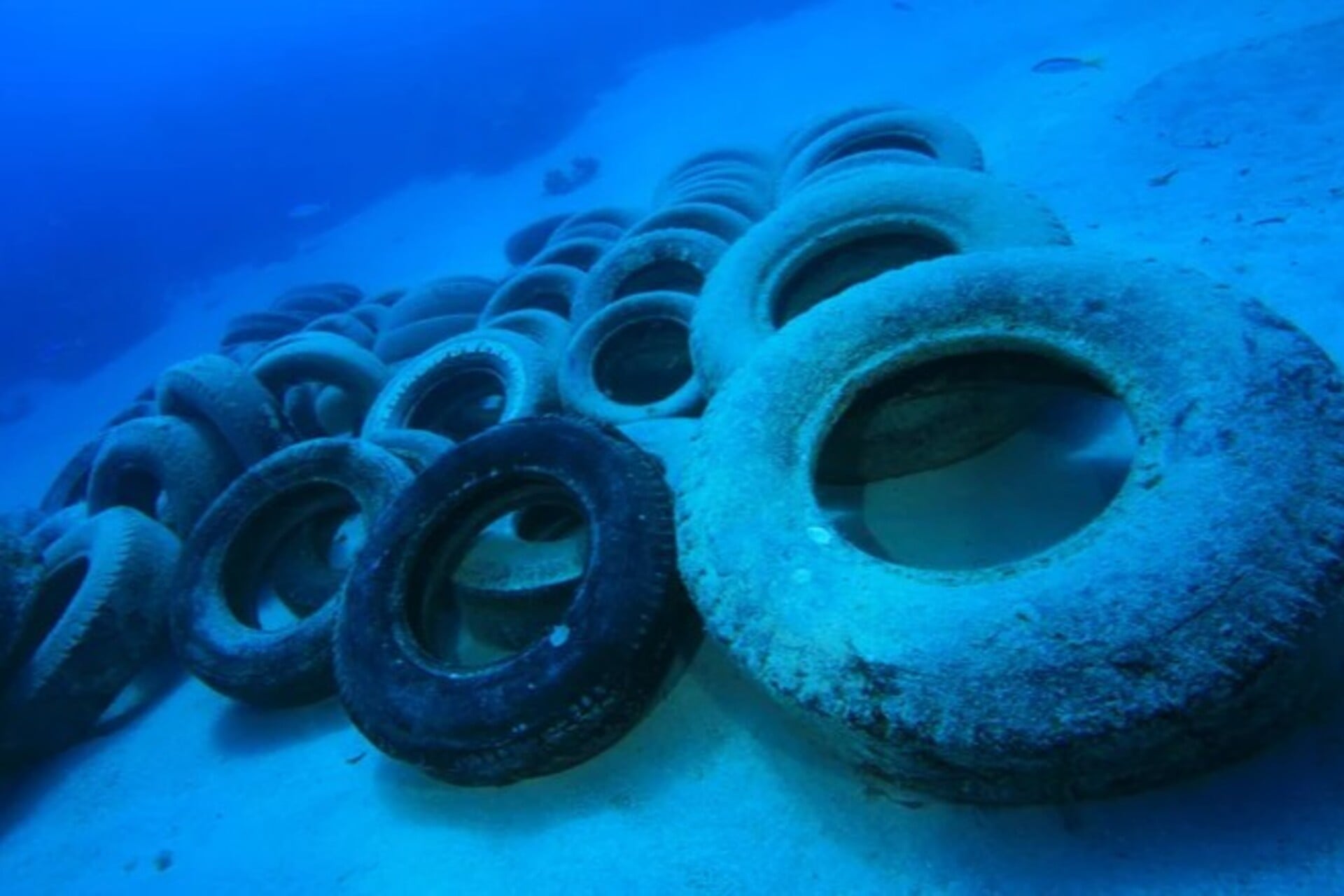
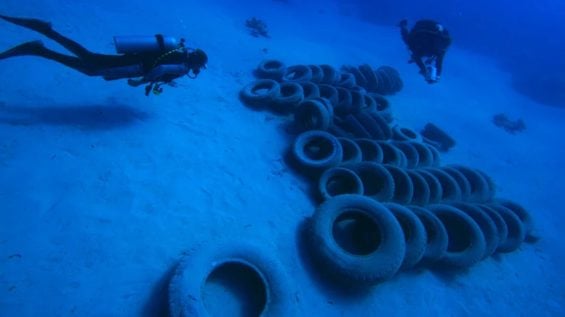
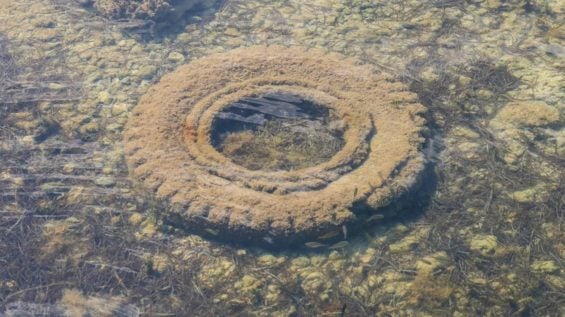
It seemed like a brilliant idea in the 1970s: why not harness millions of discarded tires to erect artificial reefs and stimulate marine life off the coast of Florida? Named Osborne Reef, the project run by Broward Artificial Reef Incorporated (Barinc), on the east coast of Fort Lauderdale, has become in a few years one of the biggest ecological disasters ever caused by a good intention – and the cleanup remains incomplete more than five decades later.
At the helm of the endeavor was Ray McAllister, a professor of ocean engineering at Florida Atlantic University and one of the founders of Barinc. With the approval of the U.S. Army Corps of Engineers, the group mobilized a flotilla of volunteers with more than 100 private boats, escorted by the USS Thrush, to sink more than two million tires gathered in thousands of tied bales. Even Goodyear, the manufacturer of the tires, has jumped on board.
Photos: Rich Carey | Shutterstock
The premise was simple, but the execution ignored the dynamics of the ocean. Instead of becoming a new habitat for corals and fish, tires have become a trap. Over time, the nylon and steel lashings broke, and sea currents and storms spread the tires like projectiles across the ocean floor.
The impact was devastating. Far from attracting life, the tires choked out existing corals and inhibited the growth of new colonies. “A coral destruction machine that doesn’t stop killing,” summarized William Nuckols, one of the coordinators of the cleanup, in an interview with CBS News. What was supposed to help nature became toxic rubble spread over vast areas.
Between 2007 and 2009, divers from the U.S. Navy, Army and Coast Guard recovered about 72,000 tires. Since then, according to the Florida Department of Environmental Protection, more than 586,000 units have been recalled, and a $5 million contract has been signed with Schlueter Vessel Management & Consulting to continue the work.
Photos: Michael Rosebrock | Shutterstock
Projections indicate that, by 2033, the total removed should be just under 1 million tires — less than half of what was dumped into the sea. In other words, more than 60 years after the beginning of the project, the rubber nightmare will still be far from over.
The Florida episode is not an isolated case: decades ago, Virginia sank tires to create similar habitats; a Category 3 storm in 1998 ripped the material off and spread it onto beaches in North Carolina. In New Jersey, scientists even anchored about a thousand tires backed with concrete — and then saw fragments reappear in the state’s sands.
Comments are the sole responsibility of their authors and do not represent the opinion of this site. Comments containing profanity or offensive language will not be published. If you identify anything that violates the terms of use, please report it.