Shell oil company shows electric car with technology that can make giant batteries obsolete
Oil company's prototype uses fluid derived from natural gas to cut battery costs by 25% and increase the efficiency of electric vehicles
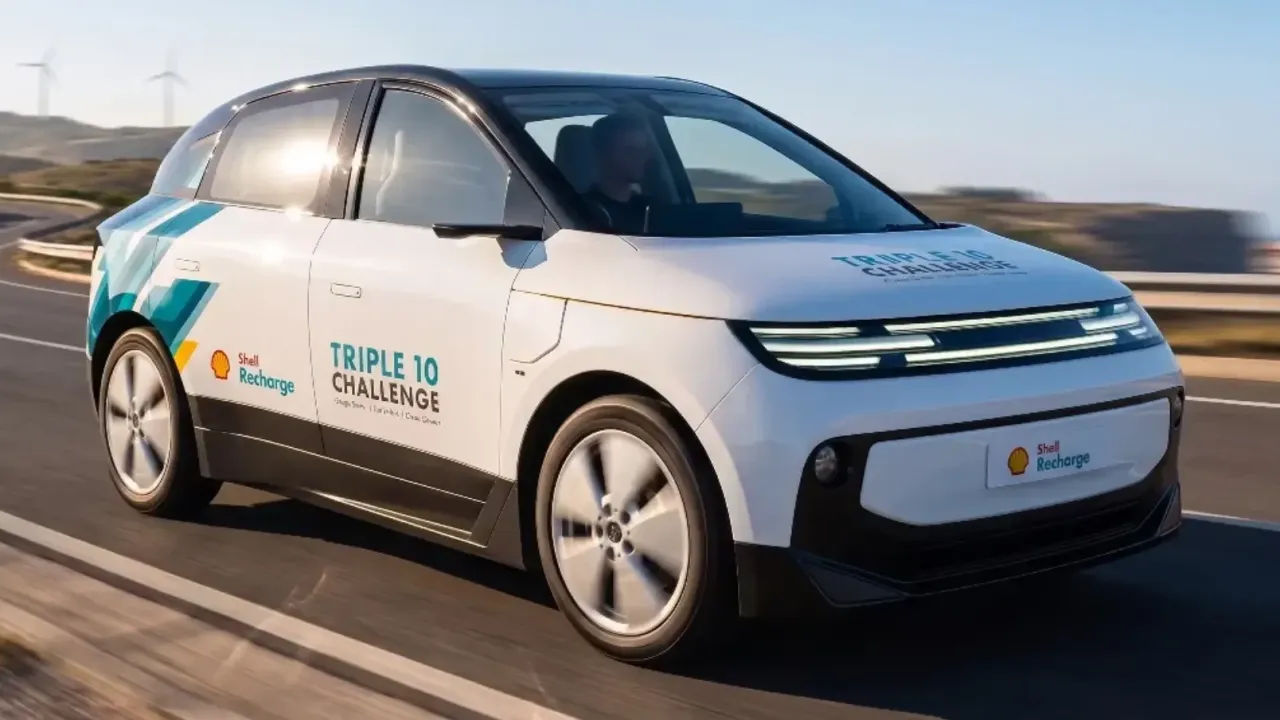
Shell concept demonstrates that the evolution of electric vehicles can be in thermal management, and not just in larger batteries (Photo: Shell | Disclosure)
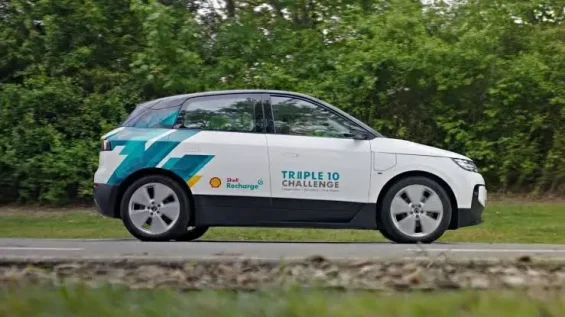
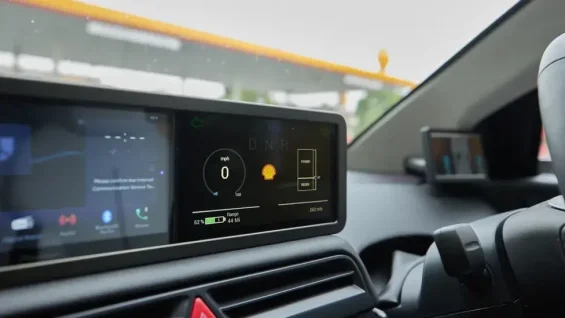
Known for its performance in the oil sector, Shell presented its own electric car, but not to become an automaker. Named Shell Triple 10 Challenge, the concept is a laboratory on wheels created to test new thermal management solutions and show that it is possible to increase efficiency without resorting to larger batteries.
Developed in partnership with the British companies RML, Empel Systems and Horiba Mira, the prototype will not be produced in series, but anticipates technologies that, according to the company, can reduce weight, costs and recharge time of the next electric vehicles.
The name refers to three goals of the project. The first was to recharge the battery from 10% to 80% in less than 10 minutes: the prototype fulfilled the goal by recovering about 245 km of range in 9 minutes and 54 seconds, using a 175 kW public charger, common in the network, and not an ultra-fast one. According to Shell, this represents an advance of almost 90% in the added autonomy per minute of recharge compared to current electric vehicles. The second goal was to travel 10 km consuming only 1 kWh, an efficiency about 30% higher than equivalent models — for comparison, a rear-wheel drive Tesla Model 3 does around 8 km/kWh. The third limited the carbon footprint to 10 tons of CO₂ over the entire life cycle.
Instead of appealing to a larger battery, the model adopts a package of only 32 kWh, similar to that of a plug-in hybrid. The difference is in the cooling system, which uses a dielectric fluid developed by Shell, derived from natural gas, in direct contact with the cells. The liquid keeps the temperature below 60°C during fast refills, preventing performance loss and allowing it to sustain high power for longer.
The same circuit also cools the electric motor and inverters, which reduces the number of components and the weight of the vehicle. In addition to aerodynamic improvements, such as closed wheels and optimized bodywork, the set allows, according to Shell, to cut the cost of the battery by about 25% without compromising the autonomy, estimated at more than 300 km in real use.
Although it does not reach dealerships, the Shell Triple 10 Challenge serves a business objective: to prove that the oil company’s immersion fluid can become a key part of the next generation of electric vehicles, with faster recharging, less raw materials and lower costs, using, according to the company, technology that already exists and can be scaled today.
Comments are the sole responsibility of their authors and do not represent the opinion of this site. Comments containing profanity or offensive language will not be published. If you identify anything that violates the terms of use, please report it.