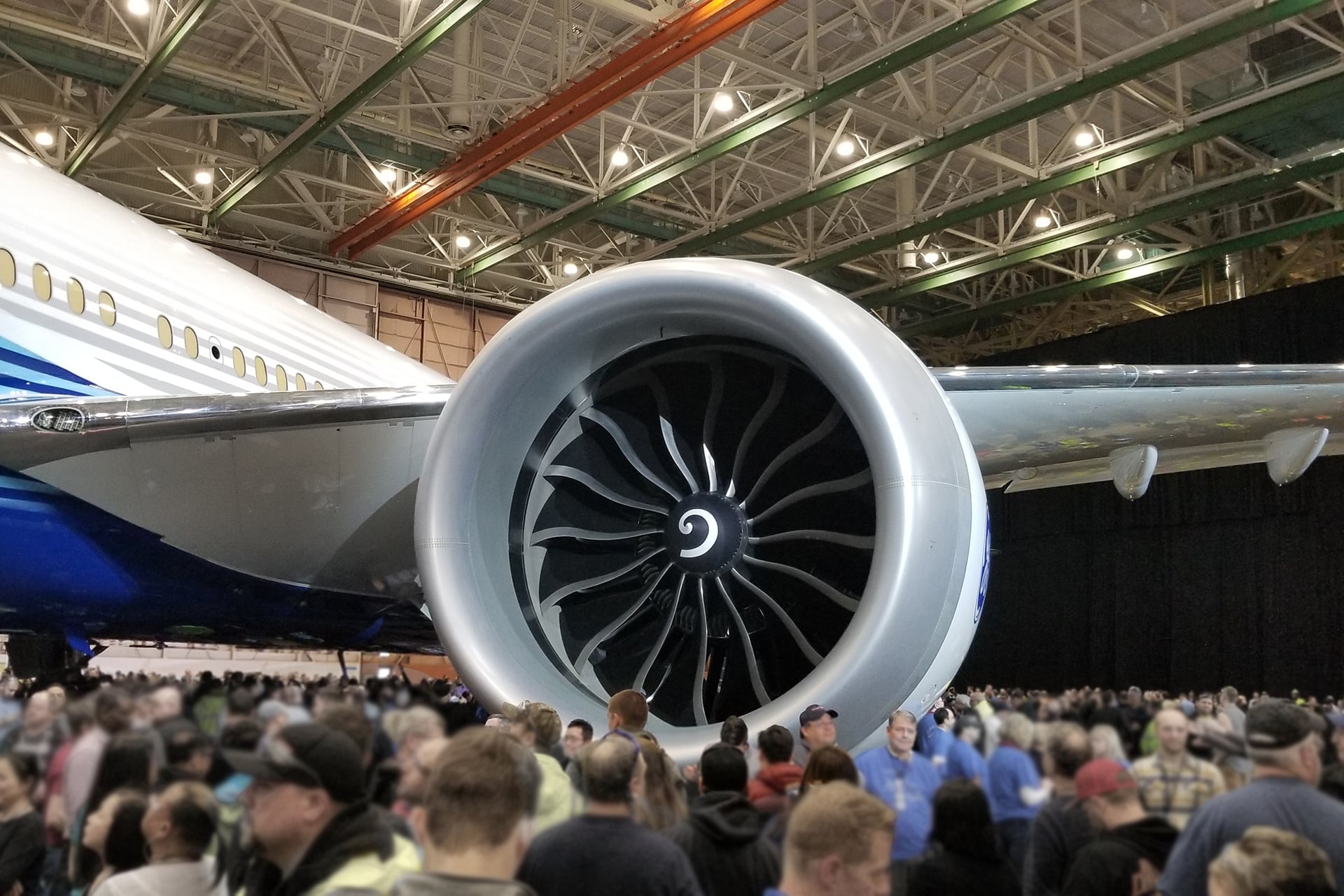
When General Electric (GE) decided to develop the Boeing 777X engine, the goal was not to evolve the predecessor GE90, but to break the limits of physics. The result was the GE9X, the largest and most powerful commercial engine ever built: it has a front fan of 134 inches (about 3.40 meters), almost the diameter of the fuselage of a Boeing 737, and generates up to 134,300 pounds of thrust (close to 600 kN). The monumental scale, however, brought equally colossal problems.
To achieve the promised efficiency, the engine operates at a 10:1 bypass ratio, which required the fan’s 16 carbon fiber blades to spin so fast that the tips reach supersonic speeds even at low revs. The phenomenon generates vibrations and centrifugal forces that smaller engines have never had to face.
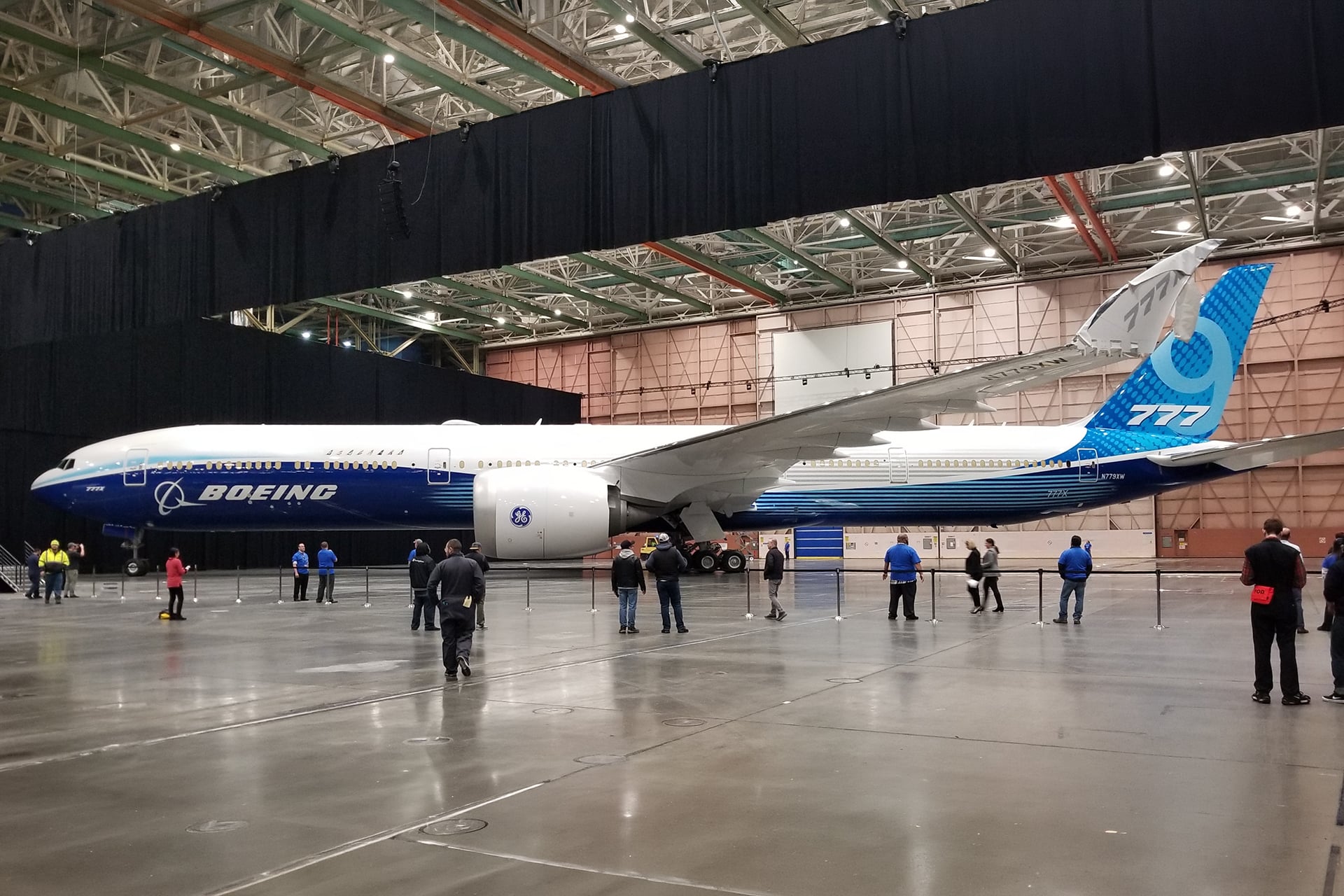
The size also took its toll on the plane’s design. As the carcass (nacelle) is huge, Boeing had to lengthen the landing gear and create a special attachment on the wings just to prevent the engine from scraping the ground. The weight, over 9.5 tons even with carbon fiber and 3D printed parts, requires dedicated software for the plane to fly optimally.
New engines are the only propulsion option for the new Boeing 777X (Photo: Dan Nevill | Wikimedia)
The most dramatic failures, however, came from the engineering itself. In 2024, the test fleet was immobilized after inspectors found cracks in the thrust links, the structural parts that attach the engine to the wings, which forced the company to redo the design of the component. In early 2026, a new durability problem arose: a crack in the mid-seal, a barrier between the turbine stages that could not withstand the extreme pressures and temperatures of the core.
The 777X program is about six years behind schedule and has more than $15 billion in costs. Originally scheduled for 2020, entry into service has been rescheduled for 2027. As Boeing began assembling the airframes before certification, about 30 ready-made planes are awaiting repairs at Paine Field in Washington.
Unlike the original 777, which is offered with engines from GE, Pratt & Whitney and Rolls-Royce, the 777X relies solely on the GE9X. There is no plan B: if the engine has a durability problem, the entire program crashes. The rigidity already has a commercial cost, and Boeing has seen orders canceled, including 15 aircraft from Etihad Airways.
The bet is justified. When it finally enters service with Lufthansa, the first customer, the GE9X should burn 10% less fuel than the GE90, a significant gain in an industry with tight margins. For now, however, the world’s largest commercial jet engine remains also Boeing’s riskiest bet.
Comments are the sole responsibility of their authors and do not represent the opinion of this site. Comments containing profanity or offensive language will not be published. If you identify anything that violates the terms of use, please report it.