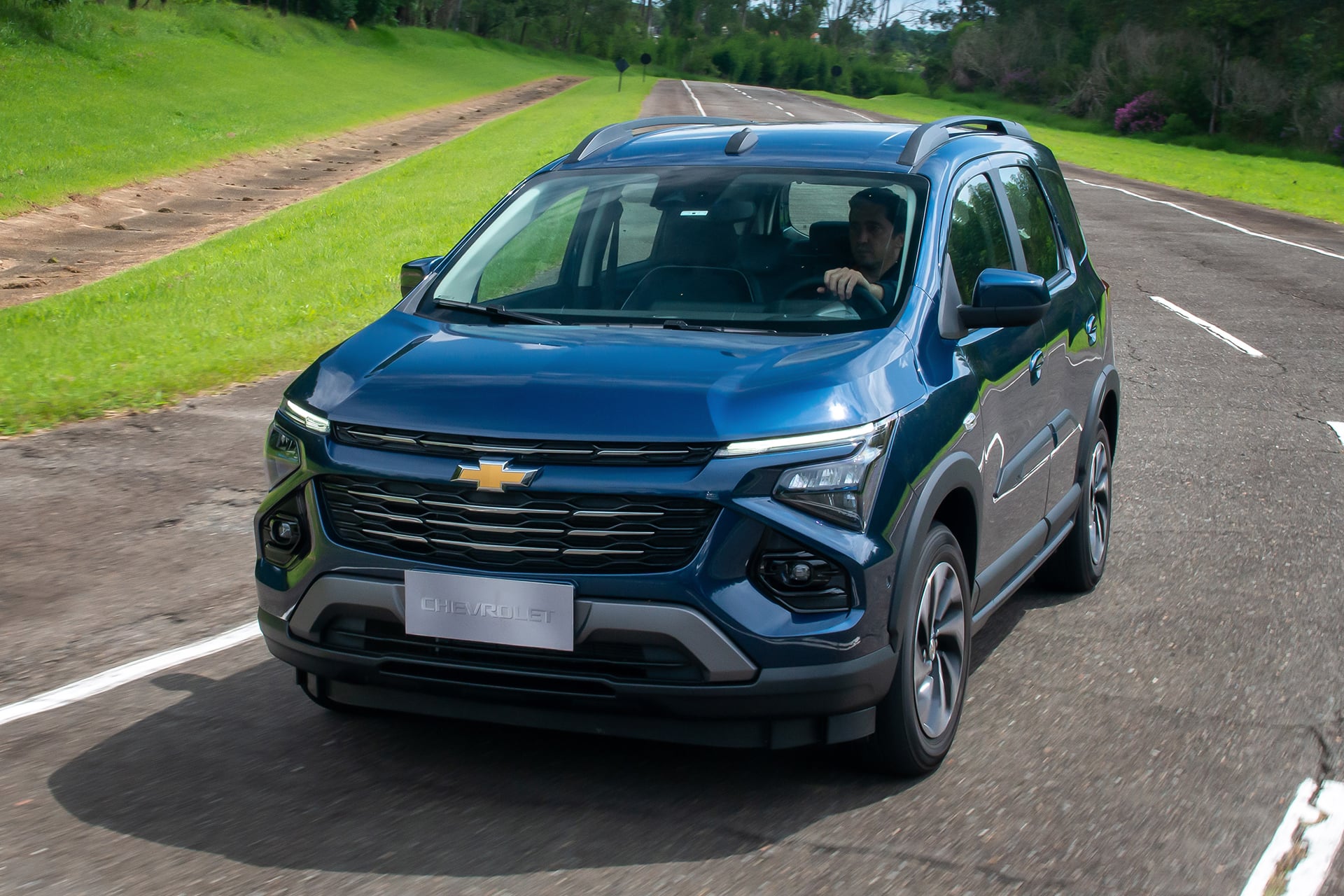
When talking about a “polluting car”, the image that comes to mind is usually that of a diesel pickup emitting black smoke. The official data, however, tell another story. AutoPapo carried out a survey based on the new table of Inmetro’s Brazilian Vehicle Labeling Program — the same one that supports the energy efficiency label of vehicles — and arrived at the 15 models that emit the most local pollutants through the exhaust. At the top appear popular flex cars, not diesel utility vehicles.
The methodology
We considered three pollutants measured in the exhaust: NMOG, NOx and CO. We added up the values of each version and ordered them from highest to lowest, using the most polluting configuration of each model. Electric vehicles (zero exhaust emissions) and greenhouse gas numbers, discussed later, were left out.
Why diesel pickup trucks don’t lead
Characteristics of diesel engines make pickup trucks emit fewer pollutants in the sum than flex models, for example (Photo: Ford | Disclosure)
The surprise of the ranking is explained by the chemistry of combustion. The sum is driven almost entirely by carbon monoxide (CO), and CO is precisely the pollutant in which diesel does well. The Diesel cycle engine works with a lean mixture, that is, with excess air in the combustion chamber. With oxygen left over, almost all the carbon in the fuel oxidizes to CO₂, and very little stops in the middle of the way as CO. According to Cetesb, carbon monoxide is the result of incomplete burning – exactly what diesel, with its abundant air, tends to avoid.
Gasoline and flex engines, on the other hand, operate close to the stoichiometric mixture and, in situations such as cold start, acceleration and mixture enrichment, burn with less available air. Then the combustion is incomplete and the CO skyrockets — hence the high numbers of the popular flex on this list. This is also why the three-way catalytic converter, which destroys CO in gasoline cars, does not work in diesel: with no oxygen left in the flex exhaust, it oxidizes CO; In diesel, excess air makes this same process unfeasible.
This does not absolve diesel – it is just dirty in another way. Where gasoline lacks in CO, diesel sins in NOx and, above all, in particulate matter (soot), pollutants that this specific sum does not capture or captures in a limited way. So much so that, in Inmetro’s own table, diesel pickup trucks exhibit high values of NMOG+NOx, but very low CO. A ranking assembled by particulate matter or by isolated NOx would have other protagonists — probably the diesel SUVs that common sense would already expect there.
What are these pollutants
NMOG (non-methane organic gases) gathers volatile organic compounds left over from incomplete combustion. NOx are nitrogen oxides, formed under high temperature in the engine. Together, NMOG and NOx are the main precursors of tropospheric ozone —that bad, ground-level ozone that irritates the respiratory tract, aggravates asthma and bronchitis, and harms vegetation. CO (carbon monoxide) is a colorless and odorless gas that, inhaled, reduces blood oxygenation; indoors, it can be lethal.
How Inmetro measures
The measurement is not done on the street, but in the laboratory, with the car on a chassis dynamometer that simulates a standardized cycle of city and road (ABNT NBR 6.601 and 16.567 standards). Reference fuels are used — gasoline with 22% ethanol and diesel with 7% biodiesel — different from what comes out at the pump. Flex models are tested with both gasoline and ethanol.
The legal limits
The individual ceilings have been valid since the Proconve L7 phase and continue in L8 (in force since 2025). For passenger cars, the limit is 80 mg/km of NMOG+NOx combined and 1,000 mg/km of CO; for light commercial vehicles, 140 mg/km and 320 mg/km, respectively. All the models on the list are within the law — “more polluting” does not mean irregular. The novelty of L8 is to charge the NMOG+NOx target by the average of each automaker’s fleet, no longer car by car, and to tighten the index to 50 mg/km.
What about greenhouse gases?
The table also shows fossil CO₂, the main greenhouse gas. It has been disregarded here because it is in another order of magnitude — it is measured in grams per kilometer, versus milligrams of local pollutants — and because it responds to a different problem: the global climate, not the air quality of your street. Mixing the two in one account would distort the ranking.
Comments are the sole responsibility of their authors and do not represent the opinion of this site. Comments containing profanity or offensive language will not be published. If you identify anything that violates the terms of use, please report it.