

4 PSI rule: the home test that shows if the tire pressure is right
Method compares cold pressing with reading after spinning; It is valid on highway and asphalt, but not off-road or competition tires
By
Eduardo Passos
Published on 2026-06-24 at 04:00 PM
Updated on 2026-06-24 at 04:23 PM
Published on 2026-06-24 at 04:00 PM
Updated on 2026-06-24 at 04:23 PM
Be the first to comment.
Summarize with:
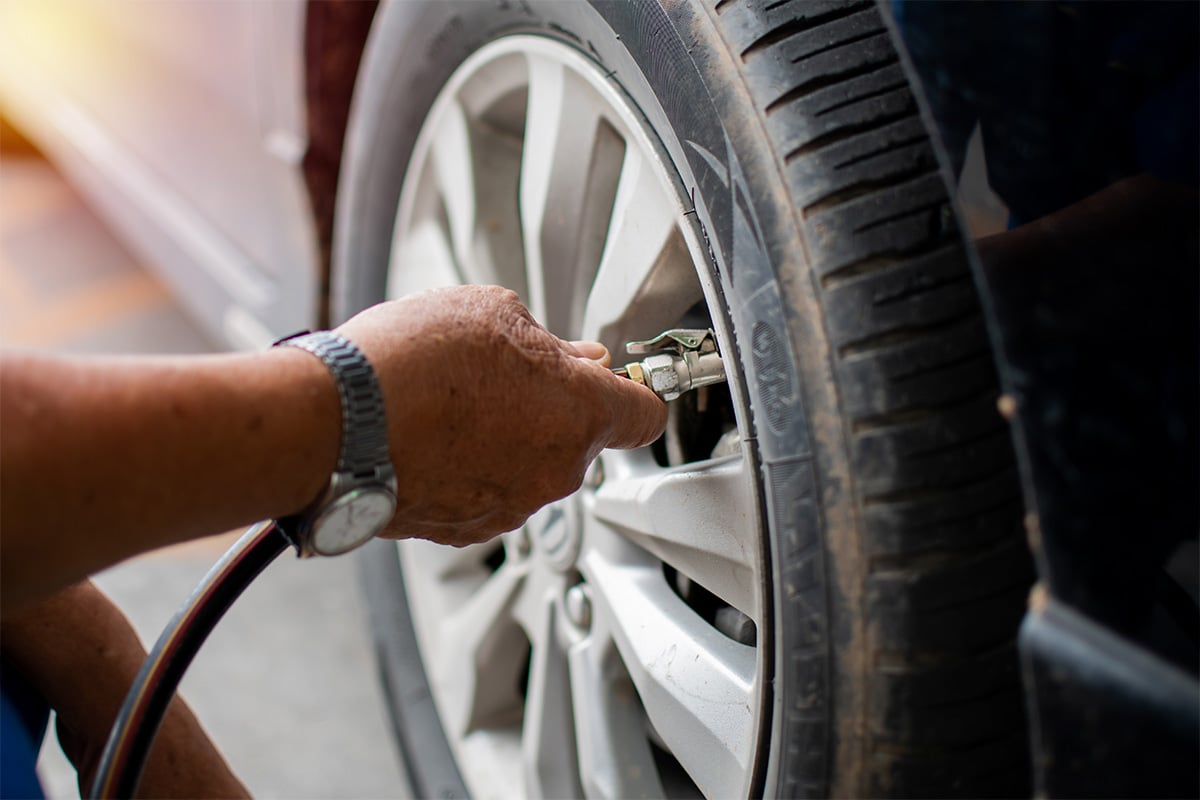
There is a simple test to know if your tyre pressure is correct: the so-called “4 PSI rule”. The idea is to compare the pressure with the cold tire and after running — and the account works well on highway and asphalt, but loses its validity outside this scenario.
The starting point is always the pressure recommended by the automaker, indicated on the label of the driver’s door column — and not the number engraved on the sidewall of the tire, which is the maximum pressure supported, not that of use. Calibrate cold tires to this value, drive at highway speed for 20 to 30 minutes and measure again; Most modern cars show the reading on the dashboard or in the multimedia center. If the pressure has gone up about 4 PSI, everything is fine.
The increase is due to the heat. With each turn, the side of the tire flexes and generates internal friction — a phenomenon that engineers call hysteresis. This friction turns into heat, heats the air trapped inside the tire and raises the pressure. A high well above 4 PSI indicates that the tire started from too low a pressure: it flexes more, heats up more, and is at risk of structural damage or tread separation. A much smaller variation, on the other hand, suggests too high initial calibration, which concentrates wear in the center of the tread.
The rule, however, assumes constant highway speed on firm ground – and collapses in other situations. Off-road, it is common to reduce the pressure to something around 12 PSI in sand, 18 in mud, 20 in snow and 25 in gravel, values far below what the 4 PSI account predicts. The same goes for special tires: while the typical factory recommendation is between 28 and 36 PSI, drag slicks run from 4 to 12 PSI, a range in which a variation of 4 PSI is no longer a fine tuning to become a huge change.
Using the car’s TPMS as a benchmark for the test is reasonable: in a 2023 AAA assessment of 11 vehicles, most showed readings within about 1 PSI of actual pressure. Still, no measurement with a hot tire should replace the cold pressure recommended by the automaker — that’s the number that rules.
SEE MORE ABOUT

0 Comments
Comments are the sole responsibility of their authors and do not represent the opinion of this site. Comments containing profanity or offensive language will not be published. If you identify anything that violates the terms of use, please report it.