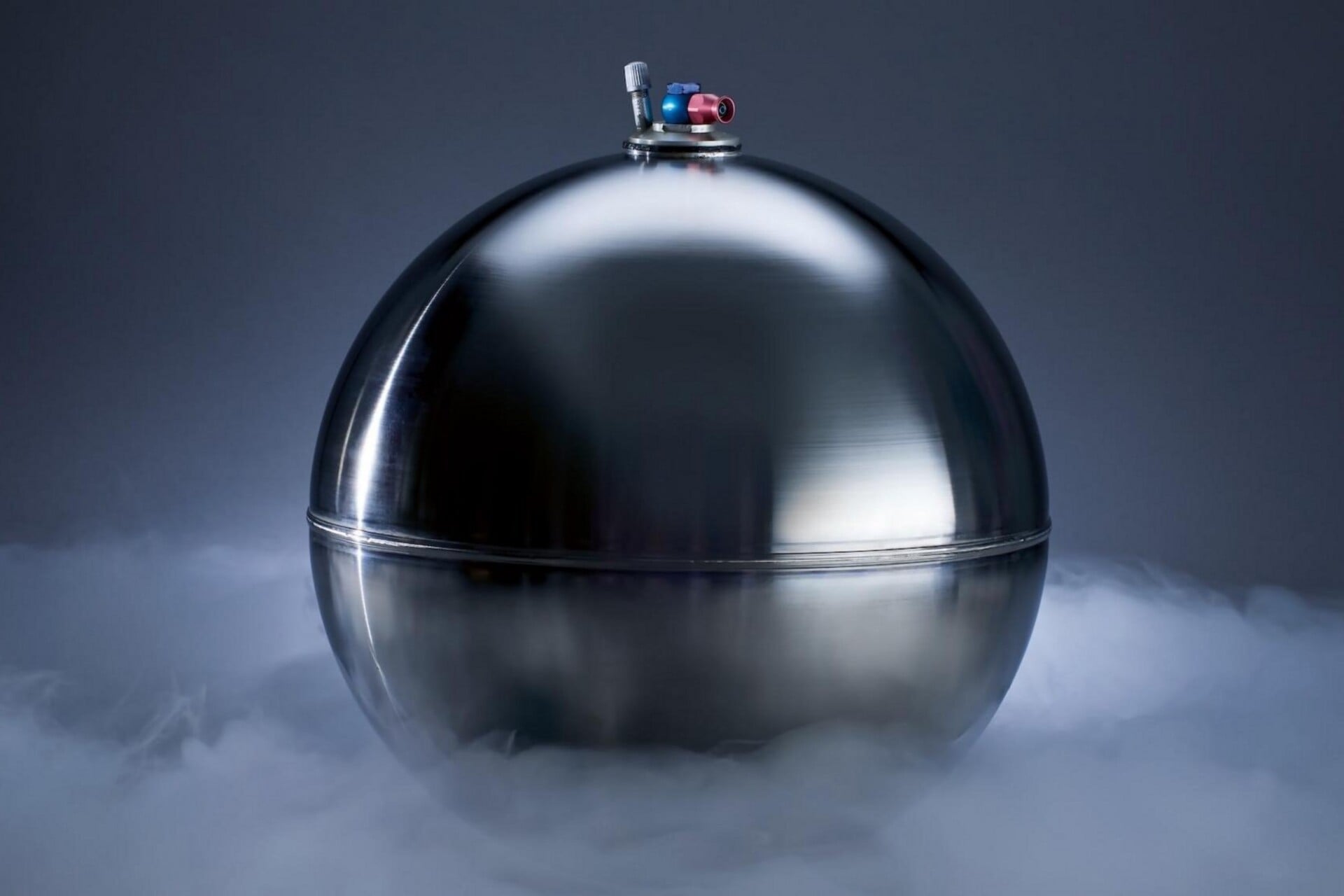
Next to the engine of the Porsche 909 Bergspyder was a titanium sphere the size of two footballs, held together by three straps. It was the fuel tank, and it existed for one reason only: to cut seven kilograms. Porsche this week revisited the history of the lightest race car it has ever built and its unusual mechanism.
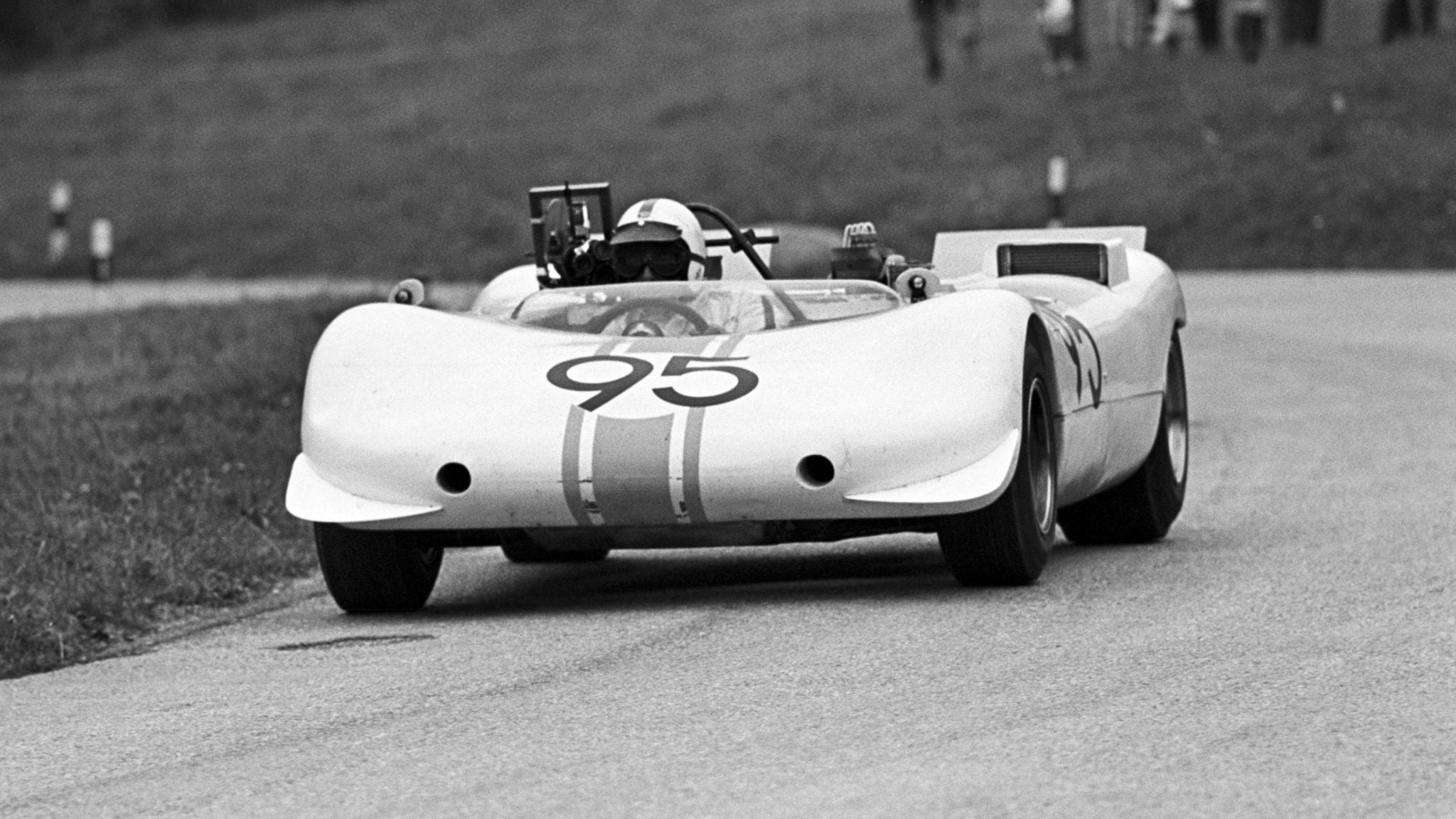
The 909 debuted on September 8, 1968, on the ascent of the Gaisberg, in Salzburg, the penultimate stage of the European Mountain Championships, disputed in timed uphill races. The car weighed about 400 kilograms and measured 3.48 m in length, almost 1.80 m in width and 75 cm in height.
Gerhard Mitter in a Porsche 909 Bergspyder on the Gaisberg mountain climb in 1968. Photo: Porsche | Disclosure
The pressurized
sphere Inside the titanium shell, with a wall of only 0.8 mm, there was a rubber bag. The gasoline went in the bag. In the gap between it and the titanium, the mechanics injected nitrogen at about 15 bar before starting. A hose connected the assembly to the mechanical injection pump.
The gas pressure did the job that normally falls to the feed pump, the one that pulls fuel from the tank and pushes it to the engine. Without it, the 909 saved up to seven kilograms.
Photo: Porsche | Disclosure
The spherical shape is not a whim: it is the geometry that best distributes the internal pressure, which allows you to use the thinnest wall possible without bursting.
The rest of the car followed the same logic. The fiberglass body weighed 10 kilograms. The springs and brake calipers were titanium, the chassis was an aluminum truss, the engine had titanium and magnesium parts, and the brake discs were beryllium, a light, rigid and expensive metal, today avoided because it is toxic in the form of powder.
2.5 seconds and feet in front of the axle
The engine was a two-liter eight-cylinder opposed with 275 hp. This took the 909 from 0 to 100 km/h in 2.5 seconds, with a top speed of up to 250 km/h depending on the gear ratio. The power-to-weight ratio of 1.4 kg/hp came close to Formula 1 at the time.
The layout was equally radical. The differential was at the rear end, while the seat, engine and five-speed gearbox were pushed forward. Result: the driver’s feet were in front of the front axle, surrounded only by the thin aluminum tubes and the plastic bodywork.
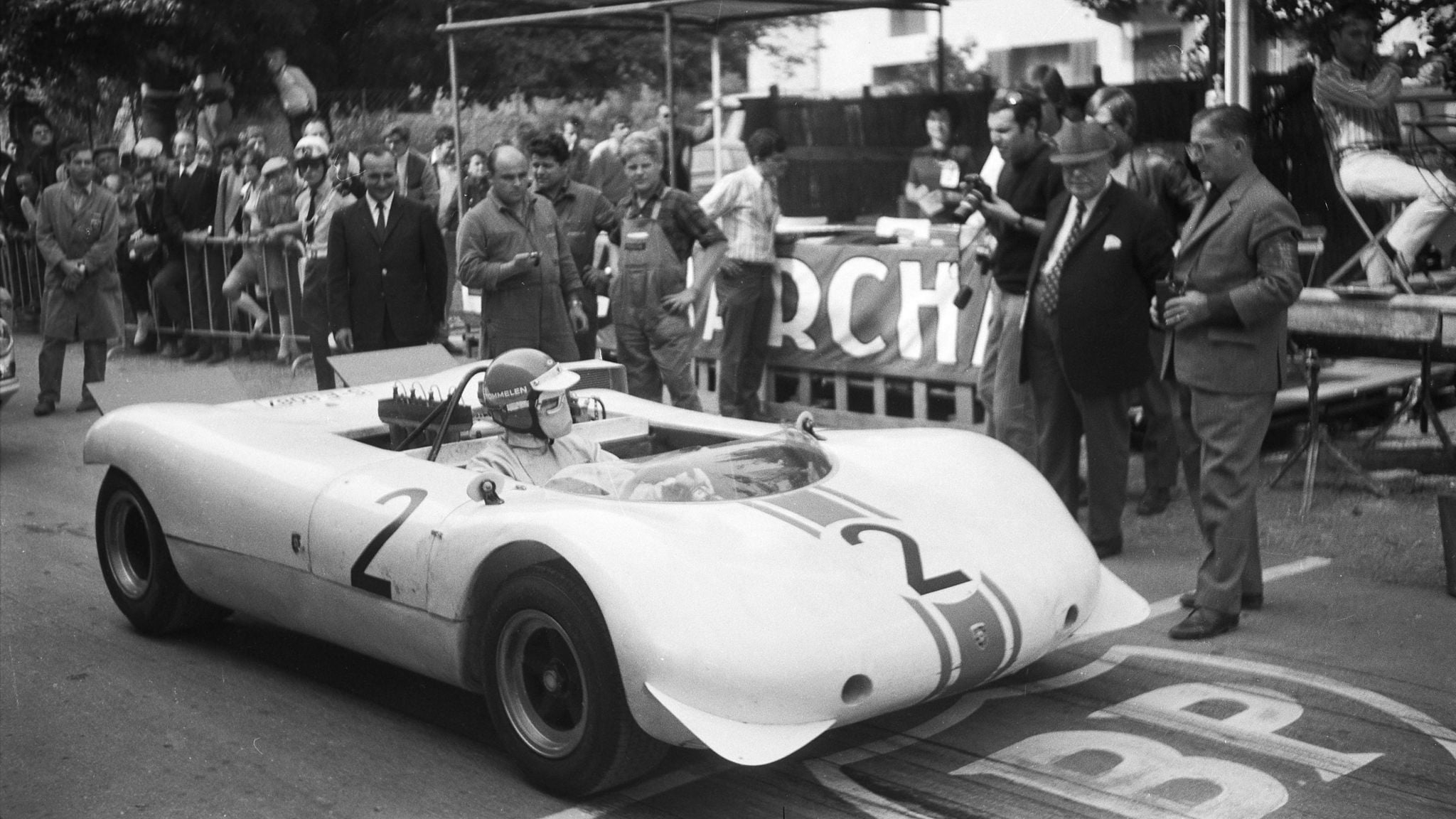
Rolf Stommelen in a Porsche 909 Bergspyder in Mont Ventoux. Photo: Porsche | Disclosure
The experiment did not work on the track. At Gaisberg, the engine choked on too rich a mixture and failed, and Rolf Stommelen finished third. At Mont Ventoux, France, the team combined the ball with a conventional gasoline pump, and Stommelen was second. It was the last race of the model: Porsche left the mountain championship for the World Championship of Makes and Le Mans. Only two 909s were built.
The weight distribution tested in the 909 went to the 908/3, which in 1970 proved almost unbeatable on the winding circuits of the Nürburgring and the Targa Florio. In the 11 editions of the European Mountain Championship, Porsche has won nine titles.
Comments are the sole responsibility of their authors and do not represent the opinion of this site. Comments containing profanity or offensive language will not be published. If you identify anything that violates the terms of use, please report it.