

After the failed merger, Honda and Nissan reach a much more modest agreement
Japanese companies to standardize software-defined ECUs, operating system and vehicle control software from fiscal 2029
By
Júlia Haddad
Published on 2026-09-01 at 01:00 PM
Published on 2026-09-01 at 01:00 PM
Be the first to comment.
Summarize with:
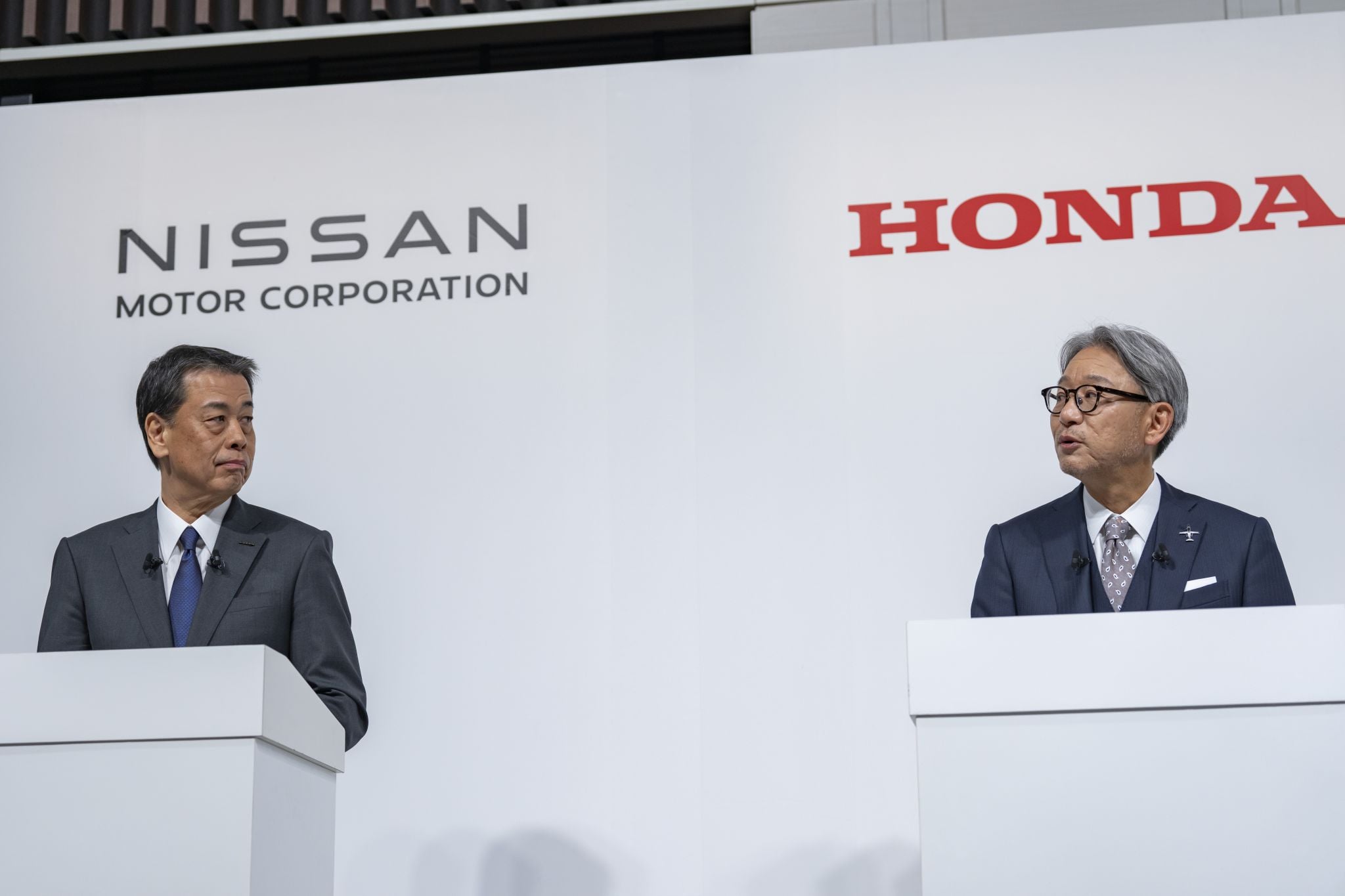
Honda and Nissan announced on Monday (31) an agreement to jointly develop the electronic centers and software of their cars from fiscal 2029. It is a fraction of what the two negotiated 20 months ago, when they discussed a merger that would create the third largest automaker in the world.
The date helps to measure the distance between the two plans: according to the agreement signed at the end of 2024, the joint holding company of the two companies should have debuted on the Tokyo Stock Exchange precisely in August 2026. Instead, August 2026 ended with a contract for the standardization of electronic parts.
The merger that didn’t come out
On December 23, 2024, Honda and Nissan signed a memorandum of understanding to integrate the business under a common parent company. The operation was valued at more than $60 billion and would put the resulting group behind only Toyota and Volkswagen in global sales. A second memorandum, signed on the same day, provided for Mitsubishi’s entry.
During the talks, Honda proposed to change the structure: instead of the holding company with a divided board of directors, it would be the parent company and Nissan would become a subsidiary through a share exchange. Nissan refused, understanding that it would lose autonomy. At the time, Honda was worth more than five times what the stock exchange partner was worth. There was also pressure for Nissan to buy back Renault’s stake and Mitsubishi’s refusal to occupy the role of third partner. On February 13, 2025, the three ended negotiations.
The following year and a half was one of restructuring at Nissan. Under the command of Ivan Espinosa, who took over in April 2025, the automaker is executing the Re:Nissan plan, which reduces the number of factories from 17 to 10 and provides for the cut of 20 thousand jobs by fiscal 2027. In the year ended in March, the company recorded a net loss of 533.1 billion yen, the second consecutive year in the red, with global sales of 3.15 million vehicles, down 5.8%.
What the agreement covers now
The partnership will standardize the electronic control centers, the ECUs, as well as the embedded operating system, parts of the middleware and the software that controls the vehicle. This set forms the electrical and electronic architecture of the so-called SDVs, or software-defined vehicles, in which the car’s functions are concentrated in a few computers capable of receiving remote updates.
In practice, it is the same logic as platform sharing: the base is common, the product is not. Each brand maintains its own interface, its own features and its own design. The companies have not yet informed how they will divide the responsibilities or which models will debut the technology.
Mitsubishi may return to the table. According to Reuters, the automaker said it is still in discussions with Honda and Nissan about joining the agreement.
SEE MORE ABOUT

0 Comments
Comments are the sole responsibility of their authors and do not represent the opinion of this site. Comments containing profanity or offensive language will not be published. If you identify anything that violates the terms of use, please report it.