


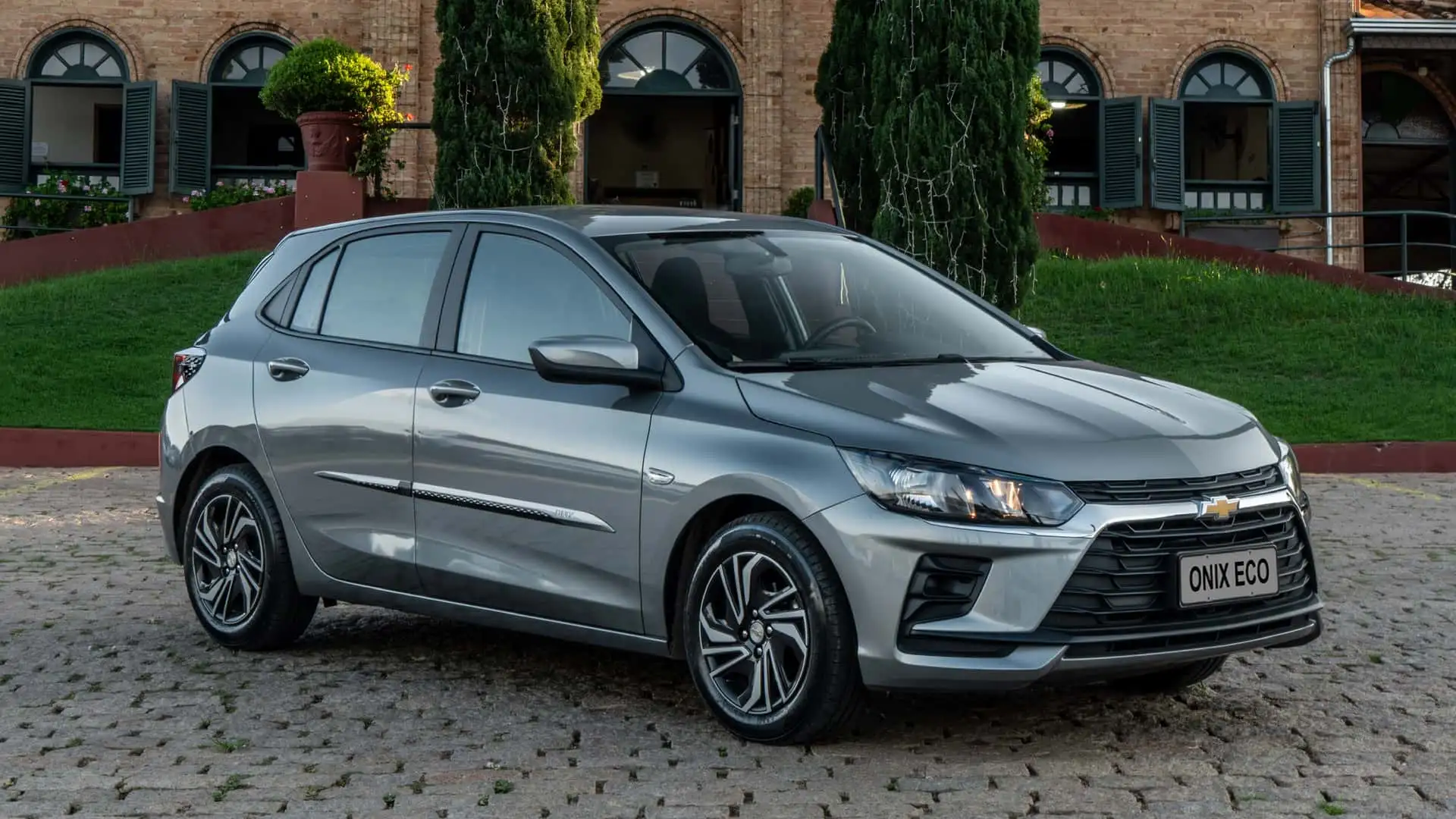
New Chevrolet Onix Eco only runs on alcohol and is the cheapest automatic car in Brazil, for R$ 99.990
New configuration abandons flex technology to take advantage of tax incentives from the Sustainable Car Program and become the cheapest automatic in the country
By
Júlia Haddad
Published on 2026-06-08 at 02:00 PM
Published on 2026-06-08 at 02:00 PM
Be the first to comment.
Summarize with:
Chevrolet presented the Onix 2027 line with an important novelty: the Eco version, equipped with an engine powered exclusively by ethanol. The strategy fits the model into the Sustainable Car Program, linked to the Mover automotive regime, and reduces the price of entry-level automatic versions.
With the benefit fully passed on to the consumer, the Onix Eco becomes the cheapest automatic for sale in the country during the launch campaign. In the hatch, the price drops from R$ 103.190 to R$ 99.990 promotional; the Onix Plus Eco sedan retreats from R$ 106.990 to R$ 103.990.
SEE ALSO:
- Best-selling cars from World Cup countries: Group A
- India gets first flex-fuel car and bets on ethanol to reduce oil imports
- Lecar: Brazilian ‘automaker’ without a car and without a factory wins another government setback
Why only ethanol?
The movement responds to the federal government’s new emissions measurement rules, which now consider the entire fuel cycle, from cultivation to use in the vehicle. As ethanol has a much smaller carbon footprint than gasoline, Chevrolet was able to include an automatic version in the incentive program for the first time; until then, in the Onix line, only manual transmissions benefited.
The new configuration uses the 1.0-liter turbocharged three-cylinder engine with a six-speed automatic transmission. The hardware is identical to that of the flex version; Engineering focused on electronic recalibration to operate only with ethanol, maintaining the 115 hp and 16,8 kgfm of torque.
The dedicated calibration yielded small efficiency gains. In the Onix Plus Eco, consumption is 9.1 km/l in the city and 11.1 km/l on the highway, with 0 to 100 km/h in 10.5 seconds.
In addition to those who already fill up with ethanol, Chevrolet targets companies and fleet owners with ESG goals that want to reduce emissions without migrating to electric vehicles. According to the brand, the Eco cuts about 70% of emissions in the well-to-wheel criterion and is classified by Inmetro as zero fossil CO2 emissions. In exchange, the driver gives up filling up with gasoline – a return to the pure alcohol engine, which accounted for 95.8% of car sales in the country in 1986, before the flex fuel dominated the market in 2003.
SEE MORE ABOUT

0 Comments
Comments are the sole responsibility of their authors and do not represent the opinion of this site. Comments containing profanity or offensive language will not be published. If you identify anything that violates the terms of use, please report it.