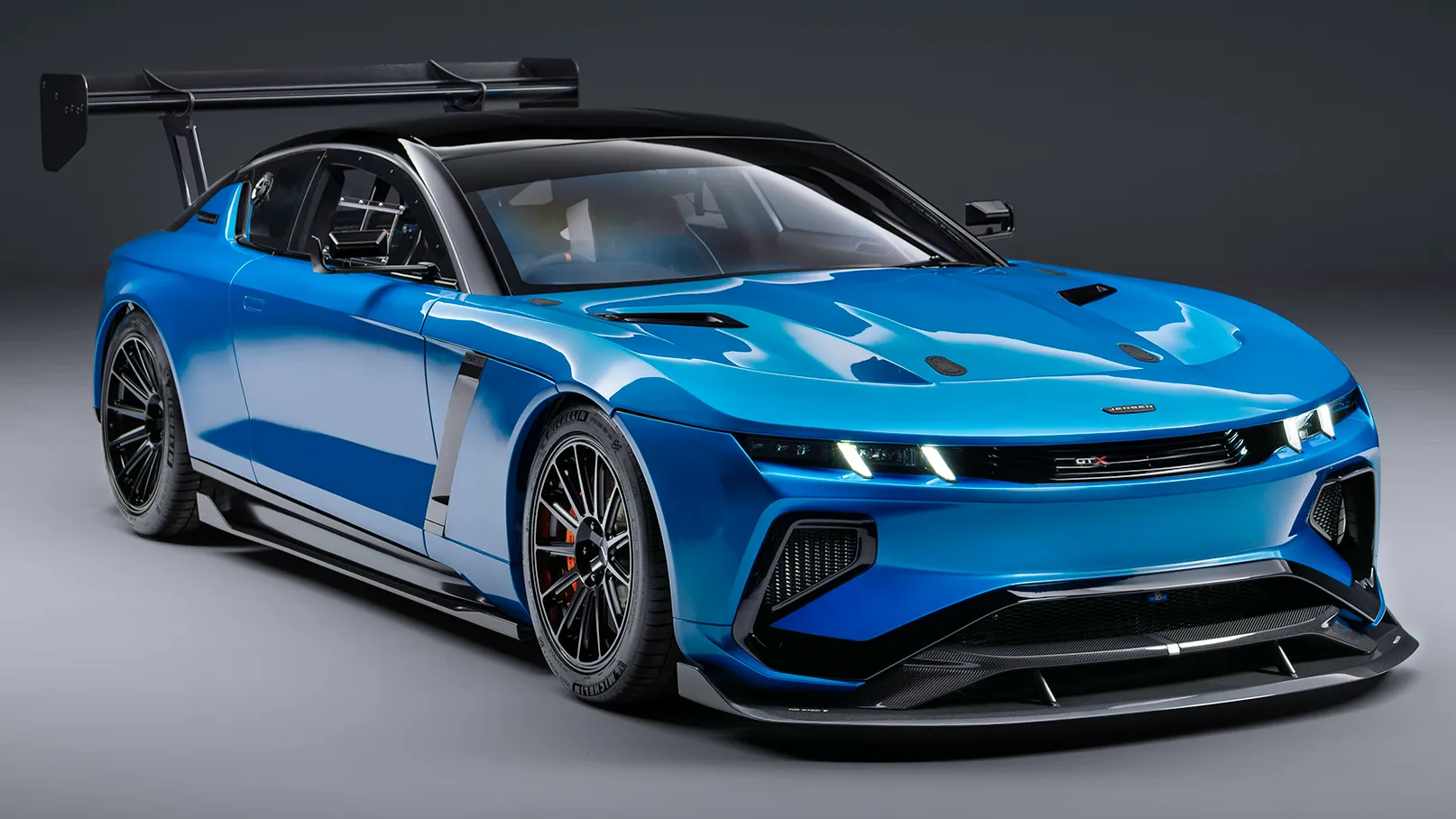
Half a century after closing its doors, Jensen has once again presented its own car. The Interceptor GTX is a track coupe with 973 hp that the British brand describes as an advanced prototype, not a restomod: it serves as a development platform for two street models that should arrive later. According to evo magazine, a made-to-order copy would cost from 850 thousand pounds (about R$ 5,9 million).
The name carries weight: the original Jensen Interceptor was produced between 1966 and 1976, with Chrysler V8 engines from 5.9 to 7.2 liters, and became a symbol of British grand touring before Jensen Motors went bankrupt. Banbury-based Jensen International Automotive spent nearly two decades restoring and repowering these cars, including the Interceptor R, before starting a project from scratch.
American V8 with less than 20% original
parts Under the hood is a 6.8-liter supercharged V8 engine with 973 hp, derived from General Motors’ LT5 architecture and rebuilt by Late Model Engines, of Houston, Texas. The preparation includes CNC-machined cylinder heads, titanium valves, forged rotary assembly, dry sump, 2.65-liter Roots compressor and MoTeC management. Less than 20% of the original GM parts remained, informs Jensen, which says there is room to reach 1,217 hp and more than 152 kgfm according to calibration. The rev cut is at 7,000 rpm.
Photo: Jensen | Disclosure
The engine has been moved back behind the front axle, which improves weight distribution. Power follows a carbon fiber axle, inside a steel torque tube, to a six-speed Samsonas sequential gearbox mounted on the rear axle, with spur gears and Wavetrac differential. Shifts can be made by butterflies or by a lever on the floor.
Hand-beaten body and 350 kg of aerodynamic
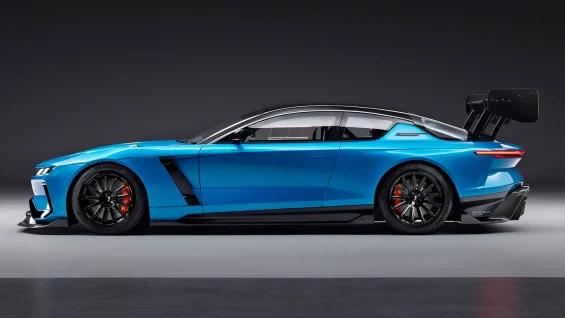
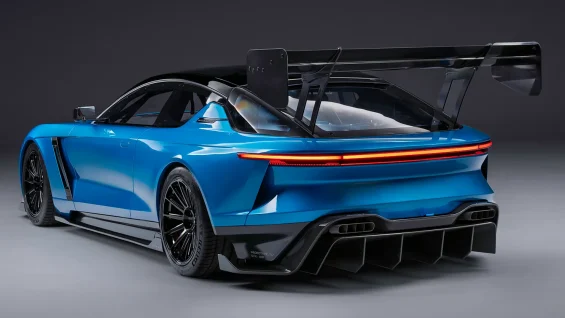
support The design is by the independent studio Avant Design, and the aluminium body was hand-moulded by Coventry Metalcraft on a glued and riveted aluminium monocoque. The aerodynamic components in carbon fibre were in charge of Artiglio Automotive. The adjustable rear wing generates around 350 kg of aerodynamic support, complemented by a front splitter , flat floor and integrated diffuser.
Photo: Jensen | Disclosure
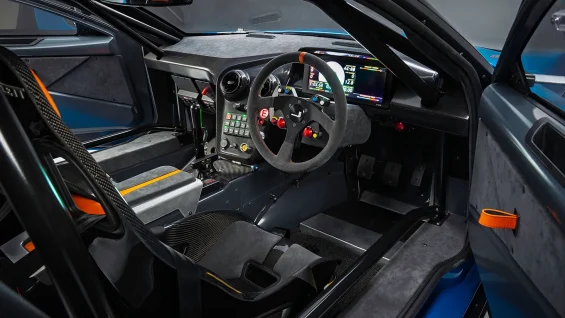
Completing the package are double-wishbone suspension on both axles, three-way adjustable Nitron shock absorbers, AP Racing brakes with floating steel discs, 20″ forged Vossen wheels and Michelin Pilot Sport tires. Inside, there is an FIA-approved cage, carbon fiber Tillett seats, six-point belts, Lifeline extinguishing system, MoTeC dashboard and Alcantara trim with orange stitching.
Jensen says that about 80% of the external design will be kept in the street models: first the GTR, more radical, then the GT, with a luxurious profile, both with a standard H manual or automatic transmission. According to evo, the current tooling holds 10 to 15 units of the GTX before needing to be renewed.
Comments are the sole responsibility of their authors and do not represent the opinion of this site. Comments containing profanity or offensive language will not be published. If you identify anything that violates the terms of use, please report it.