

In decline in China, BYD already earns more from cars sold abroad
Price war and falling plug-in hybrids dropped domestic revenue by 31% and net profit by 20.5%, despite a 34% increase in foreign sales
By
João Paulo Profeta
Published on 2026-09-02 at 10:00 PM
Published on 2026-09-02 at 10:00 PM
Be the first to comment.
Summarize with:
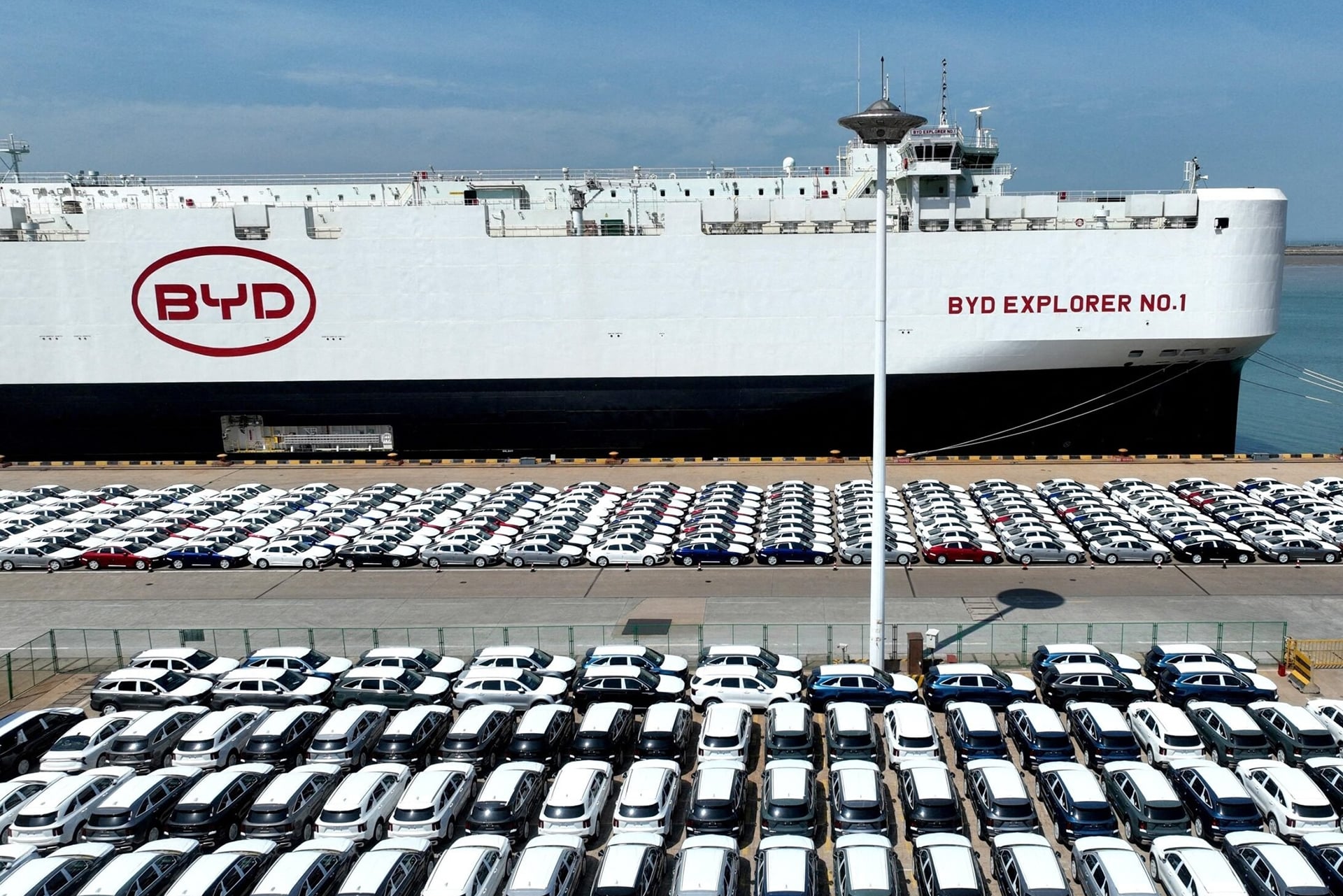
BYD earned more outside China than within the country itself in the first half of 2026, something unprecedented in its history. According to the balance sheet released by the manufacturer on August 28, 53% of total revenue came from international markets, in a semester marked by price war and collapse in domestic demand.
In the first six months of the year, the automaker accumulated 181.3 billion yuan (about US$ 27 billion, or R$ 138 billion) in foreign revenue, up 34% over the same period in 2025. In the domestic market, collection fell 31%.
The dimension of the inversion appears in the volumes. The BYD brand sold 795,169 vehicles in China in the first half of the year, down 45.9% year-on-year, according to insurance records compiled by the China EV DataTracker. In the same period, the group sold 792,256 cars outside the country — practically the same number, but up 70.6%.
The external performance was not enough to shield the result. Global revenue fell 7.1% to 344.8 billion yuan (US$50.9 billion), and net income attributable to shareholders fell 20.5% to 12.3 billion yuan (US$1.8 billion).
Brazil is the largest foreign
market The international operation worked as a margin shield. The gross margin of sales abroad reached 22%, an increase of 1.9 percentage points in one year, and pulled the consolidated gross margin from 18.01% to 18.85%.
The advance is supported by investments in manufacturing capacity and distribution in Europe, Southeast Asia and Latin America. Brazil has become BYD’s largest market outside China and is on, along with Hungary and Turkey, the list of countries where the automaker is building local production.
The problem is in hybrids
The domestic weakness has a specific address: plug-in hybrids. The group sold 2,288,709 units in the category in 2025, down 7.9% over 2024, and the decline continued in 2026 — 1,265,017 cars between January and August, 11.2% less than a year earlier. Other brands in the conglomerate are doing better, such as Fang Cheng Bao, which sold 131 thousand units in China in the first half of the year, up 115%, a volume still insufficient to compensate for the loss of the main brand.
July and August suggest a turnaround. In the two months, BYD sold 844,456 cars worldwide, up 18.5%, driven by pure electric (+29.6%), while plug-in cars advanced 6%. In August alone, foreign sales hit a record of 190 thousand units, more than double that recorded in the previous year.
The pressure is not exclusive to BYD. Chinese retail sales of passenger vehicles fell 21.1% in July, the tenth consecutive monthly retraction, according to the CPCA association, while the country’s exports grew 88.2%. In the domestic market, more than a hundred brands continue to compete for space.
SEE MORE ABOUT

0 Comments
Comments are the sole responsibility of their authors and do not represent the opinion of this site. Comments containing profanity or offensive language will not be published. If you identify anything that violates the terms of use, please report it.