


In addition to sirens and paintings, police vehicles must also have specialized ergonomics
New trend focuses on the context of operations and greater need for agility, security and interaction between agents and vehicle
By
Julia Vargas
Published on 2026-07-21 at 08:00 AM
Published on 2026-07-21 at 08:00 AM
Be the first to comment.
Summarize with:
The adaptation of police vehicles goes through a change in concept. If before the focus of the adaptation was restricted to the installation of sirens, radios and shields, today vehicle ergonomics is highlighted. The goal is to make the vehicle not only a means of transport, but also a functional, safe work environment adapted to the routine of the security forces.
SEE ALSO:
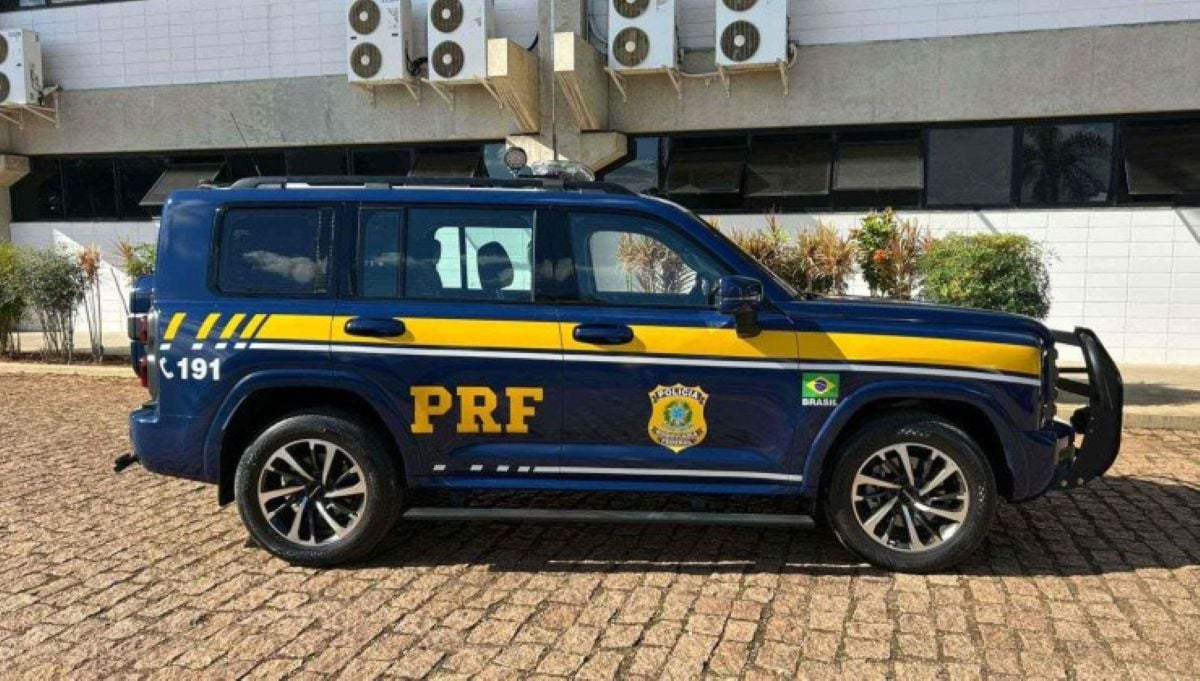
- Sales success, GWM Haval H9 may be PRF’s new vehicle
- Florida wins the most beautiful car contest in the USA for the fourth time in a row
- Renault Oroch becomes a vehicle of the PM of MG with digital radio, GPS and 4G tracking
Fewer distractions behind the wheel and faster response
Police officers spend long working hours in their vehicles and often need to handle various systems quickly and urgently. Therefore, improper positioning of buttons, screens, and supports can generate distractions or even dangerous errors during high-speed travel.
This relationship was proven in a study by the National Institute for Occupational Safety and Health (NIOSH), in the United States, published in the scientific journal Machines. The research concluded that the incorrect arrangement of onboard equipment increases the driver’s levels of distraction, compromising the safety of the mission.
As a solution, automotive engineering has focused on improving the DVI (Driver-Vehicle Interface), the interface between the driver and the vehicle, ensuring that all commands are in intuitive positions and within reach.
Key benefits of ergonomics in patrol vehicles:
- The integration between ergonomics, technology and internal design brings direct operational advantages to the police routine:
- Reduced physical exhaustion: minimizes pain and fatigue accumulated over long shifts.
- Intuitive controls: allows you to activate sirens, lights and communication without looking away from the road.
- Quick access to equipment: facilitates the handling of work tools in emergency situations.
- Accident prevention: reduces the risk of collisions caused by distractions inside the cabin.
The application of ergonomic concepts, already consolidated in other countries, has become standard not only in police vehicles, but also in ambulances, armored vehicles and special operational units, strengthening the efficiency of corporations and the preservation of the health of agents on duty.
SEE MORE ABOUT

0 Comments
Comments are the sole responsibility of their authors and do not represent the opinion of this site. Comments containing profanity or offensive language will not be published. If you identify anything that violates the terms of use, please report it.