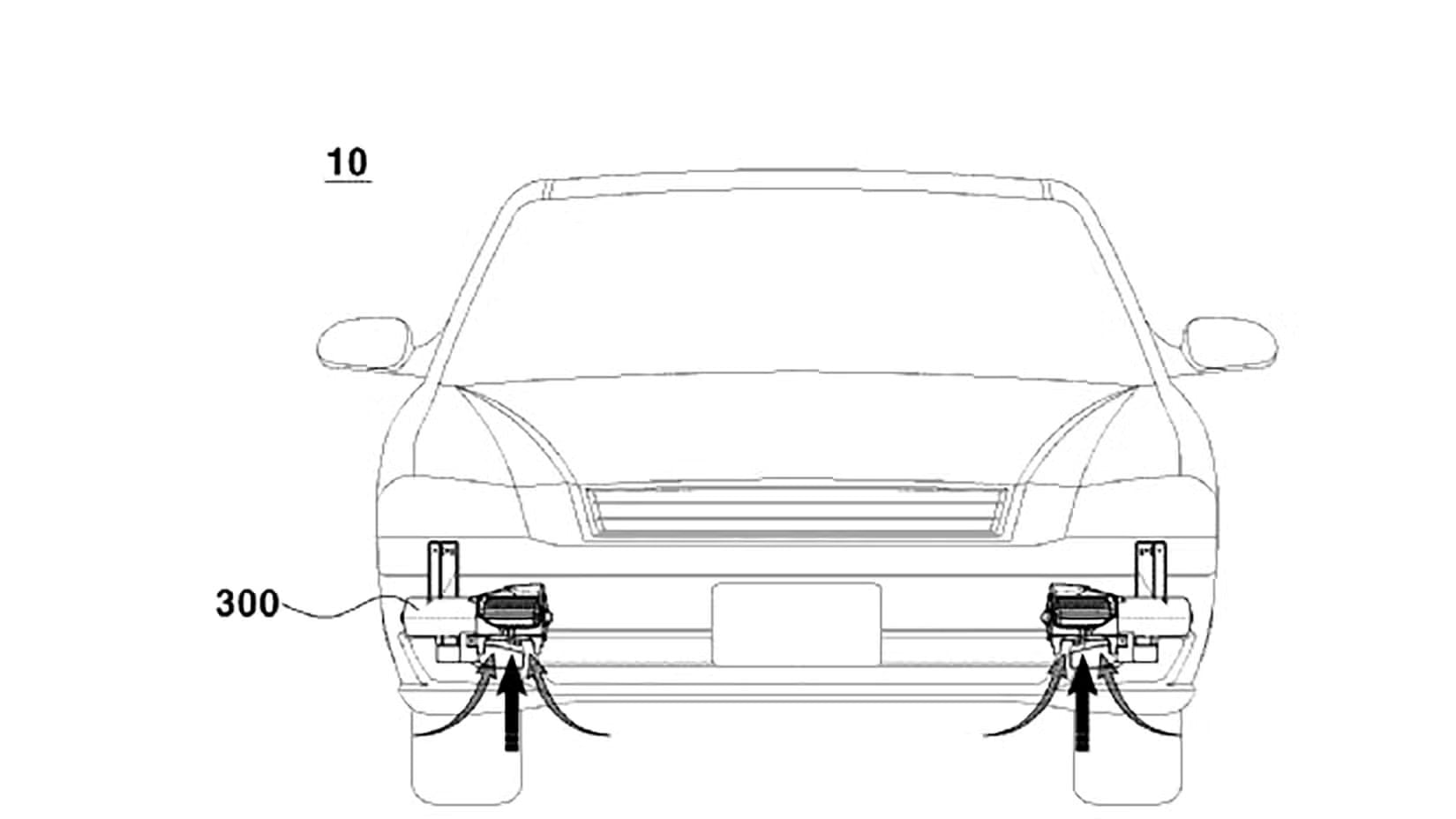
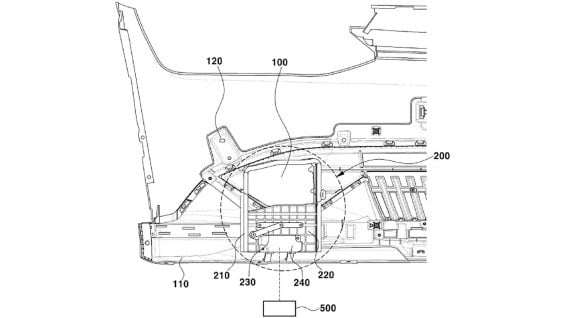
Hyundai and Kia have filed a patent for an embedded wind power generation system that promises to increase the efficiency of electric vehicles, hybrids and even models powered only by combustion. Revealed by the CarBuzz website, the technology takes advantage of the airflow captured by the front grille to produce electricity in specific situations — without the intention of fully recharging the battery during travel.
The system positions a small generator behind movable fins installed on the front grille. The air is conducted through a channel to the generating unit and then expelled through the bottom or rear of the car. When generation fails to compensate, the fins close to reduce aerodynamic drag.
The concept yields more at low speeds. At an all-time high, air resistance would require more energy to move the vehicle than the generator could recover. On urban routes, decelerating, downhill and even with the car stopped in a favorable wind, the system could generate electricity to supplement the battery charge — going beyond what regenerative braking recovers.
Although it can equip 100% electric vehicles, it is in hybrids that the solution tends to yield the most, according to the proposal. The energy produced would help keep the battery charged, expanding the use of the electric motor and allowing the combustion engine to work longer in the higher efficiency range – and then be turned off in favor of electric running. In exclusively combustion cars, the generator could take over part of the alternator’s function and power the 12-volt systems, relieving the mechanical strain on the engine.
Hyundai and Kia have not disclosed the power of the equipment or confirmed series production. It is worth remembering that a patent does not guarantee commercial use: automakers usually register solutions also to protect intellectual property. In addition, small generators tend to have limited efficiency in actual use, and the energy sent to the battery still faces conversion losses throughout the electrical assembly.
The movement is explained by the persistent appetite for efficiency even outside the electric world. In markets such as the United States, most consumers still want to keep gasoline cars on the road for longer, and any advance capable of cutting consumption helps to prolong the relevance of these mechanics. The record reinforces that Hyundai and Kia are also pursuing marginal gains, not just big bets on electrification.
Comments are the sole responsibility of their authors and do not represent the opinion of this site. Comments containing profanity or offensive language will not be published. If you identify anything that violates the terms of use, please report it.