A team linked to China’s chemical industry claims to have resolved the impasse that prevented BMW from taking the darkest car ever produced to the streets. Researchers at NIPSEA Group, Nippon Paint’s color technology division in China, have developed an ultra-matte paint capable of absorbing more than 99.9% of light. Unlike the Vantablack paint that covered a BMW X6 in 2019, the new pigment is designed to be manufactured on a large scale and applied with conventional painting equipment.
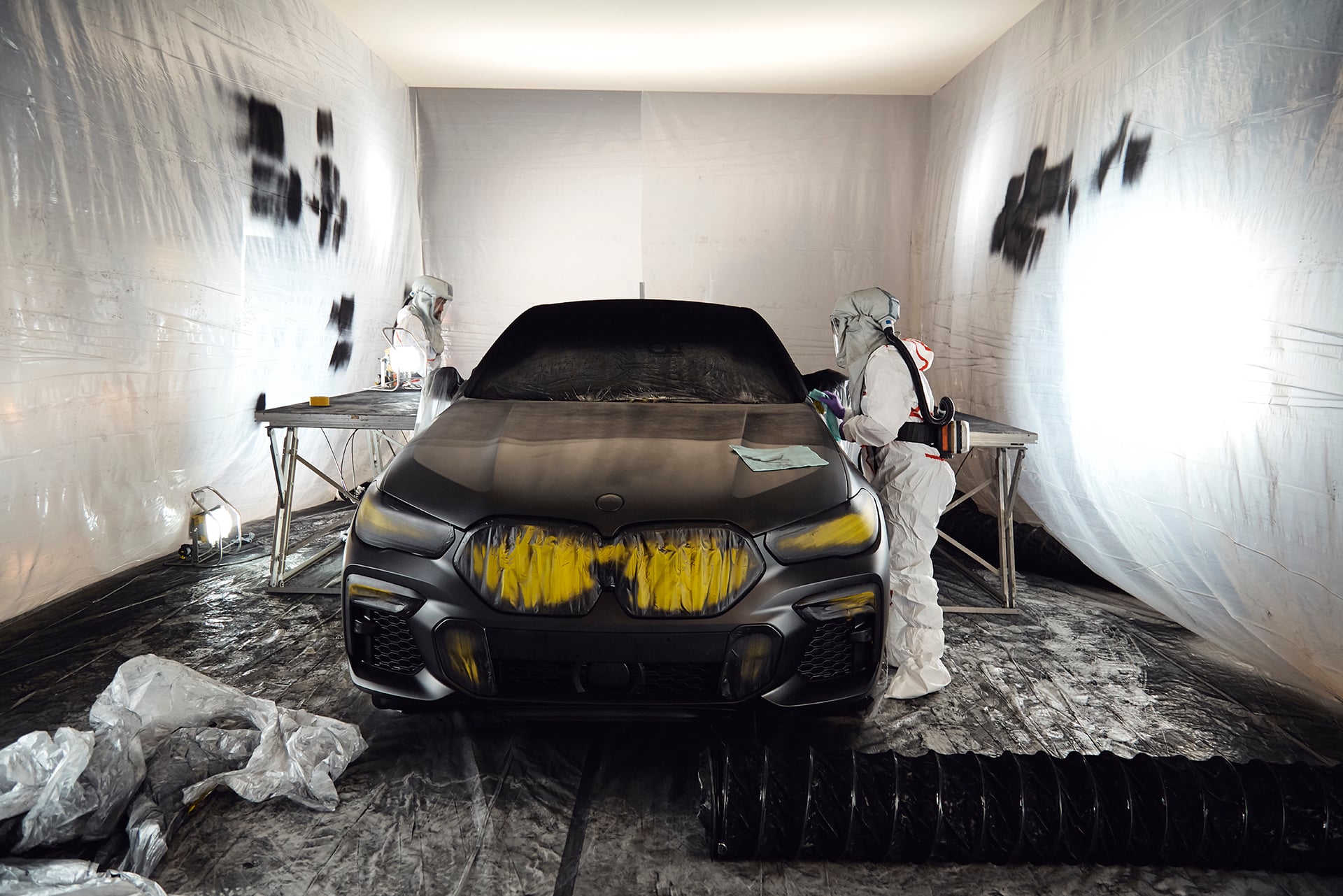
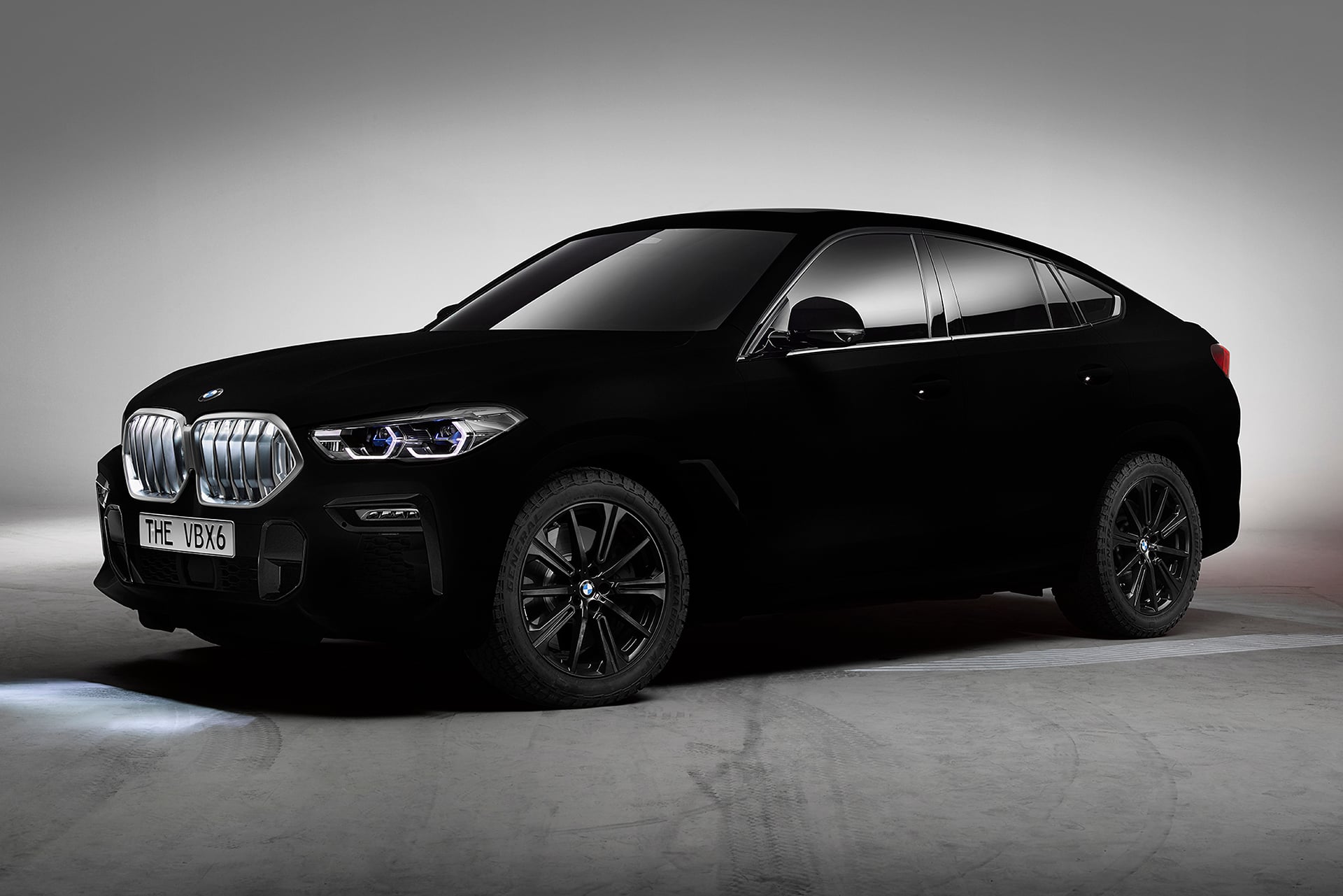
The finish refers directly to that X6 presented seven years ago, which absorbed 99.965% of light and looked less like a car than a hole cut in the landscape, flattening the volume of the body to the point that the eye sees only a silhouette. The paint, created by the British Surrey NanoSystems, never went beyond a showpiece: it was fragile, expensive and difficult to apply, which made its mass production unfeasible.
Vantablack paint even distorted the three-dimensional aspect of the car because it was so dark, but it had limited application
The new formulation attacks precisely this bottleneck. According to the study, the recipe combines nanoscale carbon black and carbon nanotubes, ground together in an aqueous medium by a high-energy process that keeps the particles stably distributed — an essential condition for industrial manufacturing. In an accelerated stability test, the mixture was subjected to a centrifuge with a force greater than 2,000 times that of gravity for seven hours and showed minimal separation.
The extreme darkness doesn’t just come from chemistry: the surface forms a microscopic relief of peaks and valleys that traps light. Each ray that enters this structure bounces between the indentations and loses energy, until almost nothing is reflected back.
According to the researchers, the coated panels withstood environments with 95% humidity at 40 °C and remained submerged in water for 10 days with no visible signs of degradation. In the measurements, the average reflectance was around 0.08%, compared to about 0.11% for a common black ink – a performance close to that of Vantablack’s vertical nanotube arrangements, but in a format designed for the assembly line. The work was published in the scientific journal Matter & Light, of the Cell Press group, and its main objective was to evaluate the adhesion and initial durability of the coating.
None of this means, however, that an “absolute black” car will arrive at dealerships anytime soon. Before being considered suitable for large-scale use in the automotive industry, the paint still needs to prove resistance to ultraviolet radiation, scratches, corrosion, and stone impact, among other demands.
Comments are the sole responsibility of their authors and do not represent the opinion of this site. Comments containing profanity or offensive language will not be published. If you identify anything that violates the terms of use, please report it.