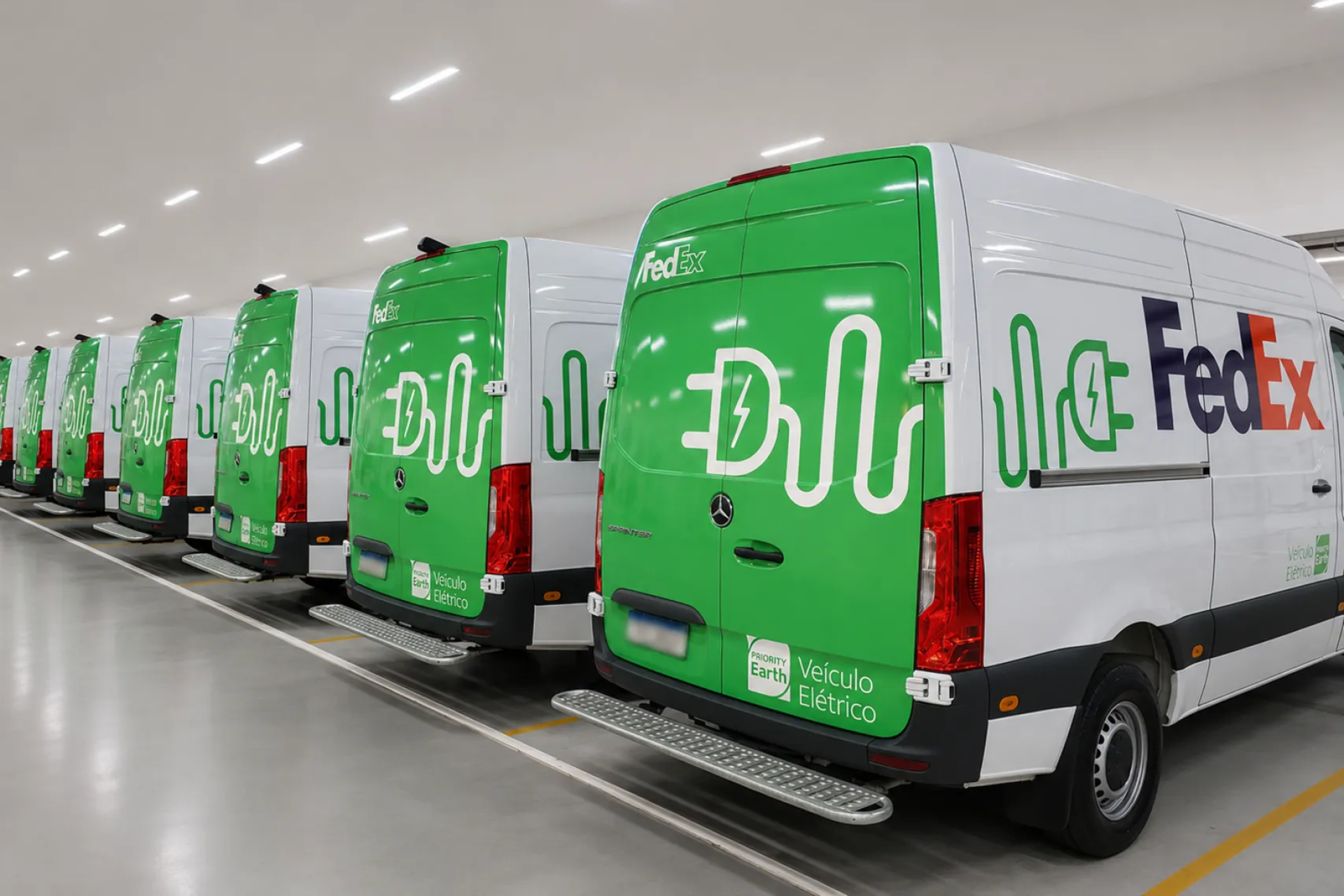
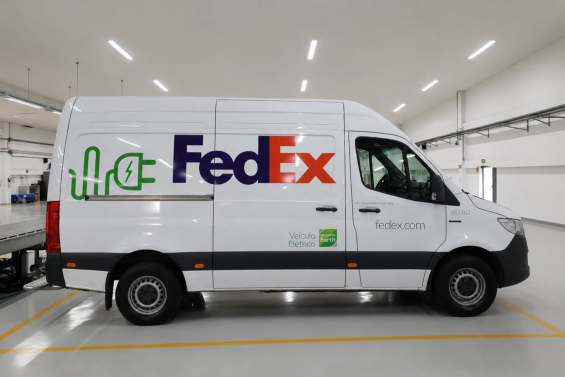
Mercedes-Benz delivered 17 units of the eSprinter Van Street 320 to FedEx, expanding the delivery company’s electric fleet in the country. With the reinforcement, FedEx now operates 53 electric vehicles in Brazil — part of the company’s global plan to electrify 100% of its pickup and delivery fleet by 2040.
The eSprinter has an electric range of up to 478 km.
The new vans will be destined for FedEx stations in Campinas (SP), Curitiba (PR) and São Paulo (SP). Among the attractions of the model for urban operation is the possibility of being driven with a category B driver’s license, which expands the number of eligible drivers. In addition to not emitting local pollutants, the electric van makes the operation quieter and more efficient — relevant advantages in the heavy traffic of large cities.
This is the fourth delivery of electric vehicles from Mercedes-Benz to FedEx in three years. The most recent had occurred in August 2025, with 27 units. A pioneer in electric cargo transport in Brazil – where it started using vehicles of this type in 2013 – FedEx already operates electric models in urban centers such as Salvador, Recife, Belo Horizonte, Rio de Janeiro, São Paulo, Curitiba and Campinas.
The eSprinter is offered with two battery options, 81 kWh and 113 kWh, and a range of up to 478 km in the WLTP cycle in the highest capacity configuration. Imported from Germany, the van uses lithium-iron-phosphate (LFP) batteries and can be recharged at alternating current, up to 11 kW, or at fast direct current stations, up to 50 kW, which replenish 10% to 80% of the charge in about 90 minutes. With a load capacity of up to 14 m³ and a total gross weight of up to 4.25 tons, the model has rear-wheel drive and modular architecture.
The movement follows the pressure for low-emission logistics in metropolises, where circulation restriction policies and decarbonization goals stimulate the adoption of electric vehicles in cargo transport. Even so, the segment advances at a gradual pace in the country, depending on price, charging infrastructure and contracts with large fleet owners.
Comments are the sole responsibility of their authors and do not represent the opinion of this site. Comments containing profanity or offensive language will not be published. If you identify anything that violates the terms of use, please report it.