


Driving a manual car can do more for your brain than you think
Japanese study links coordination of gear changes to areas of the brain linked to attention and decision-making
By
Júlia Haddad
Published on 2026-07-01 at 05:00 PM
Published on 2026-07-01 at 05:00 PM
Be the first to comment.
Summarize with:
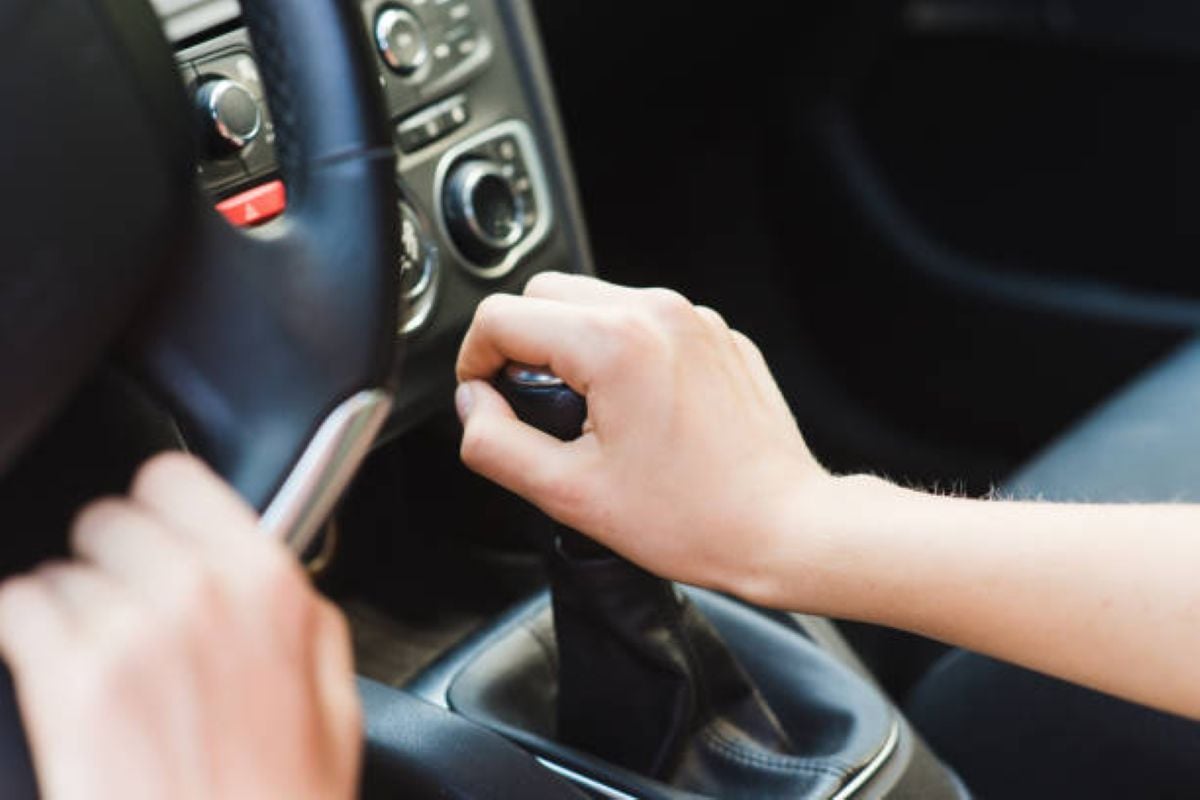
Although increasingly rare in the market, the manual transmission can offer a benefit that goes beyond driving pleasure: keeping the brain in shape. This is what a study conducted in Japan by neuroscientist Ryuta Kawashima suggests, for whom the coordination required between clutch, lever and accelerator stimulates areas of the brain linked to attention, planning and decision-making.
The survey was released by the Japanese magazine Best Car and gained international repercussion in the following days. A professor at Tohoku University, where he works at the Institute for Development, Aging and Cancer, Kawashima is known for having developed the scientific basis for Nintendo’s Brain Age series of games — a franchise that even features his face. According to the researcher, driving a manual transmission car significantly activates the prefrontal cortex, a region associated with memory, attention and decision-making.
The explanation lies in the overload of simultaneous tasks. Unlike an automatic, the driver needs to synchronize the commands, read the traffic and decide the right time for each gear change — an effort of concentration that the automatic transmission hardly requires. In a country with an increasingly aging population like Japan, Kawashima argues, this daily “gymnastics” could help preserve some cognitive functions over time. The scientist himself ponders, however, that replacing the automatic with the manual is not a recipe against brain aging.
The topic gains relevance at a time when manual transmission is losing ground in the industry. Interestingly, in Japan itself, the manual transmission accounts for only 1% to 2% of new car sales. In recent years, automakers have reduced the offer even in models aimed at enthusiasts: Volkswagen retired the manual version of the Golf GTI and Golf R, and the Corvette abandoned the third pedal in the current generation (C8). Jeep, on the other hand, stopped offering the Gladiator with manual transmission in the 2025 model year, keeping the option only on the Wrangler.
To preserve part of this experience, manufacturers have bet on simulation: Hyundai already sells the feature in the Ioniq 5 N, which imitates gear changes and even engine noise; Toyota and Subaru have filed patents for similar systems for electric vehicles, some with a clutch pedal capable of “drowning” the car. Honda, in turn, reproduces simulated changes in the Prelude hybrid. None of them recreate the real manual transmission, but all try to give back to the driver part of the involvement that the third pedal provided.
SEE MORE ABOUT

0 Comments
Comments are the sole responsibility of their authors and do not represent the opinion of this site. Comments containing profanity or offensive language will not be published. If you identify anything that violates the terms of use, please report it.