Brazil’s World Cup games empty streets of capitals and reduce energy consumption in the country
Behavior is repeated in each game of the National Team: peak displacement before the ball rolls, empty streets during the match and electric network on a 'roller coaster'
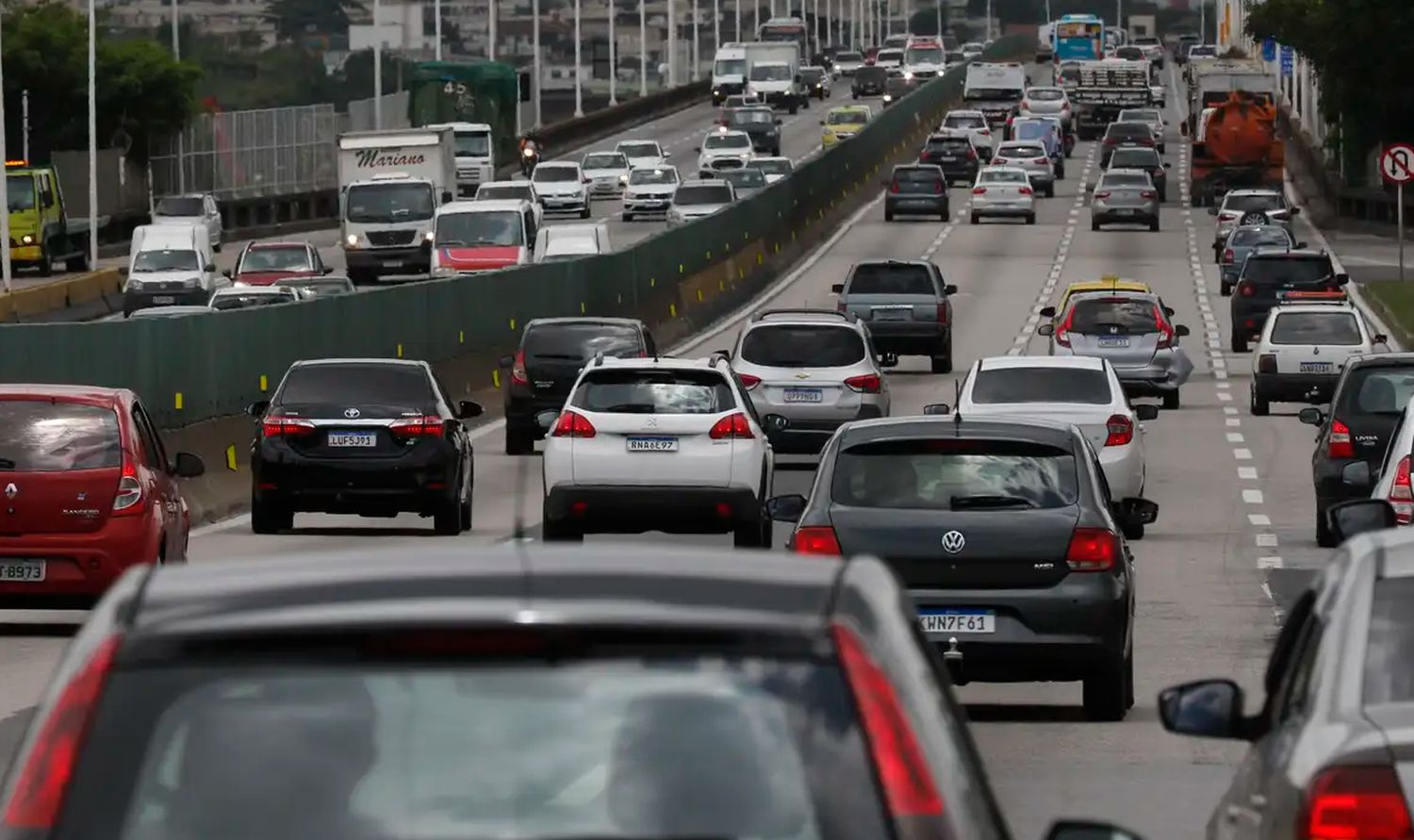
Traffic in São Paulo skyrocketed right before the game, plummeting when the ball rolled (Photo: Fernando Frazão | Agência Brasil)
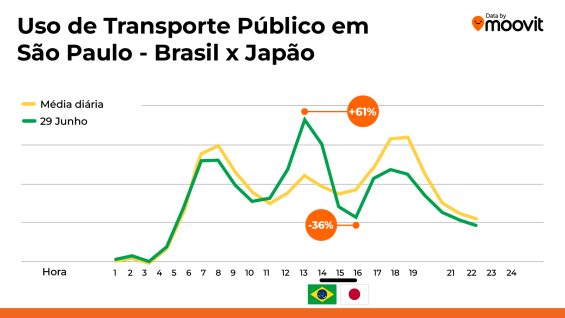
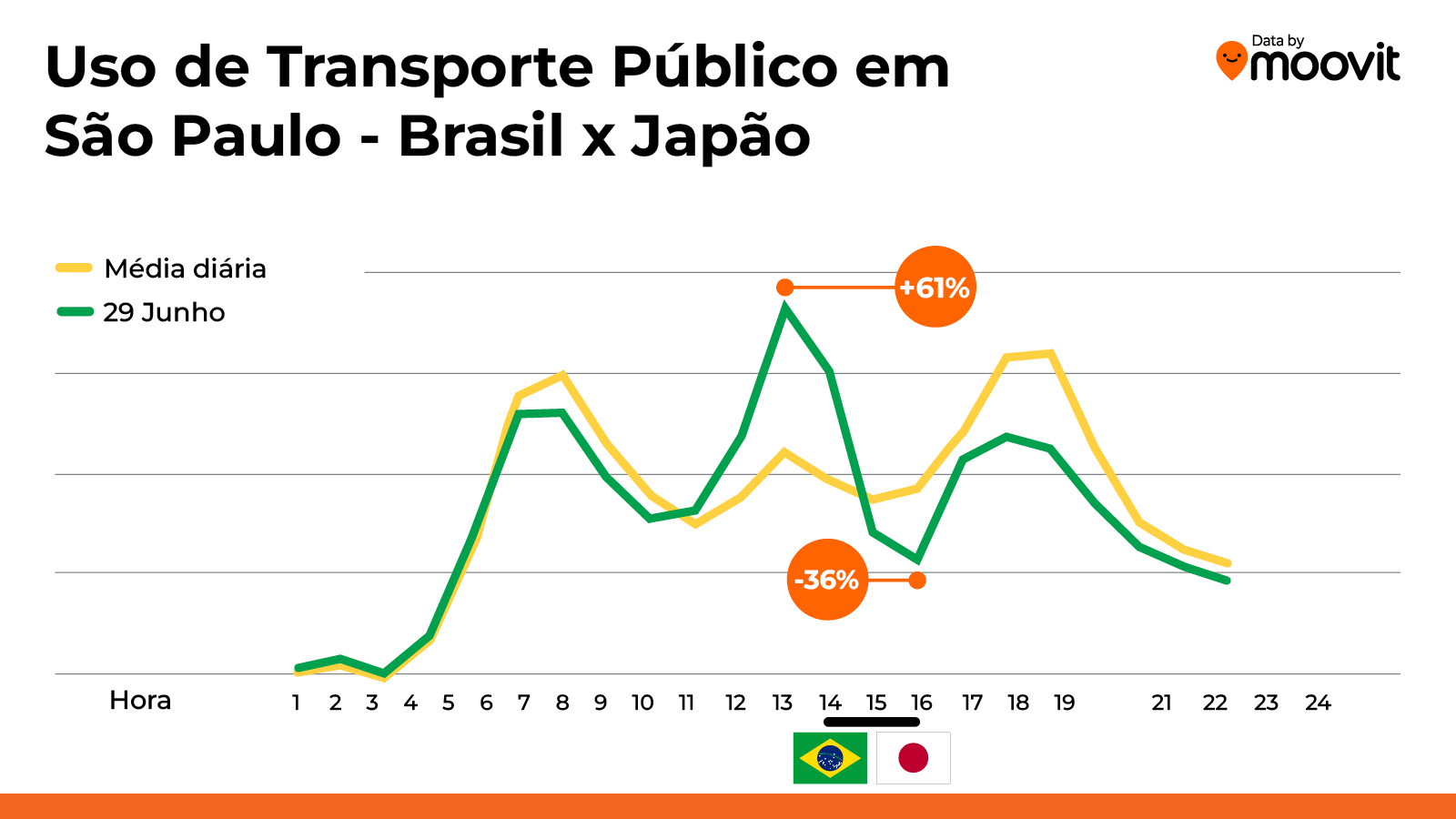
The Brazilian National Team’s games at the 2026 World Cup are profoundly changing the routine of the country’s cities, and mobility data clearly shows this. On Monday (29), the day of Brazil’s 2-1 victory over Japan, the Moovit app recorded a peak in public transport use 61% above average in São Paulo around 1 pm, an hour before the kick-off. It is the reflection of those who anticipated the return home. During the match, the movement plummeted: at 4 pm, it was 36% below the usual and, even after the game, it did not return to the average of other working days.
The pattern was repeated in the streets. According to CET, the capital dawned with only 122 km of slowness at 8 am, against 421 km on the previous Monday — a drop of 71%. Around noon, with the rush home and to the bars, the congestion jumped to 943 km at 1 pm, the highest of the month at that time. During the match, the slowness dropped to a derisory 18 km at 4 pm, at a typical level of holidays. In the previous match, against Scotland, when the rotation was suspended in the afternoon, São Paulo had hit 1,690 km at 6 pm — the worst index of 2026.
The effect is not limited to the capital of São Paulo. Traffic surveys point to Campo Grande, Manaus, Governador Valadares and Boa Vista among the cities most affected by the change in behavior on game days. In Belo Horizonte, the city hall even set up a special traffic and bus operation for the duel with the Japanese.
The energy also stops when the ball rolls
The same dance appears in electricity consumption. According to the ONS, the load of the National Interconnected System fell 21% during Brazil x Japan, reaching a minimum of 66,515 MW at 2:47 pm. Only between 1 pm and the start of the match there were 4.5 GW less — equivalent to the average consumption of Rio Grande do Sul.
As the game started at 2 pm, at the peak of solar generation, the operator had to cut about 21.8 GW of renewable sources to preserve the stability of the grid, a volume equivalent to one and a half times the Itaipu plant. The behavior followed the script of previous matches: drops of 14.4% against Scotland, 9.6% against Haiti and 8.6% in the debut against Morocco, always with a strong rebound of load at halftime, when the fans run to the fridge.
Comments are the sole responsibility of their authors and do not represent the opinion of this site. Comments containing profanity or offensive language will not be published. If you identify anything that violates the terms of use, please report it.