

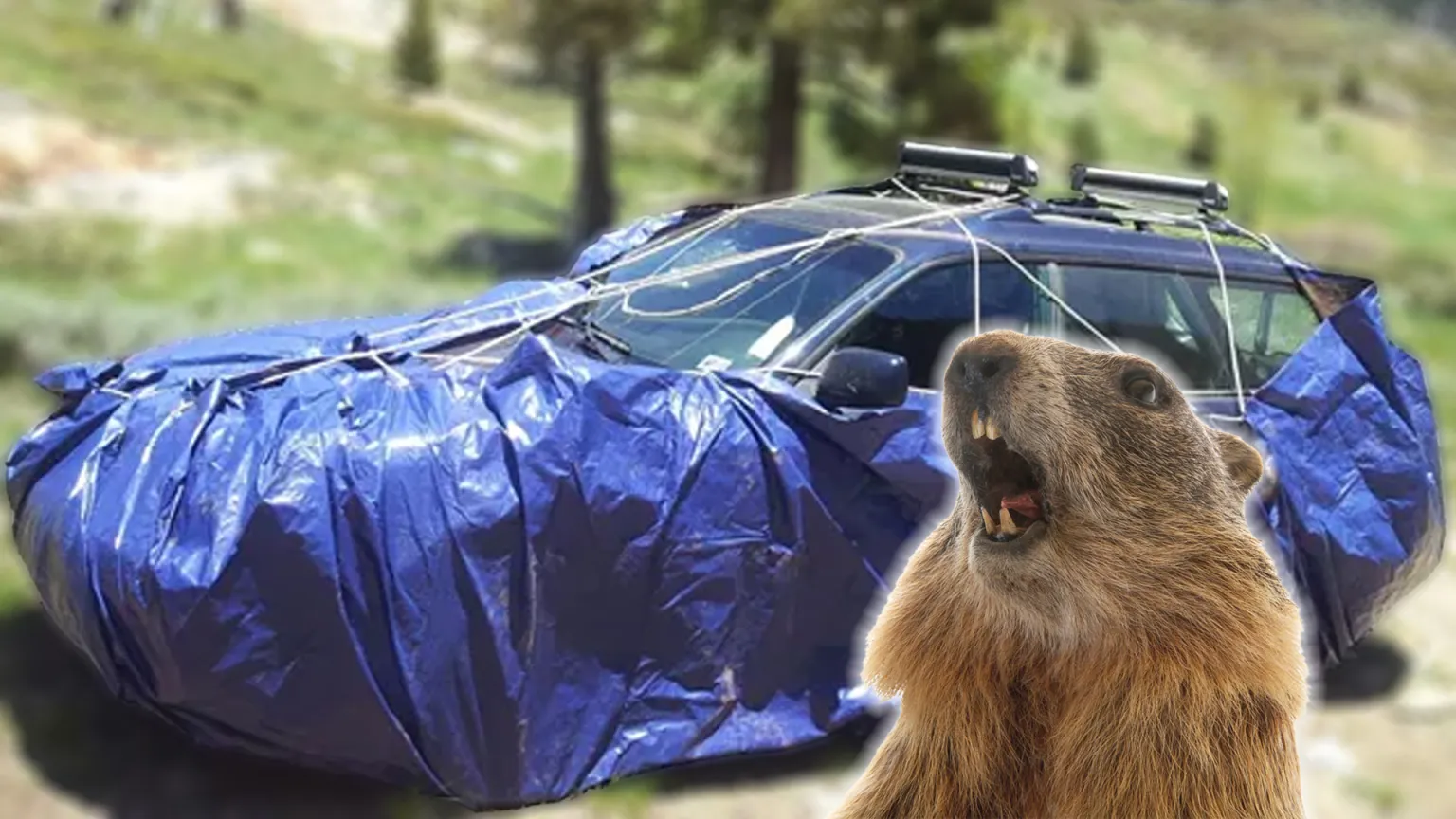
Drivers are wrapping their cars with tarpaulin because of a rodent attracted to vehicle fluids
Rodents in U.S. national parks are attracted to the sweet smell of the radiator additive and gnaw on hoses, worrying tourists
By
João Paulo Profeta
Published on 2026-09-02 at 12:00 PM
Published on 2026-09-02 at 12:00 PM
Be the first to comment.
Summarize with:
The United States National Park Service (NPS) recommends that visitors to Mineral King, an area of Sequoia National Park and Kings Canyon, in California, park on a plastic tarp and then wrap their own car with it, covering the wheel arches. The measure, which yielded images of vehicles wrapped like sandwiches, serves as a barrier against yellow-bellied marmots, rodents attracted by the sweet smell of the coolant.
According to the NPS, from spring to midsummer in the Northern Hemisphere, groundhogs in the region gnaw on radiator hoses and electrical wiring, and are capable of immobilizing a vehicle. The agency recommends the reinforced use of the tarpaulin until mid-July and advises washing the bodywork, floor and engine compartment before the visit. On the way back, the driver should inspect hoses, belts, wiring and the coolant level before starting.
Chicken wire no longer
works Tarpaulin replaced an older solution. Surrounding the car with chicken wire is no longer recommended because groundhogs have learned to get around the material, informs the NPS, which asks for the use of only non-toxic methods and warns not to be responsible for damage, nor to ensure that the guidelines themselves work.
The problem is not new either. A technical report by the United States Geological Survey already dealt with the damage caused by marmots to vehicles in Mineral King in 1986. In an article published in 2001 by Sierra magazine, ecologist Harold Werner, then in Sequoia National Park, estimated 20 to 40 cars damaged per summer, attributed to about 200 animals, numbers that have never been officially updated. The NPS also reports cases of marmots that did not leave the engine safe in time and traveled as unwitting hitchhikers to Southern California.
Sweet and lethal
fluid The attraction of the additive takes a heavy toll on the animal. Ethylene glycol, the basis of most cooling fluids, has a sweet taste and causes acute kidney failure and death in small mammals and humans. The risk is not limited to the fauna of American parks: dogs are equally sensitive to smell, which makes any leak in Brazilian garages and workshops a danger to domestic animals.
For the American website The Drive, which raised the case from a video from The Wall Street Journal, there is a hypothesis to explain the concentration of occurrences in the region. Andrew P. Collins, executive editor of the publication, evaluates that the long and steep climb to the park subjects the cooling system to prolonged stress, which increases the chance of leaks and the expulsion of excess fluid through the transshipment pipe. The thesis is not confirmed by the park service, which treats the tarp as a physical barrier, and not as a way to contain the odor.
SEE MORE ABOUT

0 Comments
Comments are the sole responsibility of their authors and do not represent the opinion of this site. Comments containing profanity or offensive language will not be published. If you identify anything that violates the terms of use, please report it.