

Donald Trump’s team unintentionally asks Brazil to favor Chinese cars
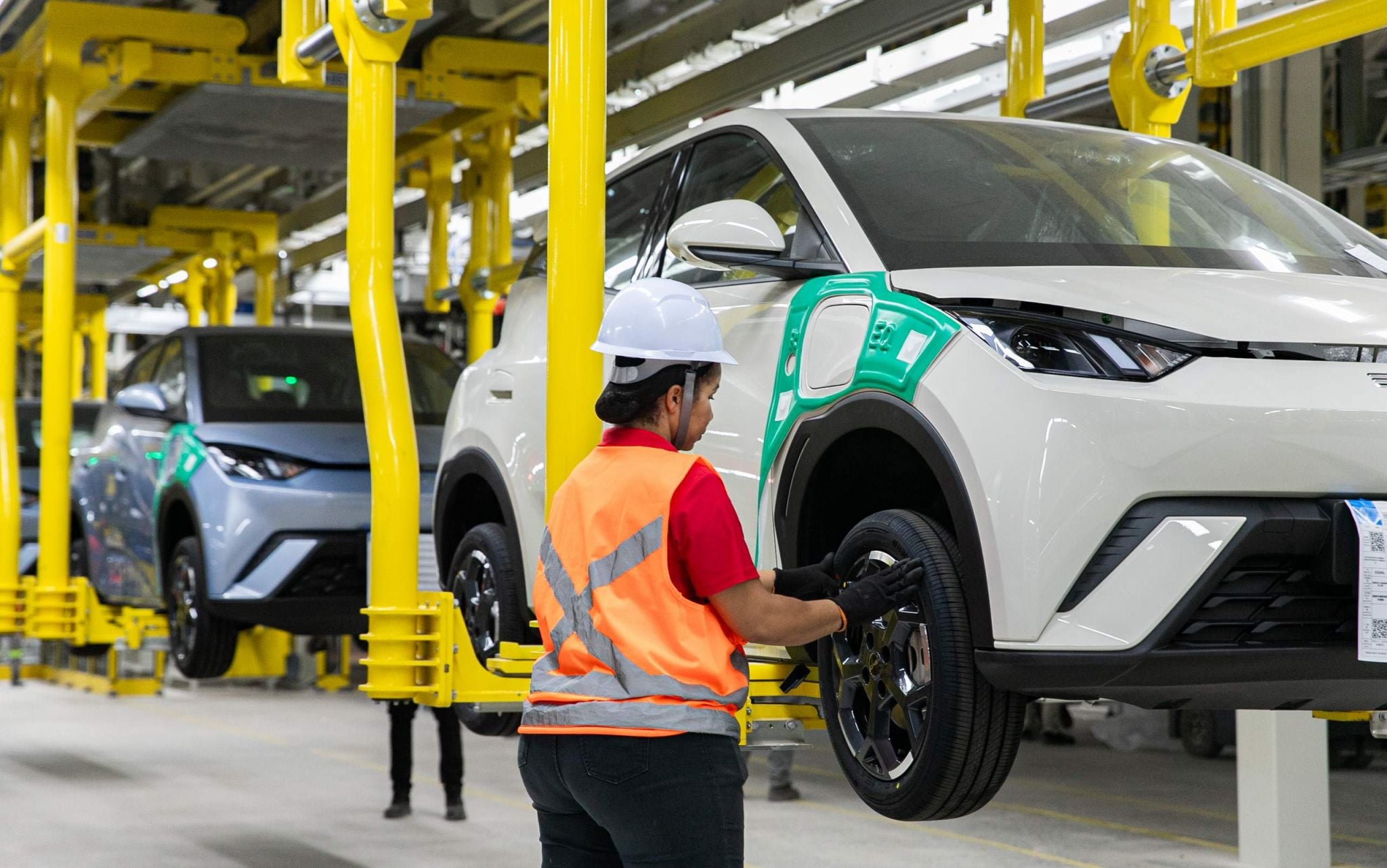
By asking for a tariff cut on vehicles, the US ran into a problem: those who would gain the most would be the Chinese automakers
By
Júlia Haddad
Published on 2026-07-03 at 07:00 PM
Published on 2026-07-03 at 07:00 PM
Be the first to comment.
Summarize with:
In the midst of the tariff negotiations, a request from the United States for Brazil to reduce the import tariff on vehicles ran into an inconvenient effect: those who would profit most from the tax cut would not be the American automakers, but the Chinese. It was with this argument that the Brazilian negotiators resisted Washington’s demand, according to reports collected by CNN from people who participated in the meetings, which were kept confidential.
The tax applied by Brazil on vehicles that come from abroad is one of the main points of negotiations between the two countries. Today, Mercosur’s Common External Tariff sets a rate of 35% for the import of vehicles, regardless of origin. The Office of the U.S. Trade Representative (USTR) has asked that this percentage to drop for foreign-made motor vehicles.
In the conversations, representatives of the Brazilian government noted that the term covers a wide universe – passenger cars, utility vehicles, electric, hybrids and combustion cars – and asked the American delegation to point out the specific “tariff line” in which it is considered more competitive than the global competition. The answer did not come.
According to CNN’s Daniel Rittner blog, a Brazilian negotiator even explained the reasoning directly to the head of the USTR, Jamieson Greer: if Brazil lowered tariffs, the likely result would not be for consumers to buy more American cars, but Chinese models, which would be even cheaper — making President Donald Trump “even more nervous” with the country.
It was then that an unusual request arose: to reduce the rates only for vehicles manufactured in the United States, leaving out all other suppliers, from China to Mexico, from Korea to Germany. The Brazilian answer was direct: “we cannot do that”.
The impediment is a basic rule of international trade: the most-favored-nation clause, a founding principle of the World Trade Organization (WTO), which obliges to extend to all countries any concession made to a single partner.
The Brazilians also pondered that, even if the country tore up its commitments to the WTO and granted the cut only to the Americans, the Judiciary is independent: a vehicle importer would file a request for an injunction to extend the reduction to Chinese cars or cars of other origins – and would hardly have the request denied.
Without consensus, the negotiations stalled. An agreement before July 15, the date set by the USTR for the entry into force of the tariff, appears as a remote possibility.
SEE MORE ABOUT

0 Comments
Comments are the sole responsibility of their authors and do not represent the opinion of this site. Comments containing profanity or offensive language will not be published. If you identify anything that violates the terms of use, please report it.