

Chinese government points out irregularities in the manufacture of the Geely EX2
The news comes a day after four Chinese government agencies launched a year-long campaign to tighten quality control in the sector
By
Júlia Haddad
Published on 2026-09-01 at 10:00 AM
Published on 2026-09-01 at 10:00 AM
Be the first to comment.
Summarize with:
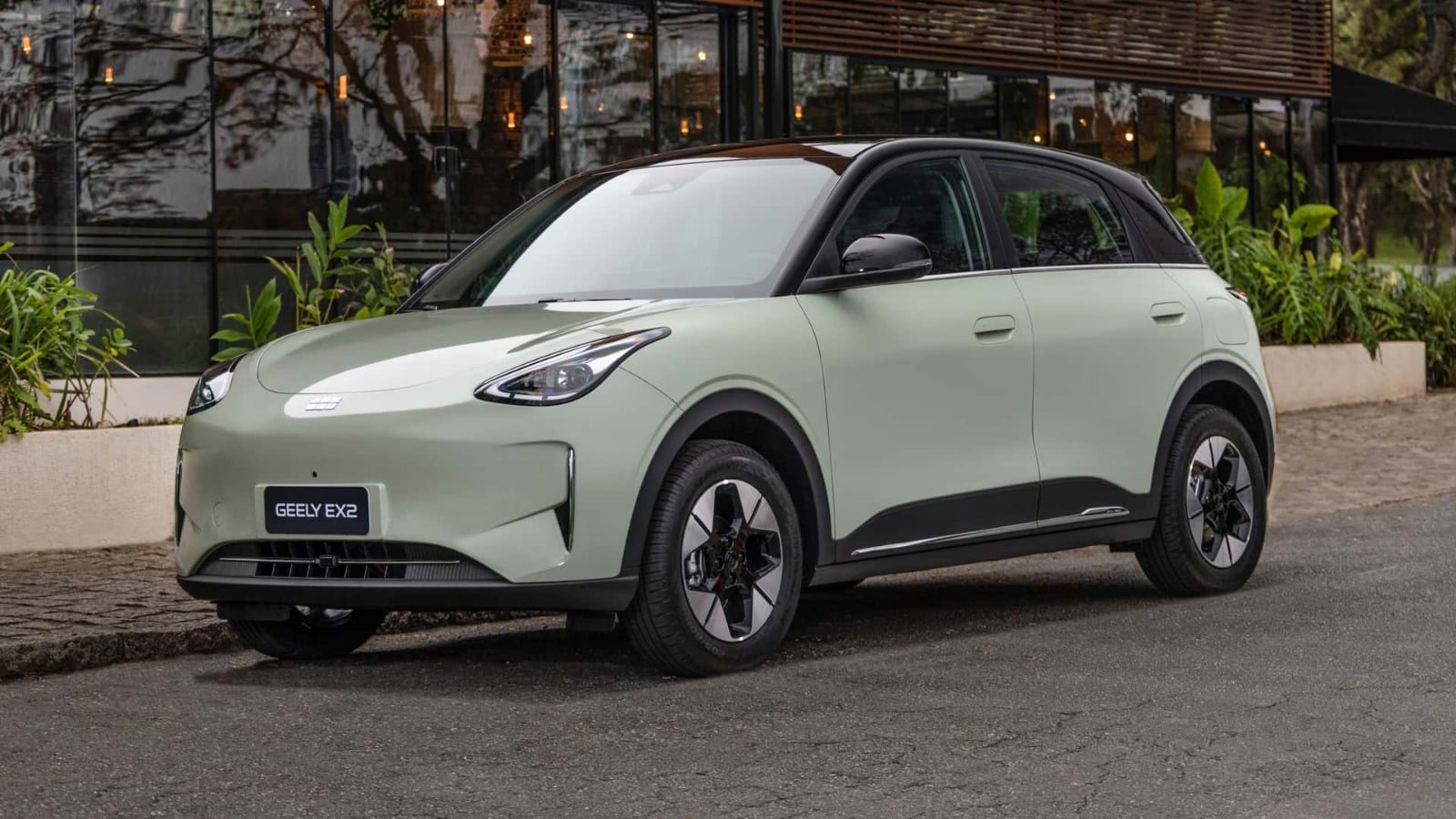
The Chinese government identified irregularities in seven models during the inspection of compliance of production of electric and hybrid vehicles for 2025. Among those pointed out are two of the country’s best-selling cars: the Geely Xingyuan, which arrived in Brazil as Geely EX2, and the BYD Qin L DM-i.
The statement from the Ministry of Industry and Information Technology (MIIT) did not mention trade names, only the identification codes of the vehicles. The cross-checking with previous records made it possible to associate the codes with the two models.
In the case of the Xingyuan, the wheelbase of the inspected unit diverged from the value declared in the official catalog beyond the tolerated margin of 1%. The car was manufactured by Zhejiang Haoqing Automobile Manufacturing, a company of the Geely group.
In the Qin L DM-i, the fuel consumption measured in the charge maintenance mode, when the battery is already discharged and the combustion engine takes over the work, exceeded the number declared by the manufacturer. The MIIT did not report the measured consumption, the size of the difference or the version involved. It also did not detail what sanctions were applied to Geely and BYD.
Two bestsellers in the crosshairs
The weight of the case is in the size of the models involved. The Xingyuan was China’s best-selling vehicle in 2025, with 465,775 units in retail, and exceeded 800 thousand units accumulated in less than two years on the market.
In Brazil, the electric hatch has been sold as the Geely EX2 since November 2025, with a 116 hp engine and a wheelbase of 2.65 m. The Qin L DM-i, in turn, is not sold here: it is a mid-size plug-in hybrid sedan, larger than the King offered in the Brazilian market, which derives from another BYD project.
The other five vehicles pointed out in the inspection were commercial. Among the problems were the absence of manuals, divergences in the parameters recorded and emergency windows and protection devices outside national standards.
Inspection at another level
According to the MIIT, the measures vary according to the severity and range from the requirement of correction to the suspension or removal of the product from the official catalog, in addition to the interruption of the electronic transmission of certificates of conformity, a document without which the car cannot be licensed.
The release came a day after four Chinese government agencies launched a year-long nationwide campaign to raise the quality and compliance of automotive production. The initiative turns annual inspections into a cross-agency task force, focusing on connected vehicle safety, companies’ research and development capabilities, and product compliance.
The MIIT itself has previously warned that aggressive designs are going to the assembly line without sufficient testing and that unbridled competition between brands increases quality risks. By publicly exposing specific models, Beijing moves from regulatory guidance to direct punishment.
SEE MORE ABOUT

0 Comments
Comments are the sole responsibility of their authors and do not represent the opinion of this site. Comments containing profanity or offensive language will not be published. If you identify anything that violates the terms of use, please report it.