


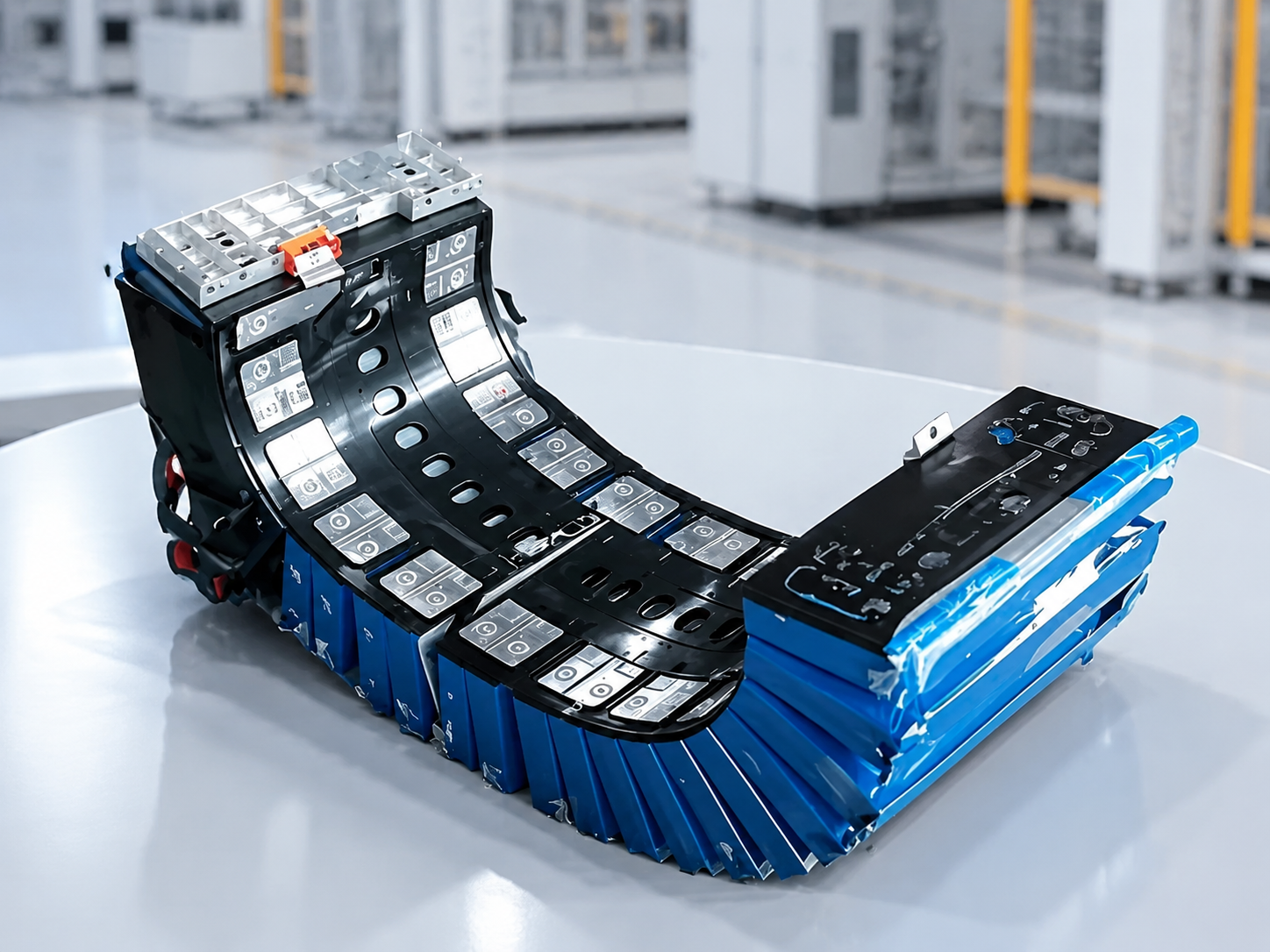
Chinese batteries have defects and become banana-shaped in GAC cars
Cells swelled until they became curved in cars with more than 150 thousand km on the clock; 72% of them served taxis and transportation by app
By
João Paulo Profeta
Published on 2026-08-10 at 10:00 AM
Published on 2026-08-10 at 10:00 AM
Be the first to comment.
Summarize with:
Lithium iron phosphate (LFP) cells supplied by CALB to electric cars in the GAC Aion line swelled and deformed into curves, earning them the nickname “banana batteries.” The nickname was born on the Chinese internet to describe a defect that gained such repercussion that the manufacturer started an internal quality reform, according to a report by the Chinese newspaper Future Auto Daily.
The cell in question is the 177 Ah LFP from CALB, China’s third-largest battery manufacturer, behind CATL and BYD. LFP chemistry is one of the most widely used in the world for three reasons: it dispenses with nickel and cobalt, which reduces the cost; it is more thermally stable than nickel alternatives; and supports more recharge cycles. Therefore, it has become standard in fleets. Of the 220.9 thousand cars sold in 2023 with this cell, 72% were for ride-hailing and taxi services.
What went wrong
Precisely the high mileage of these fleets exposed the problem: the reports focus on vehicles that have already traveled between 150 thousand and 300 thousand kilometers. In addition to the swelling, Aion S owners described electrolyte leakage, insulation failures, an abrupt drop in range, and a loss of power with the car in motion — in some cases, the vehicle stopped working while driving.
Consumer protection platforms 12365auto and Black Cat registered 182 complaints related to batteries in the first half of July. The fleet potentially involved is about 213,000 cars, with a fault detection rate of 4.7% – it is not clear how many vehicles actually have the defect.
There was no recall. On July 18, GAC and CALB publicly apologized and announced service measures: the battery warranty of the affected models rose from eight years or 150,000 kilometers to eight years or 300,000 kilometers, with inspections, repairs and replacements free of charge. The automaker also promised to compensate owners whose repair takes five days, and CALB opened a direct maintenance channel.
What CALB has changed at the factory
The changes were revealed by the Chinese press, not announced by the company. According to Future Auto Daily, CALB has tightened control of the electrode coating: the area density, previously specified between 2.3 g/cm³ and 2.5 g/cm³, now cannot vary more than 1.5% — a standard that the company says aligns with that of leaders such as CATL. It also tightened the monitoring of humidity and dew point in the injection of the electrolyte and started to keep samples of each roll produced, and not one per day.
The company would also have started a reverse audit of raw materials and inputs purchased between 2022 and 2023 and given veto power to the quality department, which can discard entire batches. According to the publication, this power is unusual among smaller Chinese manufacturers, pressured to deliver volume to automakers.
SEE MORE ABOUT

0 Comments
Comments are the sole responsibility of their authors and do not represent the opinion of this site. Comments containing profanity or offensive language will not be published. If you identify anything that violates the terms of use, please report it.