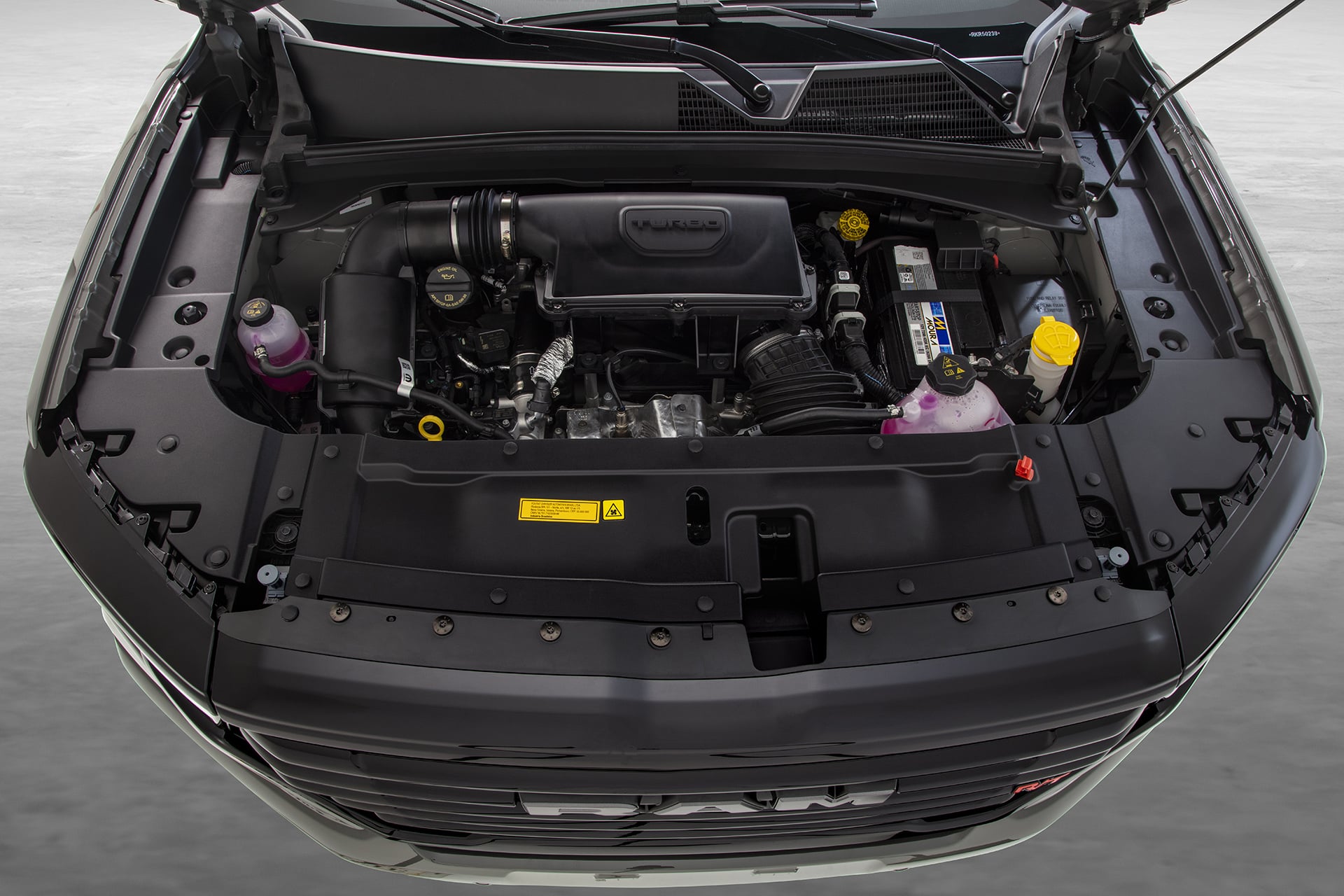
SRT, the high-performance division of Dodge and Ram, presented an electric compressor designed to eliminate turbo lag — the delay in the response of turbochargers at low revs. Named eBoost Air, the system was installed in a Jeep Grand Cherokee prototype equipped with the Hurricane 3.0 biturbo six-cylinder in-line engine. The company itself states that it is a concept, with no forecast of application in series cars.
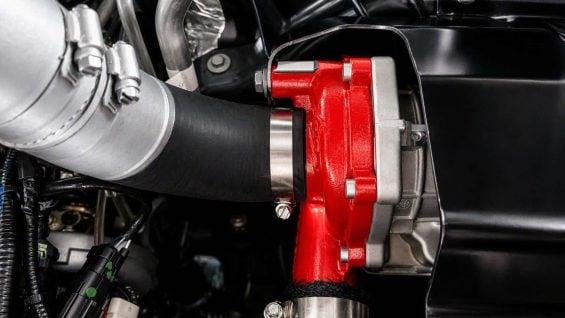
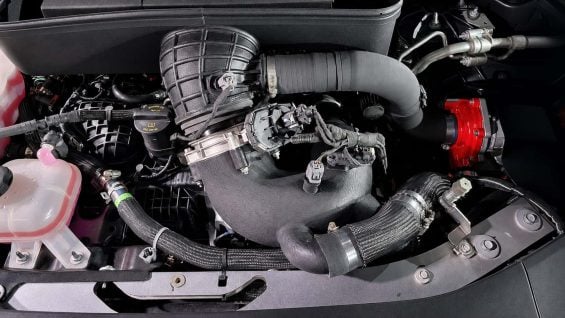
The set has three main parts: a 48-volt electric compressor, an electronically actuated bypass valve, and an energy storage device. Installed before the turbos, eBoost Air creates an alternate path for intake air and kicks in when exhaust gases run out to turn the turbines. According to SRT, the system generates 0.69 bar (10 psi) of pressure in 650 milliseconds and reaches 90% of maximum torque. In the prototype, operation is limited to about three seconds by the battery capacity.
Photo: Anthony Alaniz | Motor1 (Playback)
Although SRT calls the device an electric turbo, it works like an electric compressor: it is driven by battery power and operates independently of the turbines driven by the exhaust. The solution is different from the one adopted by Porsche in the 911, in which an electric motor is integrated into the turbo itself. From the initial design to the functional prototype, it took seven weeks.
The power gain does not come from the compressor
The electric compressor, by itself, does not increase power: by improving the response at low revs, it allows the engine to be calibrated and the turbines sized more aggressively. In the prototype, the Hurricane left the 558 hp and 73,4 kgfm of the standard HO version and went to estimated numbers between 629 hp and 649 hp, with about 82,9 kgfm — the variation depends on the publication, as SRT has not released official power data.
Photo: Anthony Alaniz | Motor1 (Playback)
The jump, therefore, comes from a slight reduction in the compression ratio, new calibration and reinforcements in the transmission. In the concept, the compressor is powered by a 48-volt, 1 Ah battery, recharged by converter and by a 12-volt alternator of greater capacity. The team is studying alternatives, including capacitors instead of the battery.
From the bench to the street car
Joel Baker, SRT’s vice president of propulsion engineering, said there was still a lot of work to do and that torque at low revs “opens up a lot of opportunities.” He also cited as a logical evolution to take the eBoost Air to the four-cylinder Hurricane 2.0 turbo — precisely the engine that Stellantis uses in Brazil in Jeep Compass, Commander and Ram Rampage.
SRT also evaluates the optimal size and capacity of energy storage, which defines how many times the compressor can be driven in sequence. The company has not confirmed whether the technology will make its way to production models, the aftermarket or smaller engines.
Comments are the sole responsibility of their authors and do not represent the opinion of this site. Comments containing profanity or offensive language will not be published. If you identify anything that violates the terms of use, please report it.