


China doesn’t just make electric cars: factory near Shanghai stamps 1967 Mustang and zero-kilometer Porsche 911
Manufacturer produces complete parts and structures for historical models that are no longer supported by automakers
By
Júlia Haddad
Published on 2026-06-03 at 07:00 PM
Published on 2026-06-03 at 07:00 PM
Be the first to comment.
Summarize with:
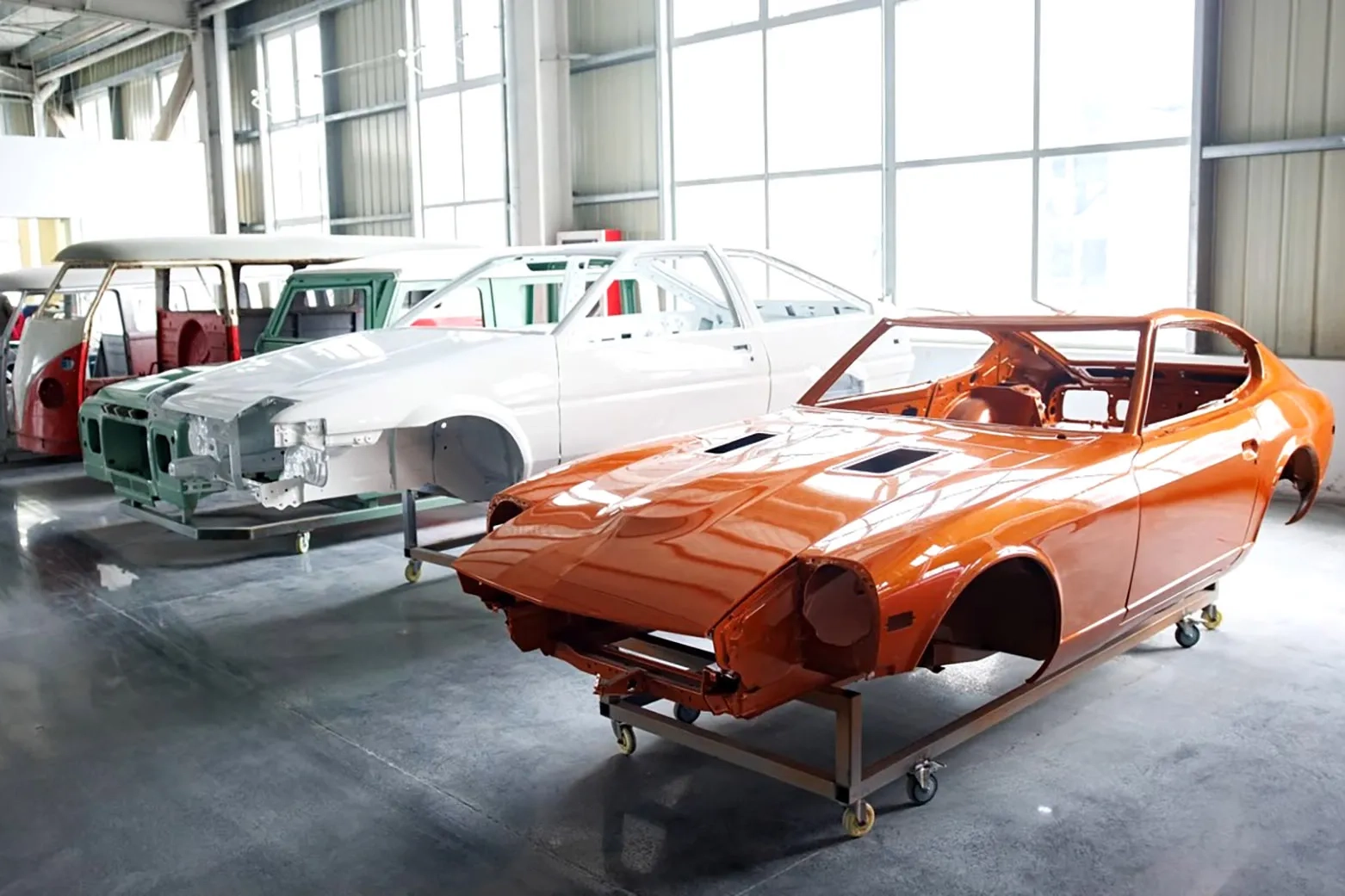
While the Chinese automotive industry is taking the world by storm with its electric cars, a little-known factory in the city of Baoying, about three hours from Shanghai, has specialized in moving the needle in the opposite direction: it stamps new steel bodies for established motorsport classics – without any involvement from the original automakers. Jiangsu Juncheng Vehicle Industry Co. produces new components for models that no longer have a wide range of original parts.
Among the models serviced are the Toyota AE86 —a drift icon, whose parts Toyota stopped supplying on a large scale years ago—, the first-generation Ford Bronco, the Datsun 240Z, the Toyota Land Cruiser and the 1967 Ford Mustang. Soon, the company will also stamp the bodies of the Porsche 911 of the 964 generation and the iconic Mercedes-Benz 300 SL Gullwing.
SEE ALSO:
- TikTok owner will also launch an electric car, made for social networks
- Lamborghini changes its mind and cancels its first electric car after Ferrari Luce controversy
- A controversy over mechanics made Need for Speed creators resign from the game — fans loved it
The process begins with the development of the dies used in the stamping of the parts. The company carves high-strength steel blocks on CNC machines, and an expert does the manual finishing before each die is taken to the production line, where it stamps the components precisely.
In addition to structural parts such as hoods, doors and fenders, Juncheng also produces supports, reinforcements and small components needed to faithfully reproduce the original bodies.
The operation only came to light internationally after Larry Chen, a photographer linked to the American platform Hagerty, specializing in classics, visited the factory and published the images on YouTube. A Bronco body produced by Juncheng has already been used in a restomod in the United States that ended up selling for US$ 400 thousand (about R$ 2 million).
With the appreciation of classics and the scarcity of original parts, factories such as Juncheng have become an essential link to keep models that the automakers themselves have already abandoned active – and to feed the growing market for restomods, in which old vehicles receive contemporary mechanics and finishes.
SEE MORE ABOUT

0 Comments
Comments are the sole responsibility of their authors and do not represent the opinion of this site. Comments containing profanity or offensive language will not be published. If you identify anything that violates the terms of use, please report it.