

BYD may take over Volkswagen’s historic factory in Germany so as not to leave it empty
In a crisis of idleness, Volkswagen is considering sharing the iconic "Glass Factory" with rival BYD; agreement can also improve relations between the countries
By
Júlia Haddad
Published on 2026-05-05 at 09:00 PM
Updated on 2026-05-05 at 09:35 PM
Published on 2026-05-05 at 09:00 PM
Updated on 2026-05-05 at 09:35 PM
Be the first to comment.
Summarize with:
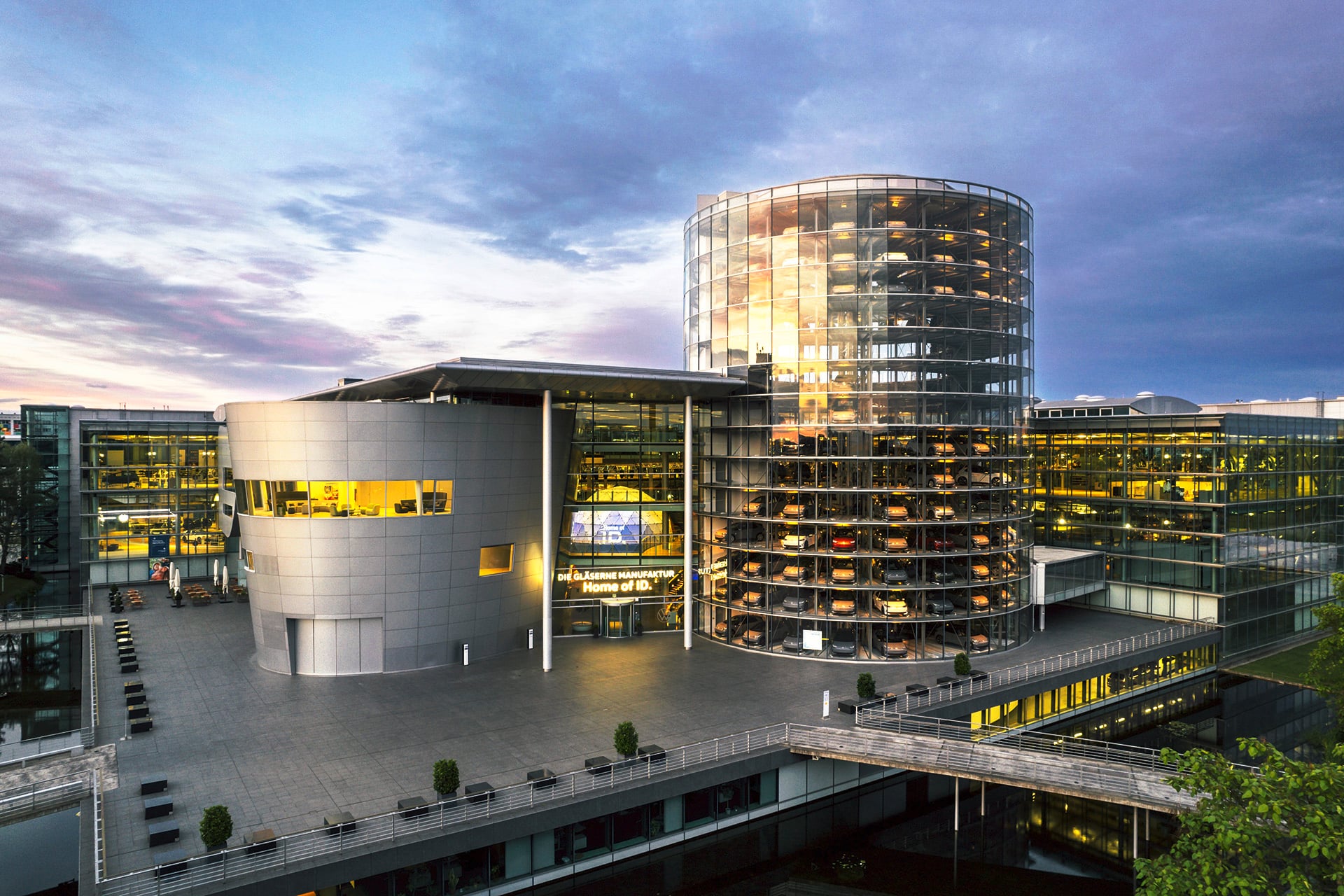
Chinese giant BYD is in advanced talks with Volkswagen to take over part of the iconic industrial unit in Dresden, Germany. The move, according to the CarNewsChina website, marks a new chapter in the reconfiguration of the global automotive industry, where traditional European manufacturers seek to mitigate the idleness of their plants while Asian brands want to use them to circumvent customs barriers on the continent. Volkswagen’s plant in Dresden, known as the “Glass Factory”, had vehicle production halted at the end of 2025.
SEE ALSO:
- iPhone maker now wants to produce electric cars in Brazil
- BYD’s new R$ 235 SUV accumulates 30,000 orders in one day
- ‘RAM crisis’ makes BYD readjust prices of its ADAS package
Tariff dribble and strategic partnerships
The installation on German soil would allow BYD to consolidate its presence in Europe as a local manufacturer, eliminating dependence on imports subject to heavy tariffs. Currently, electric vehicles coming from China face the standard tax of 10% plus a surcharge of up to 17% applied by the European Commission, alleging illegal state subsidies in Beijing. In addition to industrial occupation, the project envisages the transformation of part of the space into a center of technological innovation, in collaboration with the state of Saxony and the Technical University of Dresden (TU Dresden).
German idleness and the new industrial map
For Volkswagen, sharing idle facilities is seen by executives as a pragmatic solution to reduce fixed operating costs at a time of falling profit margins. The trend is not restricted to BYD: brands such as Xpeng and MG also monitor the availability of manufacturing plants of European groups. The choice of Germany as a productive base has a political contour, since Berlin voted against Brussels’ protectionist tariffs, signaling a more receptive environment for Chinese capital.
Although the talks are in an exploratory stage, the outcome of the imbroglio between the EU and Beijing over minimum import prices should speed up the definitions. Contacted by CarNewsChina, BYD declined to comment on the talks. Volkswagen, on the other hand, limited itself to denying any inconsistencies in market information, without ruling out future industrial partnerships in its underutilized units.
SEE MORE ABOUT

0 Comments
Comments are the sole responsibility of their authors and do not represent the opinion of this site. Comments containing profanity or offensive language will not be published. If you identify anything that violates the terms of use, please report it.