

British electric manufacturer bets on factory in Qatar to scale production
With a focus on efficiency, WEVC will use its modular aluminum platform to build a passenger car and van at a new base in the Middle East
By
João Paulo Profeta
Published on 2026-08-17 at 07:00 AM
Published on 2026-08-17 at 07:00 AM
Be the first to comment.
Summarize with:
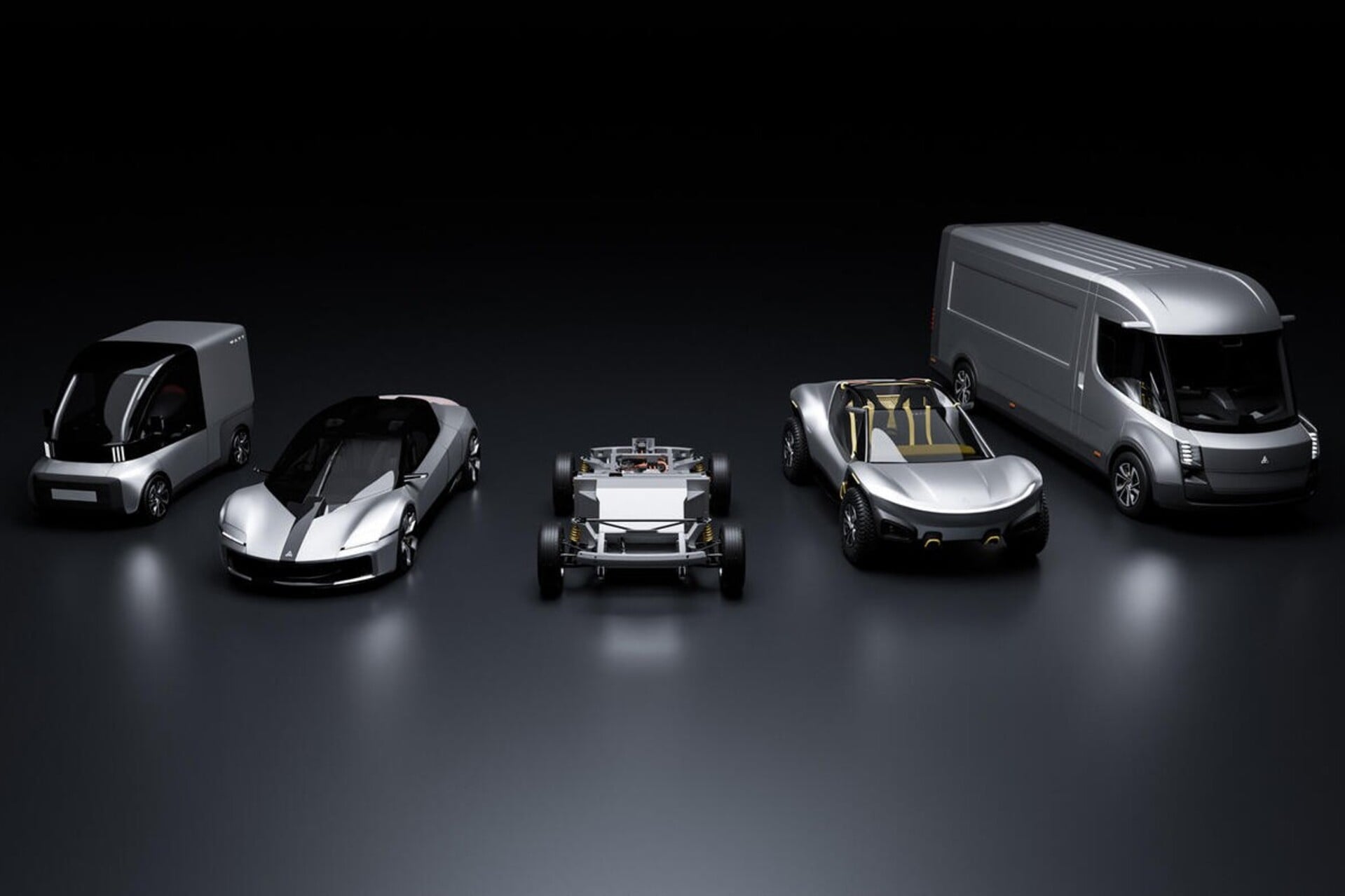
Watt Electric Vehicle Company (WEVC), recognized by Autocar’s innovation award in 2026, has entered into a strategic partnership with Qatar-based investor JTA to establish the country’s first dedicated electric vehicle factory. The industrial plant is initially focused on the production of a passenger car and a medium-sized cargo van, following the logic of the eCV1 model, already developed by the British brand. The start of operations at the factory is projected for the beginning of 2028, with an estimated initial capacity of 5 thousand units per year, a volume that should rise considerably as the project gains scale.
Engineering and design development will be centralised by WEVC itself, which plans to expand its presence in the UK with new facilities in the Midlands, adding to existing bases in Cornwall and Worcestershire. Although the assembly will be entirely carried out on Qatari soil, the vehicles will use the PACES modular platform. This aluminum architecture, based on a “skateboard” system, utilizes patented extrusions and joining parts that simplify the assembly process and dramatically reduce capital costs and the need for complex tooling.
Neil Yates, founder and CEO of WEVC, points out that the deal in Qatar not only enables the company’s production capacity, but acts as a model for future “satellite” operations that the company intends to open in markets such as the United States and Asia. According to the executive, the goal is to act as a partner of local operations globally. For the automaker, this decentralized manufacturing format is an efficient response to mitigate geopolitical obstacles, such as the imposition of tariff barriers, maintaining the economic viability of the project by requiring reduced fixed investments.
SEE MORE ABOUT

0 Comments
Comments are the sole responsibility of their authors and do not represent the opinion of this site. Comments containing profanity or offensive language will not be published. If you identify anything that violates the terms of use, please report it.