

Another flashlight for your car? Understand how the “light of thanks” works
Conceived by actor Marcos Winter, the proposal that creates a courtesy light in traffic advances in the Chamber of Deputies and seeks to encourage kindness
By
Julia Vargas
Published on 2026-08-18 at 10:00 AM
Published on 2026-08-18 at 10:00 AM
Be the first to comment.
Summarize with:
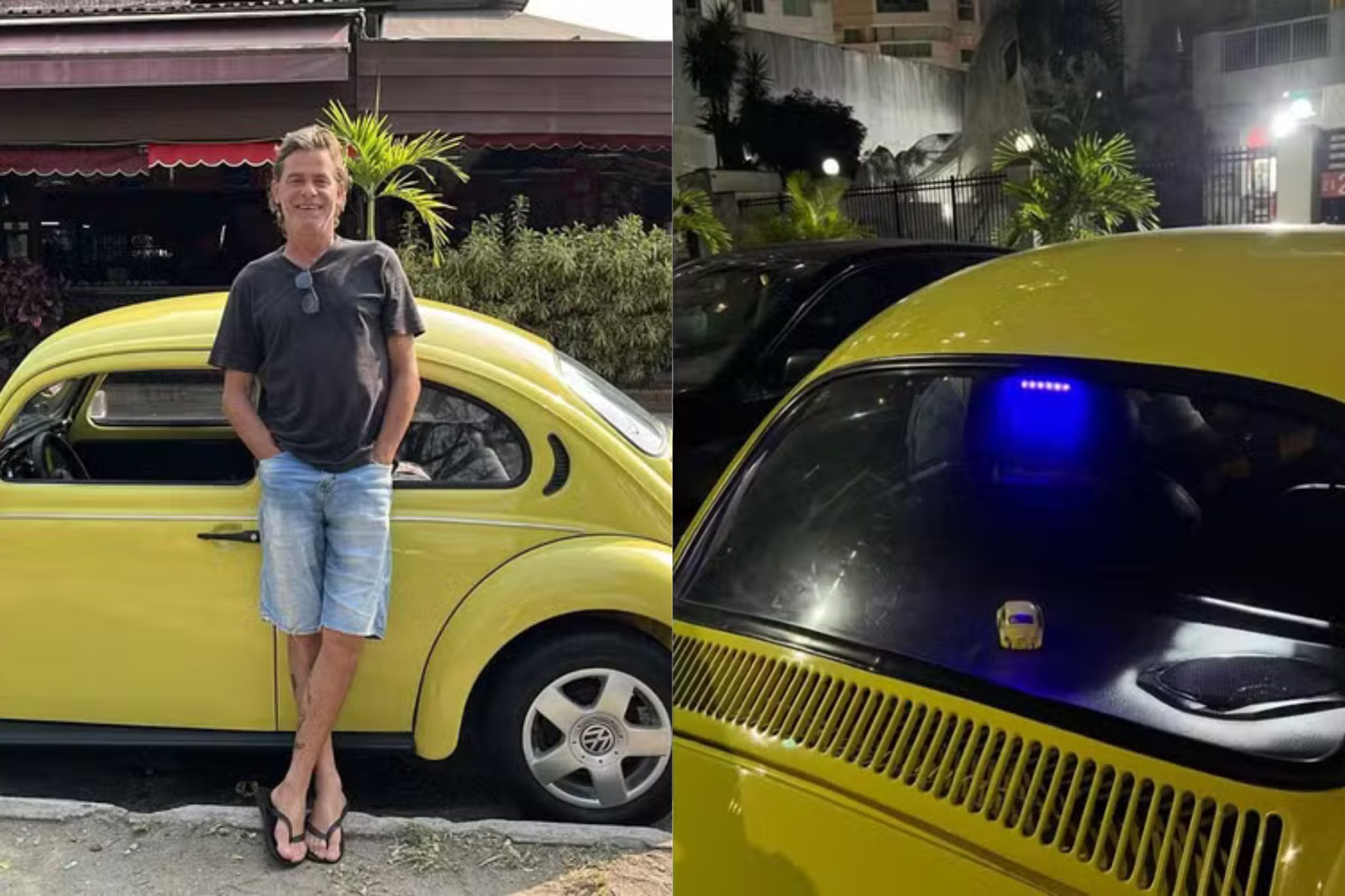
The “Luz de Obrigado” initiative, conceived by actor Marcos Winter to encourage kindness behind the wheel, has evolved from a handmade modification of a 1977 Beetle to a legislative proposal under analysis in the Chamber of Deputies. Bill 2729/2026 suggests amending the Brazilian Traffic Code (CTB) to allow the optional use of courtesy light signaling.
Although many drivers already use the horn and headlights to thank or apologize, this practice is not universal, much less regulated by the CTB, and may even generate a fine for the driver, even if he is well-intentioned. Thus, to put an end to misinterpretations and establish a legal guideline, the idea of a new complementary light in vehicles was suggested.
SEE ALSO:
- Car dashboard lights: know how to identify the problem
- Transit Day: kindness is good, but too much is a problem
- Battery light won’t go out? Understand where the problem is and what to do
Origin of the concept and operation of the “light of thanks”
The idea was born two decades ago, when Marcos Winter installed a blue LED activated by a button on the dashboard of his yellow Volkswagen Beetle. The goal was to fill a gap in road communication: to offer an exclusive signal to thank, apologize or demonstrate cooperation, avoiding the inappropriate use of the horn, the hazard lights or the high beam.
Developed in partnership with Thiago Paschoa, the concept provides for auxiliary lighting integrated into the vehicle, activated by a dedicated button or voice command. In order not to compromise safety, the installation must respect a triangular arrangement in relation to the original headlights and taillights, ensuring that there is no interference with the brake lights, turn signals or emergency signals.
Proposed by federal deputy Amom Mandel, PL 2729/2026 establishes that the provision will be strictly optional, educational and not a priority. The courtesy sign does not give way or alter the universal rules of traffic.
Processing in Congress and technical support
The proposal received conceptual support from the Brazilian Association of Traffic Medicine (Abramet) and the National Association of Automotive Vehicle Manufacturers (Anfavea). According to Abramet, the measure dialogues with traffic psychology by applying the concept of nudge (behavioral stimulus), promoting courtesy to reduce episodes of stress and aggressiveness among drivers.
Despite the repercussion and the patent process with the National Institute of Industrial Property (INPI), the equipment is not yet cleared for use in Brazilian vehicles. If the bill is approved in Congress, it will be up to the National Traffic Council (Contran) to regulate the color, intensity, activation time and approval processes. The project also foresees that, in the future, the system will be able to generate anonymized statistical data to assist research on human behavior in traffic.
SEE MORE ABOUT

0 Comments
Comments are the sole responsibility of their authors and do not represent the opinion of this site. Comments containing profanity or offensive language will not be published. If you identify anything that violates the terms of use, please report it.