

São Paulo highways get radars with artificial intelligence; understand how they work
Technology catches cell phones and lack of belts 24 hours a day, but the Military Police are fined; infractions reach R$ 293.47 and seven points
By
João Paulo Profeta
Published on 2026-08-18 at 09:00 AM
Published on 2026-08-18 at 09:00 AM
Be the first to comment.
Summarize with:
The Castello Branco Highway, one of the main links between Greater São Paulo and the southwest of the state, will receive inspection cameras with artificial intelligence (AI) capable of catching drivers on cell phones and occupants without seat belts. The concessionaire Ecovias Raposo Castello confirmed the expansion of the system, but did not disclose the schedule or the points that will receive the equipment.
The move comes two weeks after the same technology began to base fines on the Raposo Tavares highway, also managed by the concessionaire. Since August 3, the images captured by two cameras installed at km 17 and 18, in the stretch of the capital, have been used by the Military Highway Police (PMRv) to fine offenders.
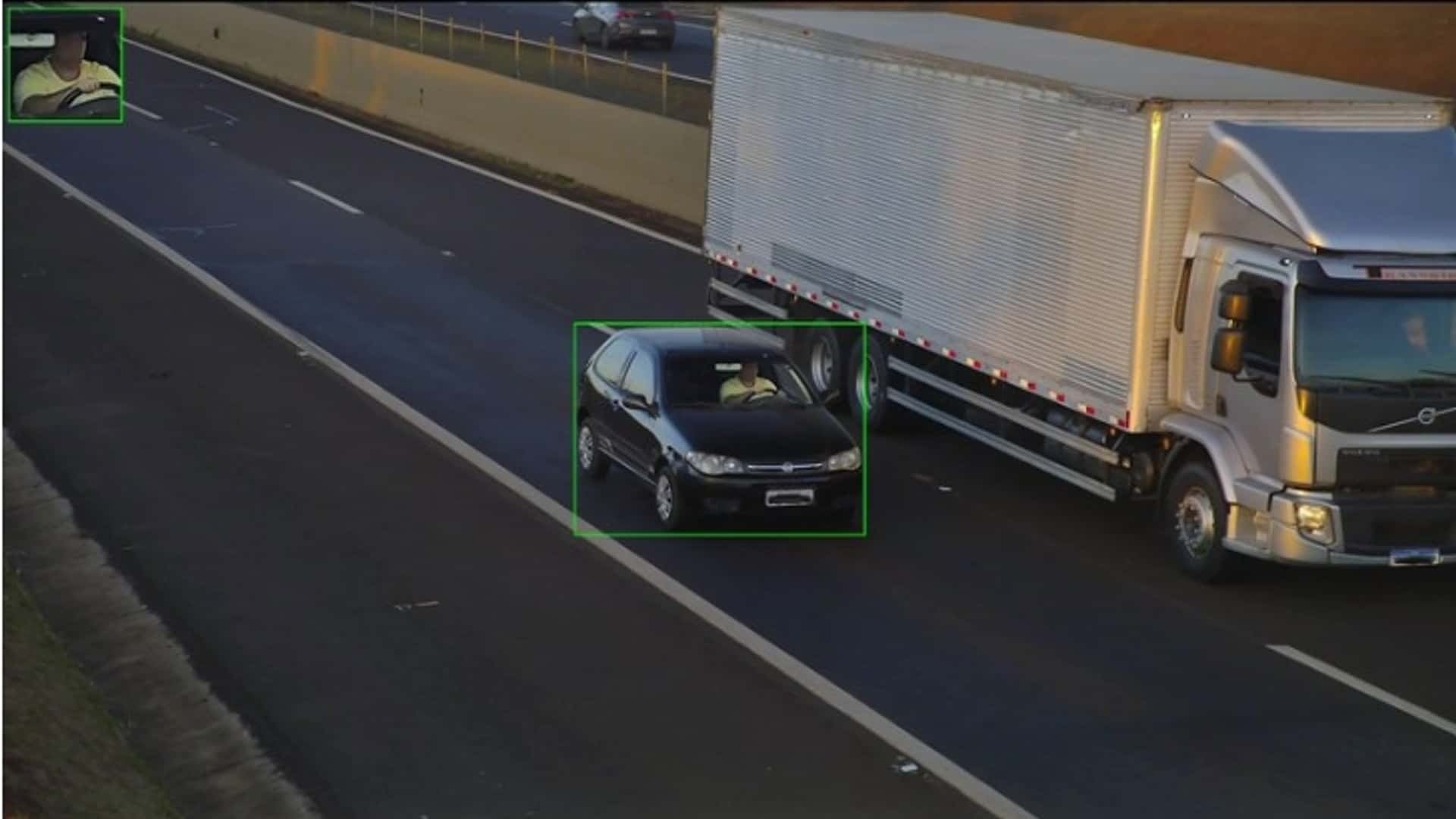
Unlike conventional radars, aimed at speeding, the equipment targets behavioral violations. They operate 24 hours a day, with high-definition cameras and infrared sensors, and record the interior of moving vehicles. AI processing identifies the cell phone in the driver’s hand and the absence of the belt, both in the front and in the back seat.
The fine depends on human validation
The cameras do not fine. Ecovias records and screens the images and forwards them to the competent traffic authority — on the highways under its management, the PMRv. A police officer analyzes each occurrence and only then issues the infraction notice. An indication pointed out by the system, therefore, is not equivalent to a fine.
When confirmed, the penalty follows the Brazilian Traffic Code. Driving without a belt is a serious infraction, punishable by R$ 195.23 and five points on the National Driver’s License (CNH). Holding or handling the cell phone while driving is a very serious infraction, with a fine of R$ 293.47 and seven points.
A thousand caught in the act in three days
The numbers from the testing phase help to measure the target of the inspection. At Raposo Tavares, the two equipment registered more than a thousand indications of infraction in just 72 hours: 40% of passengers without belts, 30% of drivers without belts and 30% of cell phone use. In July, the daily average already exceeded 300 records, informed the concessionaire.
On the Mário Covas Beltway, where the fines began in July, SPMAR counted 4,879 flagrant acts between May 12 and June 9 — an average of 168 per day. The lack of belts, adding drivers and passengers, accounted for almost 80% of the total.
“AI cameras are great allies of road safety,” says Vinícius Antonioli, Operations Manager at Ecovias Raposo Castello. According to him, the equipment has the potential to inhibit high-risk behaviors associated with serious accidents.
Technology still has limits. Ecovias informs that the system does not identify stopped vehicles, pedestrians on the road, objects on the asphalt or inappropriate transport of children. The concessionaire currently operates 48 monitoring cameras on the stretch and expects to put another 177 into operation by September, which would give full coverage to the two highways.
SEE MORE ABOUT

0 Comments
Comments are the sole responsibility of their authors and do not represent the opinion of this site. Comments containing profanity or offensive language will not be published. If you identify anything that violates the terms of use, please report it.