BYD faces new accusations of human rights violations, now in the construction of its first European factory, located in Szeged, Hungary. An investigation by China Labor Watch (CLW), reported by Automotive World, pointed to evidence of exhausting working hours and coercion against Chinese workers at the company’s construction site, raising new questions about the manufacturer’s supply chain during its global expansion.
The CLW report, structured from interviews with 50 workers, describes systematic infractions. The workers reported working shifts of up to 14 hours a day, without weekly rest, totaling more than 70 hours of work in seven days. The organization also identified the use of business visas instead of formal work permits. This administrative maneuver limited employees’ access to the local health system and created an environment of coercion under the possibility of immediate deportation.
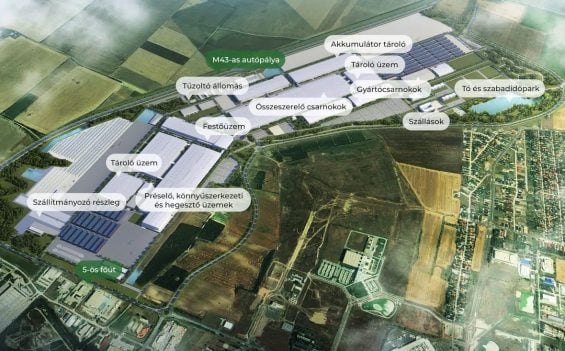
Planning of the Szeged plant
The testimonies also detail the withholding of salaries for periods of up to three months and the collection of recruitment fees, a practice that can result in debt bondage even before the start of activities at the site.
The precedent in Camaçari
The practices pointed out on the European continent have similarities with the history of the automaker in Brazil. In 2024, labor inspectors identified degrading conditions in the works of the Camaçari Pole (BA), with records of passport retention and overcrowding of accommodation.
The link between the two cases is the performance of the same subcontractor, Jinjian Construction Group. BYD has stated that the operational and legal responsibility lies with the outsourced companies. However, the infractions resulted in the inclusion of the Brazilian parent company on the federal government’s “dirty list” of slave labor in April 2026, a decision that restricts the company’s access to public financing lines in the country.
Impact on international strategy
The facility in Hungary is the main pillar of BYD’s strategy to circumvent European Union import tariffs on electric vehicles. However, the new Hungarian Prime Minister, Peter Magyar, declared that the country will strictly apply the bloc’s occupational safety standards, vetoing the operation based on the precariousness of immigrant labor.
The repercussions also reach other markets. CLW forwarded the data from its investigation to the government of Canada, warning of ethical risks in the brand’s production chain. The move has the potential to impose new bureaucratic and commercial barriers to the manufacturer’s expansion plans in North America.
Comments are the sole responsibility of their authors and do not represent the opinion of this site. Comments containing profanity or offensive language will not be published. If you identify anything that violates the terms of use, please report it.