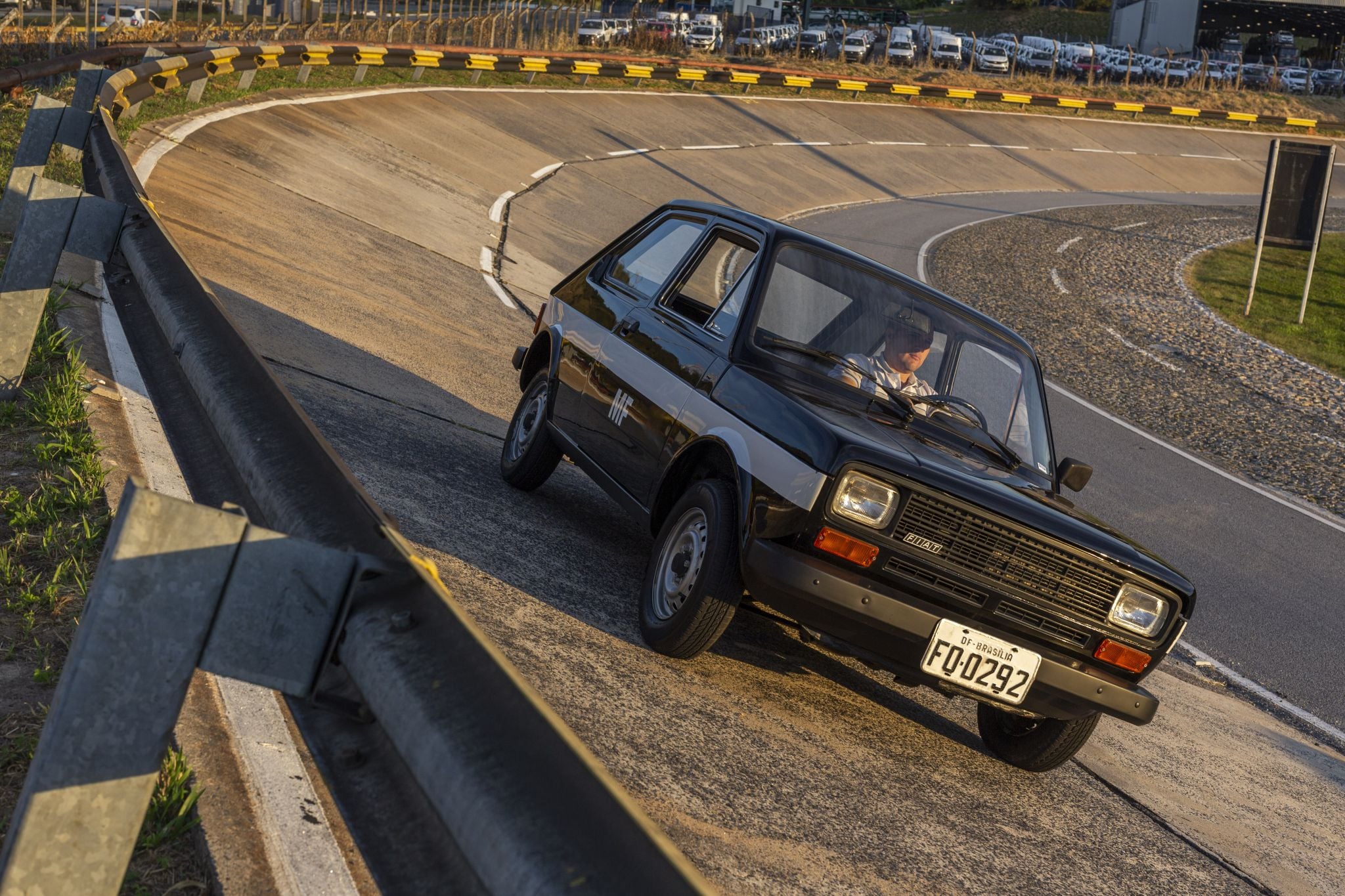
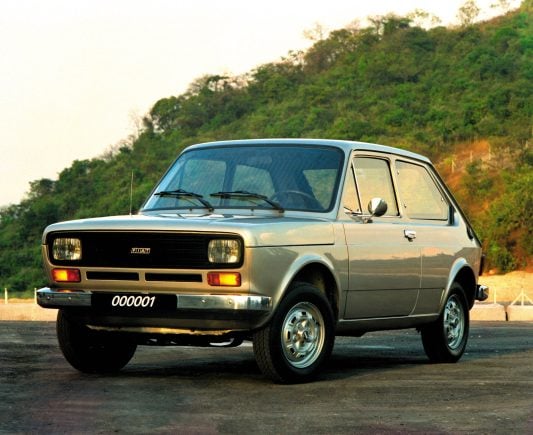
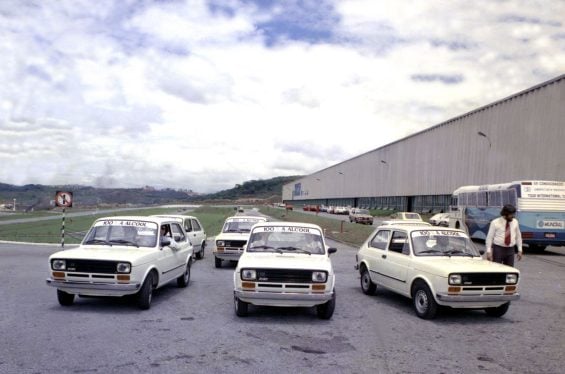
The Fiat 147 is completing 50 years as one of the most important models in the history of the Brazilian automotive industry. The first vehicle produced by Fiat in the country, the compact inaugurated the era of modern hatches in the domestic market and, three years after its launch, entered world history as the first car powered by ethanol manufactured in series.
The 147 debuted on July 9, 1976, the same day as the inauguration of the Fiat plant in Betim (MG), with a presentation at an event held in Ouro Preto. The car arrived in a market dominated by large and guzzling models, such as the Chevrolet Opal, Ford Galaxie and Dodge Dart, in the midst of the oil crisis. The proposal was the opposite: a transverse engine with front-wheel drive, which freed up interior space in a short body, in addition to radial tires and a laminated glass windshield, rare items among compacts at the time.
From the Italian 127 to the Brazilian way
The 147 was derived from the Fiat 127, launched in Italy in 1971 and voted Car of the Year in Europe the following year. The adaptation, however, was profound. After running European prototypes on Brazilian roads, engineering concluded that the model needed to be more resistant: the bodywork gained additional welding points, the rear suspension was redesigned and the Italian’s 903 cm³ engine had its displacement expanded to 1,050 cm³, with 47 hp at the debut.
Fiat also broke with the geography of the sector. By settling in Minas Gerais, and not in São Paulo, the automaker created an automotive hub that would become the second largest in the country.
The “Cachacinha” that paved the way for flex
Also in 1976, at the São Paulo Motor Show, Fiat exhibited a prototype of the 147 powered by ethanol, already with accumulated mileage in tests. The bet came to fruition in 1979, at the height of Proálcool: the 147 became the first ethanol car produced in series in the world. Nicknamed “Cachacinha”, it opened the technological trail that would lead, decades later, to flex engines, now present in almost all light cars sold in Brazil.
The hatch was also the first national model to originate a complete family. In 1979 came the pickup, the first derivative of a passenger car in Brazil; in 1980, the Panorama station wagon and the Fiorino van; in 1983, the Oggi sedan. The line went through versions such as GL, GLS, Rallye, Spazio CL and TR, and was even exported to Europe with a 1.3-liter diesel engine and 45 hp, sold as 127 D, one of the smallest diesel cars ever produced.
There were about 1.27 million units assembled in Betim until 1987, when the Uno took over the position for good. Half a century later, the 147 continues to be a reference in accessible engineering and one of the decisive chapters of Brazilian industry.
Comments are the sole responsibility of their authors and do not represent the opinion of this site. Comments containing profanity or offensive language will not be published. If you identify anything that violates the terms of use, please report it.