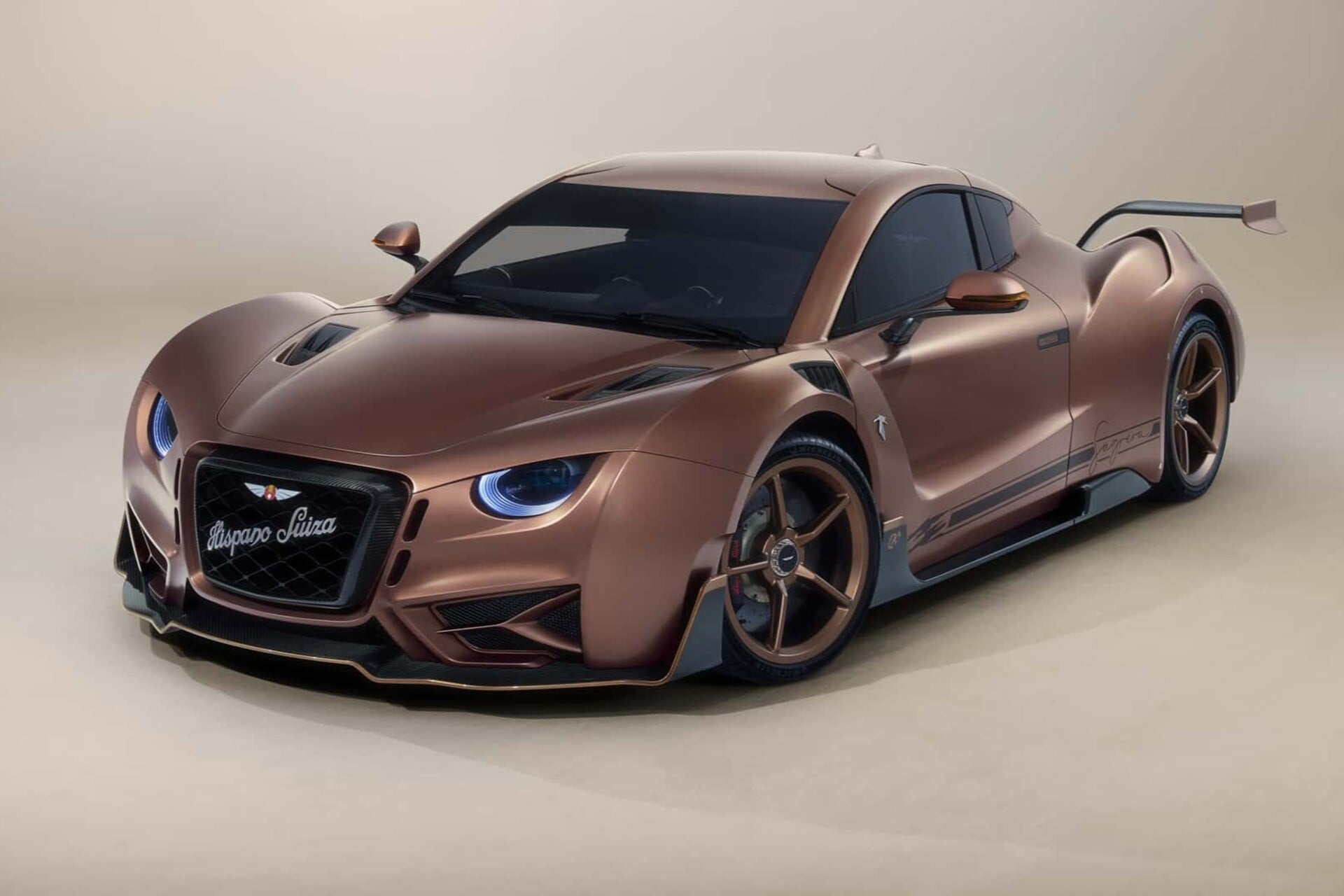
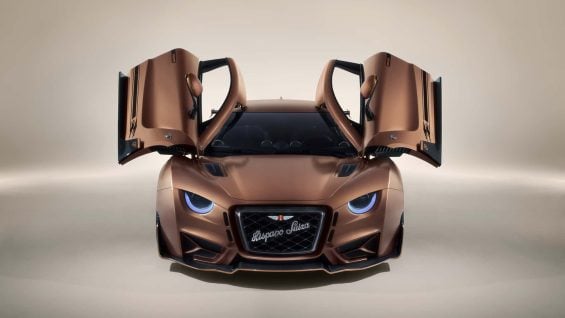
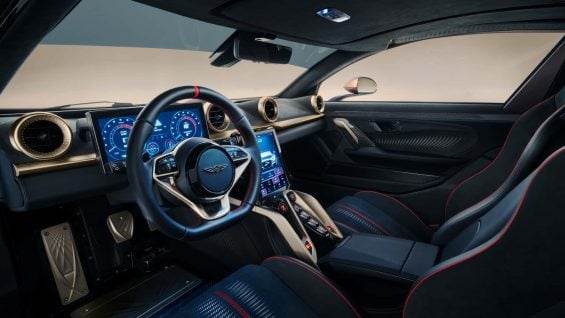
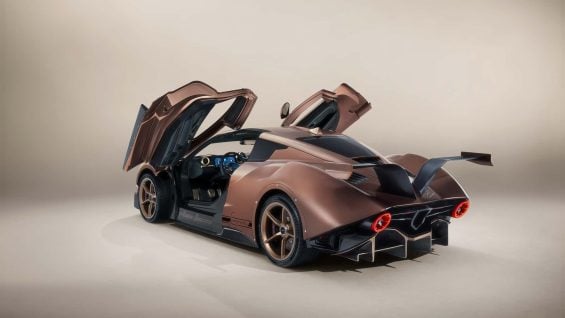
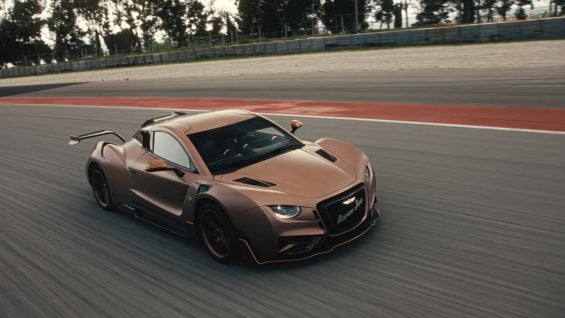
While much of the industry fills the booths with screens and adds assistants who increasingly take the wheel, the Spanish Hispano Suiza has chosen the opposite path. The brand detailed the electronic architecture of the Carmen Sagrera, the third member of its family of electric hypercars, built on a concept that the manufacturer itself called “invisible technology”: software that works behind the scenes to keep the driver at the center of the experience.
Photo: Disclosure | Hispano Suiza
Presented in 2024 to mark the company’s 120th anniversary, the Sagrera delivers 1,115 hp and 118,3 kgfm, enough to go from zero to 100 km/h in 2,6 seconds. There are four axial-flow motors and permanent magnets, of 275 hp each, connected in series and responsible only for the rear axle. The second-generation battery has 103 kWh, weighs 612 kg and yields up to 480 km in the WLTP cycle.
Photo: Disclosure | Hispano Suiza
How invisible technology works
The center of the logic is HSDD (Hispano Suiza Driver Dynamics), a proprietary system that coordinates traction, torque distribution, stability, regenerative braking and driving modes. Inside it operate three blocks: the Grip Enhancement System, for traction control; Active Yaw Modulation, for stability; and the Electronic Torque Stabiliser, capable of applying independent negative torque to the rear wheels to balance the car and, in addition, save energy.
Photo: Disclosure | Hispano Suiza
To respond quickly, the software collects data from more than 100 sensors spread across the chassis and powertrain and processes more than 200 million instructions per second. The position and speed of the steering wheel, the pressure on the accelerator and brakes, the rotation of the wheels, the movements of the body, the acceleration on all three axes, the temperature and state of charge of the battery, as well as the current and voltage of the electrical system are taken into account. The idea is to anticipate the loss of grip before the driver notices it, adjusting the response of the motors progressively.
Photo: Disclosure | Hispano Suiza
Calibration with a former Formula 1 driver
The set-up went through simulations and track and street tests, with the participation of Spaniard Luis Pérez-Sala, who raced for Minardi in the late 1980s and now acts as a development driver for the brand. The declared goal was to preserve the freedom of those who drive: electronics enter the scene only when necessary and without making the car’s reactions artificial.
The transmission brings power to the rear axle and uses a virtual self-locking differential. The tires are Michelin Pilot Sport 4 S tailor-made for the model. The name Sagrera is a reference to the neighborhood of Barcelona where Hispano Suiza, founded in 1904, installed its first large factory in 1911.
Comments are the sole responsibility of their authors and do not represent the opinion of this site. Comments containing profanity or offensive language will not be published. If you identify anything that violates the terms of use, please report it.